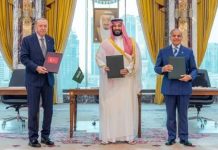

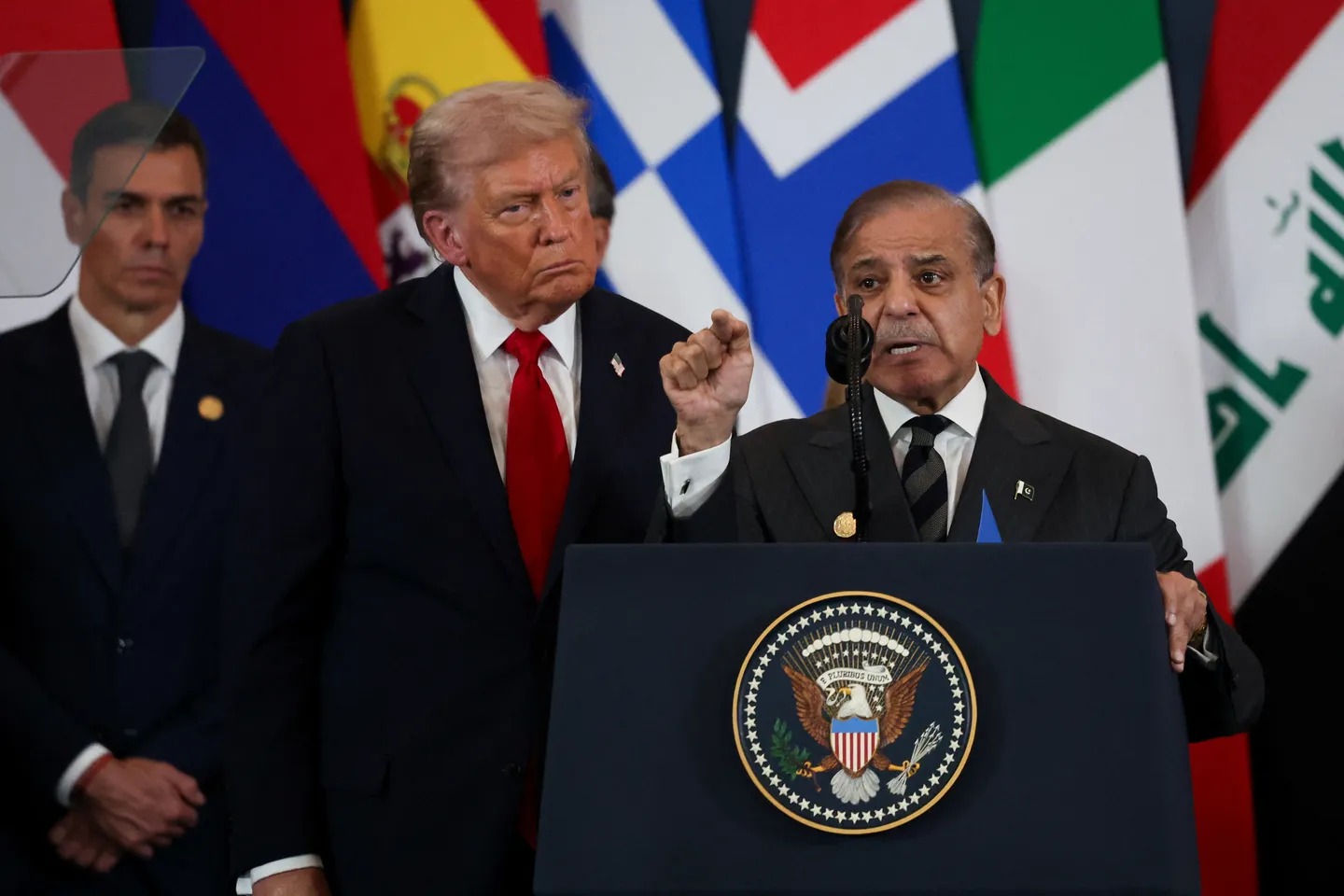
ISLAMABAD (TNS) Pakistan achieved a historic victory in Marka-e-Haq (Battle of Truth), inflicting a defeat on India that it will remember till the end of time. Pakistan’s victory in Marka-e-Haq has been acknowledged in the US Congress. Pakistan achieved ‘military superiority’ over India in the four-day war that took place in May this year. Remember that later, under the mediation of US President Donald Trump, the two neighboring countries agreed to a ceasefire on May 10. – The report submitted to Congress by the US-China Economic and Security Review Commission states that Pakistan’s military victory over India in the four-day clash in Marka-e-Haq highlighted Chinese weapons. This commission was established to submit a report on the impact of trade and economic relations between the US and China on national security. Pakistan initially claimed to have shot down six Indian aircraft in the air battle, but later increased the number to seven. Islamabad denied losing any of its aircraft and said that after three air bases were targeted, it hit 26 Indian targets. US President Donald Trump recently said that eight aircraft were actually shot down. Speaking at the American Business Forum in Miami, Donald Trump said that he had ended eight wars in eight months, including the wars between Kosovo and Serbia, Congo and Rwanda, and Pakistan and India. He added that I was in the middle of a trade agreement with the two countries, then I saw news on the front page of a newspaper that the two were going to war, 8 planes, 7 planes were shot down, the eighth plane was badly damaged, but a total of 8 planes were actually shot down. India had attacked various places in Pakistan on the night of May 6 and 7, accusing it of an attack in Pahalgam, an area of Kashmir under its administration, in April this year. In response to the Indian attacks in the four-day Marka-e-Haq war, Pakistan retaliated vigorously and shot down six Indian planes, including Rafales. In the report, the commission, referring to the May conflict, said that China used this opportunity to “test and develop its defense capabilities”.
 It also highlighted China’s role in this conflict and said that it became the center of global attention because the Pakistani army relied on Chinese weapons and allegedly benefited from Chinese intelligence. It also cited India’s claim that China provided Pakistan with direct information on Indian military positions during the crisis, the report added, adding that Pakistan denied these allegations and China neither confirmed nor denied them. According to the report, China expanded its military partnership with Pakistan in 2025, which itself led to an increase in tensions with India. The report said that in November and December 2024, China and Pakistan conducted three-week-long ‘Warrior-VIII’ counter-terrorism exercises, and in February this year, the Chinese navy participated in Pakistan’s multinational ‘peace’ exercises. These exercises reflect the growing defense cooperation between the two countries. Indian commentators have described these exercises as a setback to their relations with China and a direct security threat to their border positions. Referring to the May conflict, the report said that although calling it a ‘proxy war’ is an overstatement of China’s role, China took advantage of the conflict to test and publicize the sophistication of its weapons. The report also said that as Pakistan’s largest defense supplier, China provided about 82 percent of Pakistan’s defense imports from 2019 to 2023. The May conflict marked the first time that China’s advanced military systems, including the HQ-9 air defense system, PL-15 air-to-air missiles, and J-10 fighter jets, were used in combat, providing a real-world combat experience. It was also said that in June, China offered to sell Pakistan 40, fifth-generation J-35 fighter jets, KJ-500 aircraft and ballistic missile defense systems. The same month, Pakistan announced a 20 percent increase in its defense budget for 2025-26, bringing defense spending to $9 billion despite a reduction in the overall budget. The report said that in the weeks following the conflict, Chinese embassies praised the successes of its weapons in the India-Pakistan clash, which was aimed at increasing arms sales. The report also mentioned the allegation by French intelligence that China launched a disinformation campaign to block the sale of French Rafale jets and promote its J-35. The dispute between Pakistan and India flared up after an attack on tourists in occupied Kashmir, which India linked to Pakistan without evidence. Islamabad strongly denied the allegation and demanded an impartial investigation. But on May 7, New Delhi launched airstrikes in Punjab and Azad Kashmir, which triggered a four-day clash, Marka-e-Haq. After both sides retaliated against each other’s air bases, a ceasefire was possible on May 10, thanks to US intervention. Several months later, in September, during his address to the United Nations General Assembly, Prime Minister Shehbaz Sharif said that the Pakistan Air Force had shot down seven Indian aircraft.Remember that while addressing the American Business Forum in Miami, Donald Trump said that I ended 8 wars in 8 months, including the wars between Kosovo and Serbia, Congo and Rwanda, Pakistan and India. He added that I was in the middle of a trade agreement with the two countries, then I saw the news on the front page of a newspaper that the two were going to war, 8 planes, 7 planes were shot down, the eighth plane was very badly damaged, but in total 8 planes were actually shot down. Trump repeated his claim that he had threatened to refuse trade agreements to persuade the two countries to make peace. He said, “I said if you fight each other, we will not trade with you, we will not make any agreements.” Trump said, “A day later I got a call and was told that we had made peace, meaning they had stopped fighting. I said thank you, now we will trade, isn’t that great?” All this was possible because of tariffs, without tariffs it would never have happened. The US president has said many times before that 5 to 7 planes were shot down in the May conflict.
He also praised Prime Minister Shehbaz Sharif and Chief of Army Staff Field Marshal Asim Munir, whom he met in Washington in September. Last month, he said that “seven new, beautiful aircraft” were shot down in the brief military standoff. India has disputed Trump’s claim that the ceasefire between the two countries was brought about by US intervention and trade threats. The dispute between Pakistan and India began in May after an attack on Hindu tourists in occupied Kashmir, which New Delhi attributed to Pakistan without any evidence. Pakistan strongly denied the allegation and the Foreign Office described the Indian position as “full of lies and exaggerations”. The four-day clash saw both countries use fighter jets, missiles, artillery and drones in which dozens of people were killed. After retaliatory attacks on each other’s air bases, the two countries agreed to a ceasefire on May 10 as a result of US intervention.
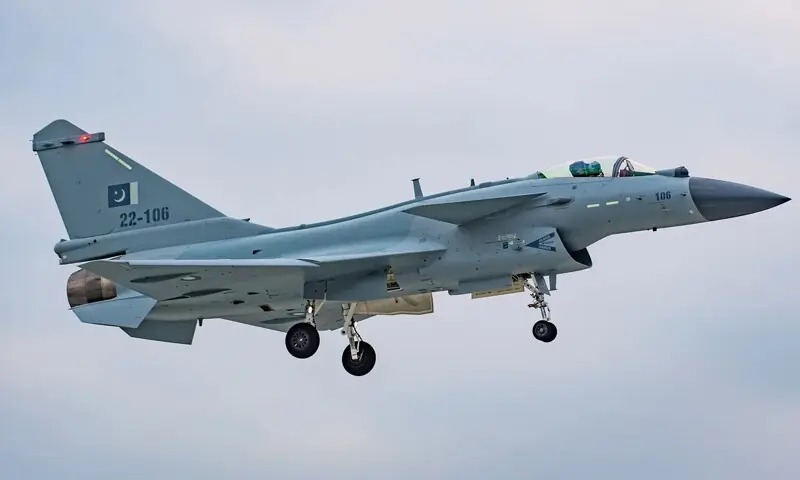 Pakistan immediately said that it had shot down 6 Indian fighter jets, including a French-made Rafale, during the Marka-e-Haq clash. New Delhi admitted ‘some losses’ but denied that 6 aircraft were shot down. Later, Donald Trump also mentioned the incident and said that he had persuaded the two countries to sit face to face and make peace during this clash after ‘7 aircraft were shot down’. On September 7, 2025, Prime Minister Muhammad Shehbaz Sharif, in his message on ‘Air Force Day’, said that the Pakistan Air Force, together with the armed forces, played a decisive role against India in ‘Marka-e-Haq’ and the way it defeated the enemy on every front, surprised the whole world. Air Force Day is celebrated in Pakistan every year on September 7 due to the important role of the Pakistan Air Force in the victory achieved in the 1965 Pakistan-India War. This year, the day is even more important because the Pakistan Air Force shot down six Indian aircraft in the four-day war with India in May, which has also been acknowledged by New Delhi authorities. Addressing a ceremony on the occasion of Defense Day, Pakistan Air Force Air Vice Marshal Shahryar Ahmed Khan had sent a message to India that the next time the score of aircraft shot down would be 60-0 instead of 6-0. In his message on Air Force Day, the Prime Minister praised the role of the Pakistan Air Force in the recent war with India and said, “Of course, this brilliant performance of the Pakistan Air Force is a manifestation of courageous leadership, the skills of the brave sons, superior strategy and effective use of multi-faceted combat capabilities.” “I am especially proud that the Pakistan Air Force, while keeping its glorious historical tradition alive, defeated an enemy many times larger than itself. Our heroes bravely proved that no matter how powerful and well-equipped the enemy is, he can never defeat passion and courage. The Prime Minister had said, “Today’s Pakistan Air Force is a great tribute to those brave sons who made the history of the Air Force by sacrificing their lives. I am confident that the Pakistan Air Force will continue to defend the country’s sovereignty, geographical borders and integrity as always.” He had added, “Today we remember the bravery and sacrifices of the heroes of the Pakistan Air Force, especially those who defended the homeland during the 1965 Pakistan-India War. This day is in the name of the martyrs of the Pakistan Air Force, who made history with courage, professionalism and the spirit of sacrifice.” In various reports related to the 1965 war, both Pakistan and India had claimed victory over each other. In the three-week-long battle, Pakistan claimed to have shot down 31 Indian aircraft, while India claimed to have shot down 43 Pakistani aircraft. The casualty figures for Pakistan were not officially released, but India claimed the death of 1,100 of its soldiers and civilians. Highlighting Air Force Day, the Prime Minister said that the purpose of celebrating this day is to remind the coming generations of the determination, courage and bravery with which our Air Force defended Pakistan.The construction of the national monument ‘Marka-e-Haq’ has been started in Sector H-8, Islamabad, in memory of the glorious victory against Indian aggression. The monument is being built in an existing park which will be transformed into a modern and attractive public space. The theme of the monument Marka-e-Haq is taken from the verse of the Holy Quran ‘Bunyan al-Marsoos’, which means ‘a wall of lead’. This theme symbolizes the collective unwavering resolve and unity of the nation, which highlights the spirit of remaining united in the face of all kinds of threats. The Frontier Works Organization (FWO) has been entrusted with the responsibility of designing and constructing the national monument Marka-e-Haq, while the Capital Development Authority (CDA) has handed over the land allotted for the monument to FWO. Work on the project has started with the special instructions of Prime Minister Shahbaz Sharif and government financial assistance. The Prime Minister unveiled the Marka-e-Haq design on the night of August 14, after which the implementation of the project is progressing rapidly. World-class materials and high international construction standards are being taken into account in the construction of the monument. The aim of the monument is to pay tribute to national unity and solidarity and to create a center of public awareness, pride and reflection. The ‘Marka-e-Haq’ monument will represent the pride and collective sacrifices of the country and will become a prestigious national addition and a manifestation of the unity of the nation in the landscape of Islamabad. The State Bank of Pakistan (SBP) has issued a commemorative coin of Rs. 75 in memory of the Battle of Haq. The central bank said in a statement that on the instructions of the federal government, the State Bank of Pakistan has issued a commemorative coin of Rs 75 to pay tribute to the courage and bravery of the armed forces in Marka-e-Haq and to celebrate Independence Day in a dignified manner. The metal composition of the coin contains nickel and brass, which contains 79 percent copper, 20 percent zinc and one percent nickel. The diameter of the commemorative coin is 30 mm and weighs 13.5 grams. On the obverse side of the coin, an extended crescent and a 5-pointed rising star are visible, facing northwest. The words ‘Islamic Republic of Pakistan’ are engraved in Urdu along the edge above the crescent and star.
Below the crescent and above the two upward-turning wheat ears, the year of issue is 2025, on the right and left sides of the crescent, respectively, the numbers 75 in bold and the word rupee in Urdu are inscribed. The reverse of the coin has the inscription Marka-e-Haq in Urdu in the center and the numerals 2025 below. The inscription ‘Pakistan is long live’ in Urdu is along the top edge of the coin. The coin features two fighter jets, a ship and a multi-rocket launcher system on the right and left sides. The commemorative coin is available from August 15 at the exchange counters of all field offices of the State Bank of Pakistan Banking Services Corporation. It may be recalled that on October 18, 2025, Prime Minister Shehbaz Sharif said that Pakistan has created history of economic stability and diplomatic achievements. Pakistan achieved a historic victory in Marka-e-Haq against India, giving India a defeat that it will remember till the end of time. The soldiers and officers of the Pakistan Air Force, Navy and Army created history. Field Marshal Syed Asim Munir led from the front. The Chief of the Pakistan Air Force hoisted the flags of success that India has not been able to come out of defeat even today. When we assumed power, there were very difficult challenges of the economic crisis. We had to take an IMF program and thank God, Pakistan was pulled out of default. Today, our economic indicators are very good, we are moving towards economic stability. Allah has also given us successes on the diplomatic front that are unparalleled in history. We signed a defense agreement with Saudi Arabia. Saudi Arabia has helped the people of Pakistan. He showered flowers of love. He said that I addressed the United Nations General Assembly and met with world leaders, and also met with US President Donald Trump in Washington and discussed the situation in Gaza. We all told the US President that stopping this war would be a great service, to which the US President promised that he was working for a ceasefire and today, thank God, the war has stopped. The Prime Minister said that even a minute before the ceasefire, boys and girls were being martyred. This is a great service, the reward of which will be given to all those who played a role in the ceasefire and Pakistan also contributed to it. Of course, this credit goes to US President Donald Trump, who led this process and signed a ceasefire agreement in our presence. Shahbaz Sharif said that leaders from all over the world were present there, but Allah Almighty has given Pakistan special honor and if any world leader spoke outside the program, it was Allah Almighty who gave Pakistan an opportunity and this is the result of hard work and sincerity. If there is Pakistan, then we are all of us. If there is respect for Pakistan, then we are all of us. Therefore, we have to forget all differences and change the destiny of Pakistan and fulfill the dreams of Quaid-e-Azam and Dr. Allama Iqbal.On May 12, 2025, Pakistan announced the completion of Operation Banyan Marsus and named the war with India from April 22 to May 10 as ‘Marka-e-Haq’.
The ISPR said that the Marka-e-Haq operations of May 10 were part of Operation Banyan Marsus. The details of ‘Marka Haq’ from April 22 to May 10, 2025 have also been released by the Pakistan Army.
Operation Banyan Marsus was carried out in response to the cowardly attacks by the Indian Army under the military conflict ‘Marka-e-Haq’. The attacks by India began on the night of May 6 and 7, 2025. The attacks resulted in the loss of lives of innocent civilians, women, children and the elderly. Pakistan had vowed to take justice and revenge against the Indian military aggression and the merciless killing of our citizens. Alhamdulillah, the armed forces of Pakistan have fulfilled the promise made to their people. The armed forces are grateful for the countless blessings, mercy, help and support of Allah Almighty.
The ISPR statement said that Allah Almighty has commanded the believers to resist when they are oppressed. The statement said that we prostrate ourselves before Allah with utmost humility. Allah has granted us the ability to transform our resolve into decisive actions on the battlefield.
It was said that the Pakistani armed forces successfully targeted 26 Indian military targets, Brahmos missile depots and S-400 systems were effectively destroyed, the enemy raised white flags and requested a ceasefire. Pakistan’s response was an exemplary example of coordinated cooperation between the three armed forces. This coordination in the air, land, sea and cyber domains led to the success of the operation, highly accurate targeting, high destructive power, lightning-fast action, all platforms worked in coordination and cooperation. According to the ISPR, the Pakistan Army used the long-range precision-guided Fateh series missiles, one and two, the Pakistan Air Force’s precision-guided weapons, and long-range ‘loitering killer munitions’ and cannons. 26 military targets were targeted in occupied Jammu and Kashmir and the interior of India. The institutions responsible for promoting terrorism in Pakistan were also targeted. The targets targeted included Air Force and Aviation bases in Suratgarh, Sirsa, Bhuj, Nalia, Adampur, Bathinda, Barnala, Halwara, Awantipora, Srinagar, Jammu, Udhampur, Mamoon, Ambala and Pathankot which were severely damaged. Brahmos missile depots in Beas and Nagrota were also destroyed, from which missiles were fired at Pakistan. S-400 battery systems in Adampur and Bhuj were also effectively disabled by the Pakistan Air Force, a field supply depot in Uri and a radar station in Poonch were targeted, which were instrumental in illegal operations against Pakistani citizens.
According to the ISPR, 10 Brigade and 80 Brigade headquarters in G-Top and Nowshera were also completely destroyed, the military command headquarters were instrumental in planning the massacre of our innocent citizens and children. The statement said that facilities providing shelter and training to proxies carrying out terrorist attacks inside Pakistan were also destroyed, including intelligence units and their frontline field elements in Rajouri and Nowshera. India used drones to violate Pakistani airspace, this was done to intimidate and spread fear among our citizens. During Operation Banyan Marsus, dozens of Pakistani armed drones continued to fly over major cities of India, Pakistani armed drones continued to fly over sensitive political and government facilities in India. Drones continued to fly from the Indian capital New Delhi and occupied Jammu and Kashmir to Gujarat, demonstrating the destructive long-range unmanned capability of drones. Pakistan’s armed forces also conducted comprehensive and effective cyber operations, crippling and weakening the critical infrastructure for the Indian army to continue its operations. Pakistan’s armed forces have modern, specialized military technologies, and in this conflict, they used a limited number and type of technologies with caution. Pakistan’s military response to the continuous provocations of the Indian army was proportionate and cautious, the operation was carefully planned to avoid civilian casualties. The ISPR said that only those institutions and facilities that were directly involved in attacks on Pakistani citizens were targeted, and those places where terrorist attacks were being carried out inside Pakistan were targeted. While the Pakistani armed forces were busy with operations on the eastern front, there was an unprecedented increase in terrorism under Indian patronage in Khyber Pakhtunkhwa and Balochistan. India is directly involved in fueling terrorism in Pakistan, India has fully activated proxy elements during this time to divert our attention, the armed forces should also continue effective operations against terrorism on the western front without interruption.According to the ISPR, ‘Marka-e-Haq’ was a perfect example of exemplary harmony among all elements of national power. ‘Marka-e-Haq’ included the full support of the Pakistani people. The armed forces salute the courage, steadfastness and spirit of the nation during this conflict. The armed forces are deeply grateful to their nation. The strength, determination and above all, the selfless support and prayers of the brave nation were with us in these difficult circumstances. The support of the nation proved to be the most effective strength-building factor for the armed forces of Pakistan. The ISPR said that whenever Pakistan’s sovereignty is threatened or territorial integrity is violated, Pakistan’s response will be decisive. The ISPR said that our hearts and sympathies are with the relatives and families of the martyrs who sacrificed their lives for the motherland. We pray for the speedy recovery of our injured compatriots.
The ISPR statement said that we pay tribute to every officer, soldier, air force and naval personnel of the Pakistan Armed Forces, the courage, professionalism and sacrifice of the armed forces made the victory on the battlefield possible.
The ISPR statement said that we are especially grateful to the youth of Pakistan, the youth played the role of frontline soldiers on the country’s cyber and information front.
The ISPR said that we are also grateful to the vibrant and dignified media of Pakistan, the Pakistani media was building an iron wall (Banyan al-Marsoos) against the false campaign and irresponsible war madness of the Indian media.
The ISPR said that we also thank our diplomatic staff, the diplomatic staff effectively represented Pakistan’s position at international forums.
The ISPR also thanked our scientists and engineers who developed indigenous, specialized technologies. According to the ISPR, these technologies play a significant role in the brilliant success of Operation ‘Banyan Marsus’.
The ISPR said that the armed forces are extremely grateful to their political leaders who demonstrated their commitment to unity in the defense of the motherland. The armed forces are especially grateful to the Prime Minister and his cabinet members for their guidance, who took fate-changing decisions for the country. The Prime Minister and the cabinet played a leading role in getting us out of this critical situation.