
ISLAMABAD (TNS) In the light of Islamic teachings, International Human Rights Day actually reflects the fundamental principles of Islam, where human dignity, equality, justice and fairness and fundamental rights have been guaranteed, which have been present in the Quran and Sunnah for 1400 years,
Such as the right to life, dignity, freedom and equality rights, such as the universal rights declared by the Prophet (peace be upon him) on the occasion of the conquest of Mecca, which are the basis of today’s human rights charter, which also includes the rights of non-Muslims and Islam provides complete protection to everyone. Human rights are given great importance in Islam and there are clear orders about them in the Quran and Hadith. Human rights in Islam are based on the oneness of Allah and the dignity and respect of man.
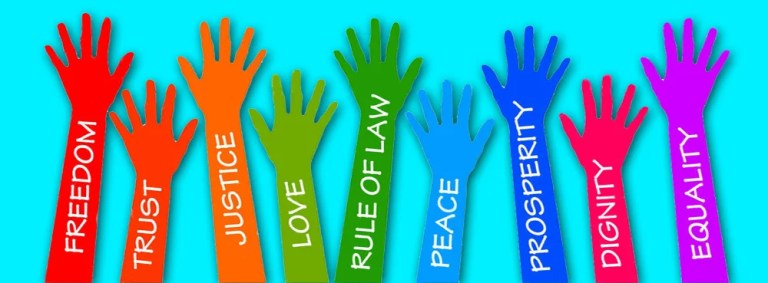 Allah has endowed man with His soul and chosen him for His caliphate. Man has the right to life and no one can kill him unjustly. Man has the right to freedom and no one can enslave him. Man has the right to honor and no one can dishonor him. Man has the right to wealth and no one can take it unjustly. Man has the right to education and no one can deprive him of it. The Quran states that Allah has endowed man with His soul and chosen him for His caliphate (Surah Al-Hujurat, verse 13).
Some important human rights in Islam are:
The right to life: Man has the right to life and no one can kill him unjustly (Surah Al-Ma’idah, verse 32).
The right to freedom: Man has the right to freedom and no one can enslave him (Surah Al-Baqarah, verse 256).
The right to dignity: Man has the right to dignity and no one can dishonor him (Surah Al-Hujurat, verses 11-12).
The right to property: Man has the right to property and no one can take it away unjustly (Surah Al-Baqarah, verse 188).
The right to education: Man has the right to education and no one can deprive him of it (Surah Al-Zumar, verse 9).
.
There are many commands in Islam to protect human rights. By following these commands, we can create a better society where the rights of every human being are respected.
Guarantee of fundamental rights: Islam has given man the status of Ashraf Al-Makhluqat and ensured the protection of his rights. These rights are not only for Muslims but for all humanity.
Justice and fairness: The Holy Quran repeatedly commands to establish justice, “O you who believe! Stand firm for Allah and bear witness to justice.” (Surah Al-Ma’idah: 8)
Right to Life: In Islam, killing a person unjustly is equivalent to killing all of humanity, “Whoever kills a person (unless it is for murder or corruption in the land), it is as if he has killed all of humanity, and whoever saves a person, it is as if he has saved all of humanity.” (Surah Al-Ma’idah: 32)
Equality and Brotherhood: In the Farewell Sermon, the Prophet (peace and blessings of Allaah be upon him) abolished any superiority based on race or colour and declared everyone equal, “There is no superiority of an Arab over a non-Arab, nor a non-Arab over an Arab, nor a white over a black, nor a black over a white.”
Abolition of Slavery (Partial): Islam emphasized the rights of slaves and promised a great reward for freeing them, which was a step towards the gradual abolition of slavery.
Women’s Rights: Islam gave women rights in inheritance, education, and social life.
Rights of Non-Muslims: Islam fully guaranteed the protection of the life, property and honour of non-Muslims (dhimmis) in the Islamic state.
When the United Nations Charter on Human Rights (1948) came into being, many of its principles (such as freedom, the right to life, equality) were already present in Islam. Islamic teachings are the basis for these universal rights, and the purpose of celebrating International Human Rights Day is to highlight the Islamic teaching that these rights are bestowed by Allah and that it is the duty of every Muslim to protect them. International Human Rights Day is an important theme in the light of Islamic teachings.
The United Nations Charter on Human Rights, commonly known as the Universal Declaration of Human Rights (UDHR), was adopted by the United Nations General Assembly on 10 December 1948. This declaration is a comprehensive and universal human rights document that proclaims fundamental rights and freedoms for all human beings.
The Declaration contains 30 articles that cover various human rights, including the rights to life, liberty, equality, and dignity. The Declaration calls on all countries to respect and protect these rights.Article 1: All human beings are born free and equal.
Article 3: Everyone has the right to life, liberty and security of person.
Article 5: No one shall be subjected to torture or to cruel, inhuman or degrading treatment.
Article 18: Everyone has the right to freedom of thought and religion.
Article 25: Everyone has the right to an adequate standard of living and to health.
This declaration is an important milestone in the history of human rights and is still respected today. The Constitution of Pakistan provides a strong framework for human rights. The 1973 Constitution of Pakistan guarantees the fundamental human rights of its citizens, including equality before the law, freedom of expression, assembly, and religion. Articles 8 to 28 of the Constitution provide that the rights are enforceable by the judiciary and the state has the responsibility to protect them. The Constitution of Pakistan has taken special care of human rights. Chapter II of the Constitution mentions fundamental rights, which include equality, protection of life and property, freedom of expression, and protection from violence.
Articles 8 to 28 of the Constitution guarantee fundamental rights, which include equality before the law, protection of life and property, freedom of expression, and protection from violence.
Fundamental rights in the Constitution of Pakistan;
Fundamental Guarantees: Part III of the Constitution contains Articles 8 to 28 of the Fundamental Rights which are applicable to all citizens irrespective of race, place of birth, caste, creed or sex.
Access to Court: Violation of these rights can be approached to the court.
Equality before the law: Same law for all.
Right to Protection: Protection of life, property and honour.
Liberty: Freedom of expression, assembly and practice of religion.
Role of Laws;
Responsibility of the State: The Constitution places the burden of protecting the rights of citizens on the State.
Consistency with the UN Charter: Human rights have been included in the Constitution of Pakistan taking into account Islamic law and the UN Charter.
The Supreme Court has given judgments in many cases in the light of the constitutional provisions on human rights, especially when there is no scope in other laws. The Constitution of Pakistan provides judicial mechanisms for the enforcement of human rights to citizens. Article (3) 184 empowers the Supreme Court to enforce public rights in matters of public interest. Article 199 of the Constitution empowers the High Courts to challenge the decisions of public servants for the enforcement of fundamental rights. The application of Section 491 of the Code of Criminal Procedure, 1898, provides that a person within the appellate criminal jurisdiction of the court must be brought before the court for the purpose of dealing with him in accordance with law. Then, a better mechanism is available under Section 220 of the Pakistan Penal Code with several legal safeguards. Structurally, judicial enforcement of human rights has been going on for a long time all over the world. Therefore, the fundamental role of judicial enforcement cannot be denied. Judicial reforms will help the judicial role in making the enforcement of human rights effective in both the civil and criminal systems. Improvement in judicial practice and procedure will clearly improve the enforcement of human rights in Pakistan. However, the role of the executive is of utmost importance for the implementation of human rights. The administrative mechanism is capable, efficient and unwaveringly linked to the foundation of implementation and administrative transparency and efficiency will be the best beacon for the implementation of human rights. The Constitution of Pakistan guarantees strong constitutional and legislative support for the implementation of human rights, but due to administrative obstacles, the implementation of human rights is not efficient. The Eighteenth Amendment has transferred the authority of human rights to the provinces. Therefore, the provinces are in dire need of strong and active human rights departments. Along with this, there is an urgent need to make the provincial departments an active and basic human rights service for the implementation of human rights up to the tehsil and district levels. Until the provincial human rights departments are efficient and active, the human rights situation will not improve. We should be aware of the basic human rights in the society. Unless we know what human rights are, we cannot protect them in any way. Whatever the society, human values are determined according to its society. Laws are also made to ensure the protection of these rights. Fundamental human rights are the rights that we have because we exist in the world as human beings. They are not given by any state or government, but they are universal and transcend nationality, gender, religion, color, race, language or any other status. The fundamental rights that a person has from birth to death. Every person is entitled to these rights. No matter what country, city or nation he belongs to. Human rights are very essential components of social rights, without which no human being can utilize his abilities. Fundamental human rights are essential components for the establishment of a balanced life and the fulfillment of man. No one has the right to hinder anyone from reaching fundamental human rights. When it comes to the theory of formal human rights, there is disagreement in many places about it. Formally, fundamental human rights began in Greece. Later, fundamental human rights were also included and ratified in the United Nations Charter.Islamic teachings also have detailed orders regarding the fulfillment of human rights. When a person comes into the world, a society is formed where he lives with his needs, rights and responsibilities.
No written manifesto is needed to prove evolutionary human rights, but human traditions, customs and culture state that man has had all the basic rights since his early history.
It is also true that in the past, these rights have often been violated in one way or another. For example, the famous philosopher Jane Jackson Romo says that man is born free, but today he is seen in chains everywhere. Samuel Moten says that the concept of human rights is linked to the modern sense of citizenship.
There are many examples related to this before the modern era. However, ancient people did not have any concept of universal human rights like the modern era.
Islam gives great importance to the rights of the people, in which a comprehensive system has been introduced regarding the implementation of the rights of the people, which is called the Covenant of Medina. Where the rights of Muslims and non-Muslims are clarified. The protection of the basic rights of relatives, neighbors, orphans, widows, and even prisoners of war is among the top priorities of Islam. The sermon of the Prophet ﷺ also contains detailed instructions and rulings on the rights of the people.
Islam emphasizes the rights of the people so much that it has been declared the first rights of the people to fulfill the rights of Allah. Talking about the modern era, the United Nations General Assembly adopted the Declaration of Human Rights in 1948 and said that recognizing the dignity, freedom and equality of every human being is the basis of justice and peace. This was the first written declaration that was implemented throughout the world.
The declaration includes the survival of life, freedom, equality, the same law for all, human dignity, education and freedom of expression. Torturing, oppressing, inhumane treatment, arbitrary imprisonment and exile are strictly prohibited, while the declaration also entrusts the state with the responsibility of protecting human rights.
The National Assembly of Pakistan in 1973, keeping in mind Islamic laws and the United Nations Charter, formulated fundamental human rights and implemented them throughout Pakistan.
Articles 8 to 28 of the Constitution of Pakistan deal with human rights. Article 8 states that no law shall be made that is contrary to human rights. The state shall be responsible for the protection of the life and property of every citizen. Article 9 guarantees that no person shall be deprived of his right to life or liberty. Article 10 states that even if a person is accused, he shall be given necessary protection. Article 11 prohibits all forms of forced labor. Prohibits the sale and purchase of human beings. Prohibits employment or labor of persons below the age of 14. Article 14 guarantees the sanctity of the home and privacy. Article 16 gives every citizen the right to move about the country and to settle in any part of the country. Article 18 allows legitimate trade and business. Under Article 24, no one is allowed to be evicted or deprived of his property. Article 25 says that all are equal before the law. Article 27 provides protection against discrimination in employment, while Article 28 allows every citizen to live according to his customs, language and culture. No one can interfere with this. The rights assigned in these articles belong to all of us. If there is a violation of these articles, if human rights are being affected, then the affected person can approach the local court. Human rights are called civil matters in the language of law, therefore, violation of human rights does not come under the category of criminal acts.
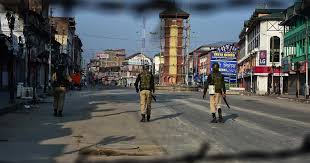
The dignity and respect of any human being is very important for the survival of society. It is very important to include articles on human rights in our curriculum so that all these articles are taught at the high school, college and university levels, which will show what the human rights of any citizen are and if these ‘rights’ are being violated, what can be done to achieve justice. Pakistan has also signed international agreements, such as the International Covenant on Civil and Political Rights, which guarantees the protection of human rights. History has proven that the oldest disputes in the United Nations are those of Kashmir and Palestine, and both are pending resolution. The United Nations has also recognized the right of Kashmiris to self-determination. Pakistan will continue to play its role in accordance with the UN Charter and international law and is committed to upholding the principles. The main reason for the threats to the system of justice and peace around the world is that many global conflicts have been unresolved for decades and there is an urgent need to implement the resolutions of the Security Council. Pakistan desires peace not only in its region but also in the world. However, Pakistan’s unilateral efforts are not enough for peace in the region. All parties must come to meaningful negotiations. Pakistan has demanded an immediate ceasefire in Gaza and a resolution of the Kashmir issue in accordance with UN resolutions. Finding an immediate and just solution to long-standing conflicts like Palestine and occupied Kashmir is indispensable for world peace. Human rights violations are ongoing in Kashmir and India is committing the most human rights violations in the world. The international community should play its role against the ongoing atrocities in Kashmir.The United Nations has not given importance to the rights of Muslim countries compared to the West. The international community and the United Nations are involved in human rights violations. The United Nations has completely failed to protect human rights, the United Nations itself is involved in human rights violations. The Charter of the United Nations was created after the Second World War, when the world saw a scene of destruction and devastation. The purpose of this charter is to prevent future wars and maintain international peace and security. The purpose of the charter is to maintain international peace and security, recognize the sovereignty and right of countries to development, take measures to prevent war and resolve international disputes, and emphasize the protection of human rights and fundamental freedoms. It should be remembered that the United Nations has completely failed to resolve the issues of Kashmir and Gaza, human rights violations are still ongoing. The Charter of the United Nations is a historic document that is a ray of new hope for international cooperation and peace and security. After the Second World War, representatives of about 50 countries gathered in the American city of San Francisco to establish an institution that could permanently protect the world from such a devastating level of war and help achieve peace, diplomacy, equality and prosperity.
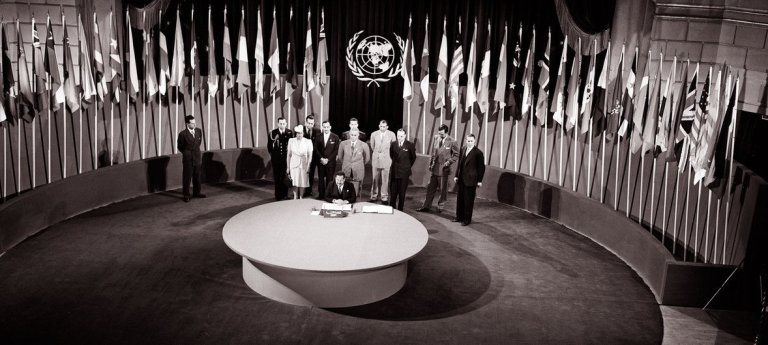
The Charter of the United Nations is an international agreement that was adopted on June 26, 1945, at a conference held in San Francisco under the chairmanship of US President Harry Truman. The Charter entered into force on October 24, 1945 and lays the foundation for the purposes, principles and institutions of the United Nations.
The Charter of the United Nations is the story of the journey from war to peace. This Charter was created after the Second World War, when the world saw a scene of destruction and devastation. The purpose of this Charter is to prevent future wars and maintain international peace and security.
The Charter was signed on June 26, 1945. However, its implementation came into effect on October 24, 1945, after ratification by the legislative bodies of the signatory countries. It is an international agreement and a legal document that all member states are responsible for implementing. It should be noted that the historic document of the United Nations Charter, which was signed in California, USA in 1945, returned to the organization’s headquarters in New York on June 24, 2025. At a multimedia exhibition titled ‘Reviving the Spirit of San Francisco’ held at the headquarters, Secretary-General Antonio Guterres welcomed the return of the Charter, which is actually a promise of the nations of the world to live in peace and to treat each other with dignity and cooperation. On this occasion, the Secretary-General said that the Charter, adopted almost 80 years ago, was the beginning of the United Nations, which contains concepts and principles that the world works to implement every day. The United Nations is a living miracle of the modern age and its men and women embody this miracle every day and everywhere. This exhibition was an opportunity for people to see photos, videos and documents related to the establishment of the United Nations through which this international organization came into being. It should be remembered that the United Nations has completely failed to resolve the issues of Kashmir and Gaza, human rights violations are still ongoing. Both conflicts began in 1947. In 1948, the United Nations had promised to grant the people of both Palestine and Kashmir the right to self-determination and the truth is that the United Nations has completely failed to resolve any problem of Muslims till date. European nations stand with the United Nations in resolving all the problems of the dominant nations of the world, but neither the United Nations nor the international community supports them in any problem of the Muslim world. If the Palestinians could not restore their state, then the Kashmiris could not get the opportunity to decide their future through a referendum held under the auspices of the United Nations. Due to the failure of the United Nations to implement its resolutions on Palestine and Kashmir, both the West and South Asian regions have been destabilized in the form of military conflicts. Millions of men, women, youth and children have lost their precious lives, millions have been injured and displaced. While the damage to civilian infrastructure and people’s lives is difficult to calculate. It is a fact that the failure of the United Nations and the international community to grant the people of Palestine and Kashmir the right to self-determination is bringing death and destruction to both regions. Scenes of this destruction are spread all over. If the people of Palestine and Kashmir resist armed resistance against the illegal occupation of their respective regions, this right is given to them by the United Nations Charter. They have also been given the right by international law to struggle against foreign imperialism. Despite this, the people of these two regions are not only being massacred but their settlements are being razed to the ground.India got its freedom due to the end of colonialism, but who knew that this same India would later take the form of colonialism in Kashmir. India played this colonial role for a quarter of a century. What was done to the minorities in this country. During this period, India itself became ‘Israel’ with the support of Israel. Just as Jews all over the world have got a single state, Hindus have also got a single state. Both became colonial countries and crossed every limit to save their respective outdated religions. The world knows that the alliance between India and Israel is a reality, both are especially advancing joint economic and military policies and tactics.