

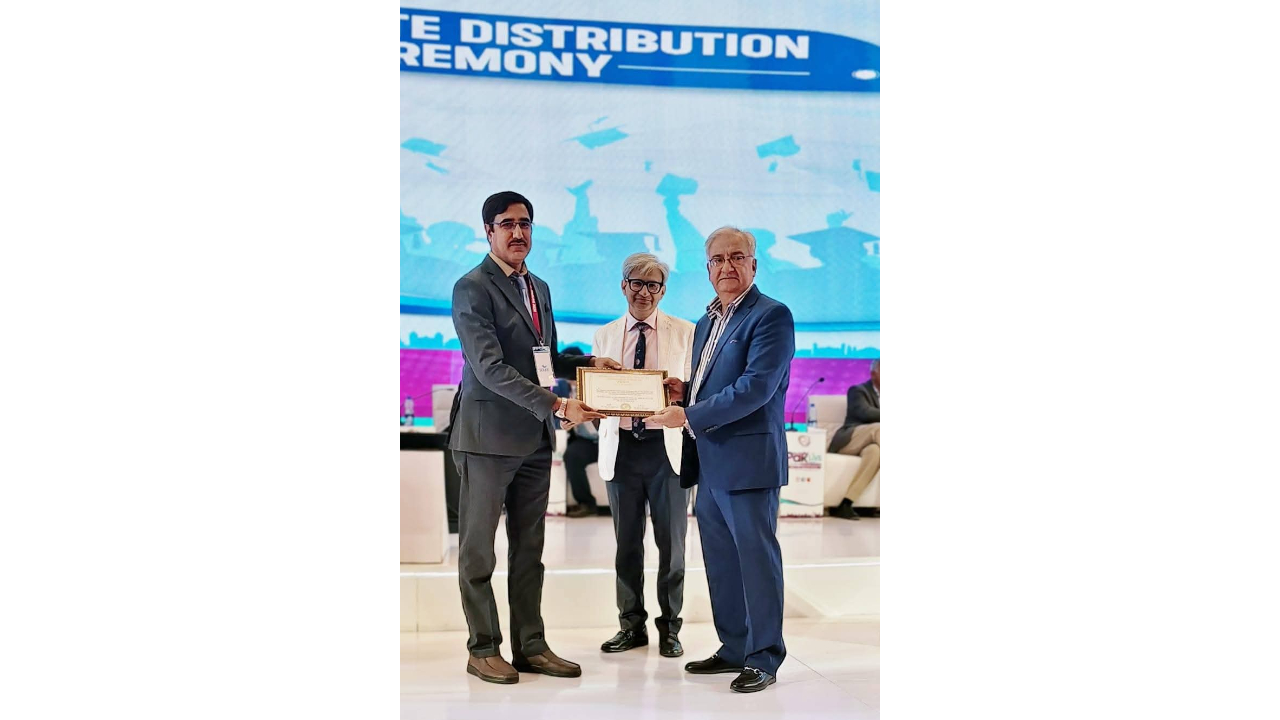
ISLAMABAD (TNS) In an age where medicine is increasingly defined by technology, protocols, and performance metrics, there remain individuals who remind us that healing is not merely a clinical act but a profoundly human responsibility. Dr. Shoaib Abid stands among those rare physicians whose identity extends beyond qualifications and titles. He represents a blend of expertise, empathy, and intellectual curiosity that continues to elevate the standards of cardiology in Pakistan.
His recent recognition by the Pakistan Society of Interventional Cardiology (PSIC), through the conferment of FPSIC status, is not simply an institutional honor. It is, more importantly, a professional acknowledgment of sustained excellence in a field where precision can determine the difference between life and death. Interventional cardiology is unforgiving in its demands; it requires not only technical mastery but also calm judgment under pressure. Dr. Abid’s work reflects both.
Yet, what distinguishes him most is not what he has achieved, but how he has chosen to practice medicine.
In clinical environments often dominated by speed and volume, Dr. Shoaib Abid is known for a patient-centered approach that resists the mechanical nature of modern healthcare. For him, a diagnosis is never just a label attached to a chart—it is a story that demands attention, context, and respect. This philosophy places him in a category of physicians who view healing as a partnership rather than a transaction.
Colleagues describe him as a clinician who combines technical rigor with emotional intelligence. In teaching hospitals and professional gatherings, he is equally recognized as a mentor who invests time in guiding younger doctors. In an era where medical training is often rushed and hierarchical barriers remain strong, his approach to mentorship reflects a quieter, more sustainable model—one rooted in encouragement rather than authority.
His engagement in academic conferences and professional forums further reflects a commitment to continuous learning. Medicine, particularly cardiology, evolves rapidly. New devices, updated protocols, and emerging evidence continually reshape the field. Dr. Abid’s consistent participation in these platforms demonstrates an understanding that clinical excellence is not a fixed achievement but an ongoing responsibility.
It is also notable that his professional associations include leading figures in the medical community, reflecting a network built not on visibility alone but on mutual respect and shared intellectual pursuit. Such relationships, especially in specialized fields like cardiology, are essential for the exchange of knowledge and the advancement of patient care standards.
However, what truly defines Dr. Shoaib Abid’s professional identity is his philosophy of care. He appears to operate with a conviction that modern medicine must not lose its moral center. Technology may enhance diagnostic accuracy and procedural success, but it cannot replace the trust between doctor and patient. That trust, fragile and invaluable, is built through empathy, clarity, and consistent ethical practice.
In this regard, he represents a broader need within healthcare systems—particularly in developing contexts—where the pressure of patient load often risks reducing care to efficiency alone. His practice serves as a reminder that efficiency without empathy is incomplete medicine.
Beyond the hospital setting, his vision extends toward public health awareness. Cardiovascular disease remains one of the leading causes of mortality globally, and in countries like Pakistan, the burden is compounded by limited preventive awareness. Physicians like Dr. Abid, who engage with both treatment and education, play an important role in bridging this gap. His emphasis on awareness reflects a recognition that prevention is as critical as intervention.
The symbolism of the white coat, often discussed in medical ethics, finds relevance in his professional journey. For many, it is a uniform of authority. For a few, it becomes a responsibility of service. Dr. Shoaib Abid appears firmly aligned with the latter interpretation—where the coat represents accountability, humility, and an obligation to serve without distinction.
In contemporary healthcare narratives, where headlines often focus on institutional failures or systemic pressures, stories of individual dedication risk being overlooked. Yet it is precisely these individuals who sustain the moral fabric of medicine. They remind us that despite systemic challenges, excellence is still possible when guided by purpose rather than position.
Dr. Abid’s career is not presented here as an exception to a flawed system, but rather as evidence of what the system can produce when talent is nurtured and professionalism is taken seriously. His journey illustrates that medical excellence is not confined to geography or resources alone—it is shaped by attitude, discipline, and ethical clarity.
In the broader landscape of cardiology, where innovation continues to redefine treatment possibilities, professionals like him ensure that human judgment remains central to clinical decision-making. Machines may assist, algorithms may guide, but it is still the physician who ultimately interprets, decides, and carries responsibility.
As healthcare continues to evolve, the challenge will not only be to advance scientifically but to preserve the human essence of medicine. In that ongoing balance between science and compassion, Dr. Shoaib Abid represents a steady point of reference.
His work does not seek attention, yet it earns respect. His practice does not rely on spectacle, yet it builds trust. And perhaps most importantly, his contribution to medicine is not measured only in procedures performed or titles awarded, but in the quiet reassurance experienced by those who come under his care.
In the end, medicine is remembered not only through its breakthroughs, but through its healers. Dr. Shoaib Abid stands as a reminder that even in a rapidly changing medical world, the most powerful instrument remains the human heart—both literally and metaphorically.