
ISLAMABAD (TNS) The federal government has completed preparations for the “people-friendly budget” for the financial year 2026-27, which will be presented in parliament on June 12, 2026.
After successful negotiations between Prime Minister Shehbaz Sharif and the leadership of the coalition party Pakistan Peoples Party, the budget document has been finalized to provide relief to the public and the salaried class due to inflation.
The most important features and relief measures of this people-friendly budget are as follows:
Relief for the salaried class and pensioners, big increase in salaries: Keeping in mind the economic difficulties of government employees, the proposal to increase their salaries and pensions by 10 to 15 percent has been made part of the budget.
Income Tax Relief: Despite IMF conditions, the government is reforming tax slabs to reduce the tax burden on the salaried class so that the low-income class can get immediate relief,
Welfare measures for agriculture and the poor;
Benazir Income Support Program: A major increase is being made in the budget of BISP for poor and deserving families to reduce the impact of inflation.
Package for farmers: Subsidies on fertilizers, quality seeds and solar tube wells and provision of soft loans are being ensured for the revival of the agricultural sector.
Energy and economic development targets Relief on solar panels: Efforts have been made to maintain tax incentives on local manufacturing and import of solar panels to relieve common consumers from heavy electricity bills.
Development budget: In order to create new employment opportunities in the country, it is proposed to increase the volume of the federal development program to Rs 1126 billion, which includes welfare projects of all provinces including Gilgit-Baltistan.
This budget has been prepared on the basic principles of economic stability, reduction in business costs and providing direct relief to the disadvantaged.
The people-friendly budget for the financial year 2026-27 will be presented in the National Assembly by Finance Minister Senator Muhammad Aurangzeb on June 12. According to an announcement issued by Advisor to the Finance Minister Khurram Shahzad, the federal budget will now be presented in the lower house of parliament on Friday, June 12, 2026. Before the budget is presented, the government will release the Pakistan Economic Survey 2025-26 on June 11.
Finance Minister Muhammad Aurangzeb will present the annual economic survey at a ceremony held at the P Block of the Pakistan Secretariat in Islamabad at 2:20 pm.
The economic survey provides a comprehensive overview of the country’s economic performance during the previous financial year and is considered an important policy document before the annual budget.
According to the latest announcement, the presentation of the federal budget has been further delayed. Earlier, the government had indicated that it would present the budget on June 10 after changing the initial schedule.
The expected budget is likely to present the government’s fiscal priorities, revenue-raising measures and expenditure plans for the fiscal year 2026-27, while also focusing on keeping the economy stable and maintaining growth.
The official Pakistan Economic Survey for the fiscal year has been released by the federal government, which covers the country’s overall economic performance and key targets. This documentary survey presents a detailed map of the growth, achievements and challenges of various sectors of the country’s economy ahead of the federal budget. The most prominent economic facts and figures of the current economic survey are as follows: Macroeconomic Performance GDP Growth: Due to the stability in the country’s economy and easing of monetary policy, the growth rate of the Gross National Product (GNP) has improved compared to previous years.
Inflation: The inflation rate in the country has gradually declined, which has provided a conducive environment for economic recovery and business activities.
Agriculture Sector Livestock: The livestock sector has performed brilliantly and recorded a growth rate of 3.8%. The total number of goats in the country has increased to about 91.8 million. Fisheries: A 1.7% increase has been seen in the fish farming and fisheries sector.
Thanks to the farmer-friendly packages of the Punjab government, the production of rice, sugarcane and maize has increased, industrial and other sectors have seen significant improvement due to the increase in demand for vehicles, transport equipment and cement in the industrial sector.
IT Exports: The information technology sector has achieved record export targets in the country’s history, which has supported the country’s foreign exchange reserves.
Remittances: Remittances sent by overseas Pakistanis have proven to be the biggest plus point for economic stability and keeping the current account deficit under control.
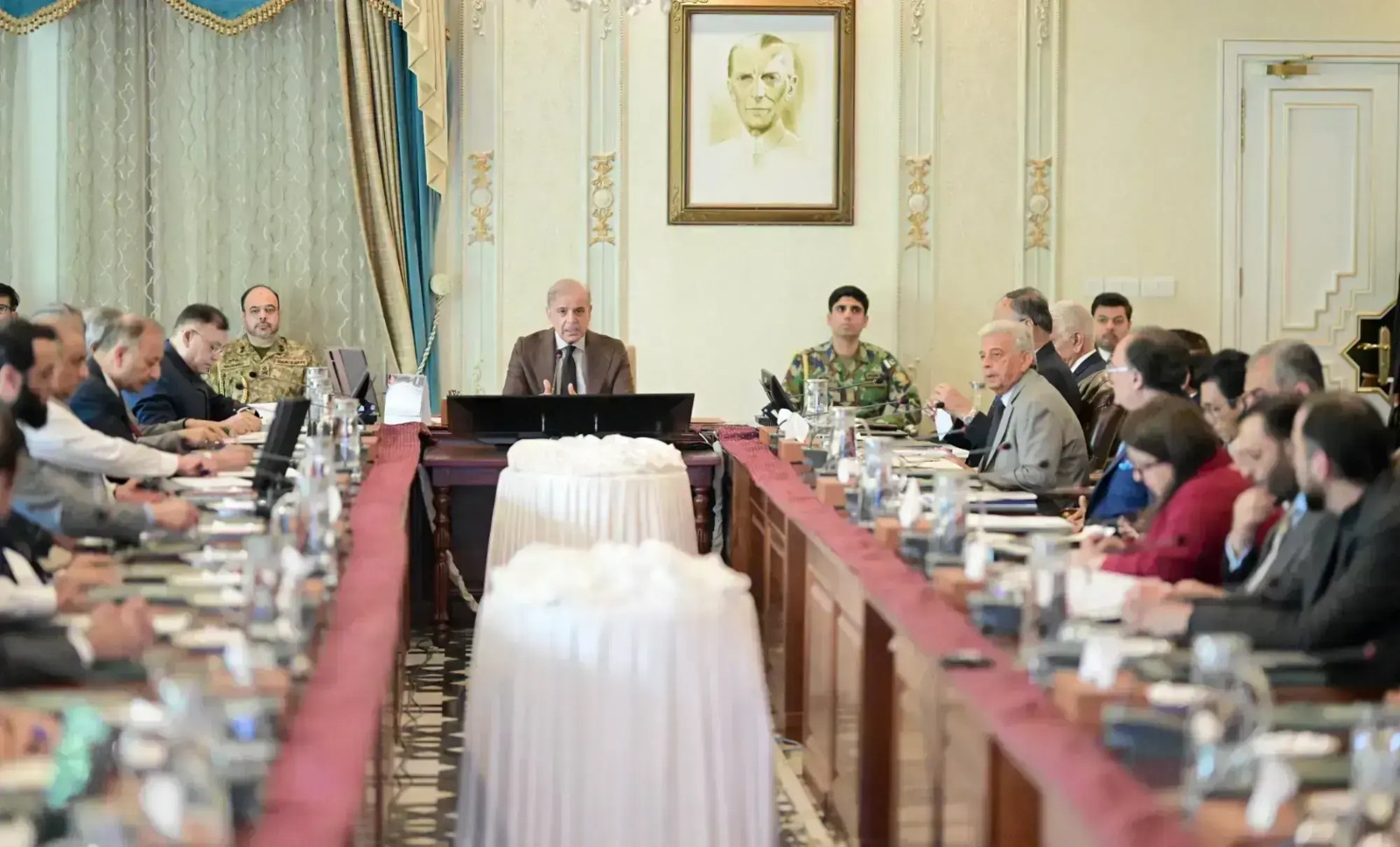
Based on this economic survey, the government has planned to limit the economic growth target to 4 percent and the inflation target to 8.4 percent in the budget for the next fiscal year.Prime Minister Shehbaz Sharif has said that Pakistan will have to introduce incentives to accelerate GDP growth and move beyond economic stability. This statement by Prime Minister Shehbaz Sharif reflects the government’s strategy to move the country’s economy towards sustainable and rapid economic growth rather than simply “pulling it out of crisis”. In the context of preparations for the budget for the fiscal year 2026-27, the Prime Minister has made it clear that Pakistan will have to introduce revolutionary economic incentives, moving away from traditional methods, to accelerate GDP growth and make economic stability permanent.
The most important proposals and incentives to be included in the budget and economic policy under this vision of the Prime Minister are as follows:
Proposed incentives to accelerate GDP: Waiver of customs duty on import of raw materials for major export sectors like textiles, sports, and leather and acceleration of the process of tax refunds are being approved. Information Technology (IT) and Digital Economy: Tax exemptions for startups, facilities for freelancers to raise money through banking channels, and special packages for tech zones are being introduced to increase IT exports.
Encouraging local manufacturing: It is proposed to provide long-term tax holidays to companies manufacturing mobiles, electric vehicles (EVs), and solar panels locally to reduce dependence on foreign imports. Steps to make economic stability permanent; Facilitation for investment: The Special Investment Facilitation Council (SIFC) has been directed to remove bureaucratic obstacles to foreign investment, especially from the Gulf countries, and to activate one-window operations. Widening the tax net: The Prime Minister has emphasized that instead of putting more burden on the already tax-paying class (such as the salaried class), a combination of incentives and strict rules should be used to bring non-filers, wholesalers, and retailers into the tax net. Relief in the energy sector: Proposals to reduce electricity tariffs for industrial consumers are under consideration so that Pakistani products can be competitive in the global market. The government aims to take the GDP growth target above 4 percent in the next fiscal year through these incentives and move the country towards economic independence while remaining under the International Monetary Fund (IMF) program. Prime Minister Shehbaz Sharif said that Pakistan will have to introduce incentives to accelerate GDP and move beyond economic stability. Addressing the National Economic Council meeting, the Prime Minister stressed the need for urgent and urgent measures to increase employment opportunities, local production and exports in the next phase. Pakistan has achieved macroeconomic stability, but now there is a need to promote the pace of growth, improve employment opportunities and production, increase exports and accelerate economic activities. The Prime Minister said that despite the ongoing geopolitical crisis, Pakistan has been successful in implementing the IMF conditions. The Prime Minister added that the federal government has been consulting with the provinces for the past several weeks regarding the upcoming budget. Without coordination and cooperation between the federation and the provinces, we could not have reached this point, now we have to move forward quickly. Our biggest challenge at this time is to strengthen our defense and eliminate terrorism, he expressed the hope that terrorism will be eliminated soon. He stressed that to achieve development and accelerate the country’s GDP, it is imperative to introduce such incentives that lead to increased exports, revival of manufacturing and transformation of the economy. Prime Minister Shehbaz Sharif also said that he had a detailed discussion with the Managing Director of the IMF, who highly appreciated Pakistan’s sincere efforts. The National Economic Council is Pakistan’s largest constitutional forum for economic planning and coordination between the federal and provincial governments. Earlier, the National Economic Council meeting, which was originally scheduled for May 22, was postponed and rescheduled for June 3, but it was postponed again and rescheduled for June 8, 2026. The volume of remittances sent by overseas Pakistanis during May 2026 was $4.251 billion. According to the State Bank, in terms of growth, remittances recorded a growth of 20.2 percent on a monthly basis and 15.4 percent on an annual basis. During the first eleven months of the current fiscal year (July-May), remittances increased by 9.2 percent to $38.1 billion, while the volume was recorded at $34.9 billion in the same period of the previous fiscal year. Topline Securities said in a note that the strong growth in remittances was mainly due to seasonal inflows related to Eid, as remittances usually increase during festivals. Topline Securities added that we expect the volume of remittances at the end of fiscal year 2026 to be marginally higher than our target of $41 billion. Remittances play a key role in supporting the country’s external accounts, boosting economic activity and increasing the income of households dependent on remittances from abroad. Meanwhile, the government is encouraging the use of legal channels along with providing incentives to ensure the continuous growth of remittances and their effective role in economic stability. Pakistanis living in Saudi Arabia sent the highest amount of money in May 2026, which was $1,025 million (1.025 billion). This amount is 12 percent more than the $914 million sent by expatriates in the same month last year, and this volume was recorded as 22 percent more than the $842 million sent in April 2026. Remittances from the United Arab Emirates increased by 33% year-on-year, from $754 million in May 2025 to $1,007 million (1.007 billion) in May 2026. Similarly, on a monthly basis, they also recorded a significant increase of 37%. Remittances from the United Kingdom stood at $645 million during May 2026, which is 15% higher than the $564 million in April.
Pakistanis living in the United States sent $350 million in May, which represents a 10% monthly increase compared to the $317 million sent during April. Remittances from the European Union stood at $466 million in May, which represents an 8% monthly increase compared to the $432 million in April.
The Pakistani rupee strengthened slightly against the US dollar in the interbank market. The local currency closed at Rs 278.36 at the close of business, up one paise against the dollar. On Tuesday, the local currency had closed at Rs 278.37. On the other hand, the US dollar remained firm against its major rivals as investors awaited key US inflation figures after the US attacks on Iran, for clues on the Federal Reserve’s policy. The dollar index, which tracks the greenback’s performance against a basket of currencies including the yen and the euro, rose 0.01 percent to 100.02. The euro fell 0.05 percent to $1.1537, while the British pound fell 0.04 percent to $1.337. Meanwhile, oil prices rose about 1 percent, having risen above a six-week low in the previous session. Brent crude futures rose 83 cents (0.9%) to $92.29 a barrel, while US West Texas Intermediate (WTI) crude rose 68 cents (0.8%) to $88.97 a barrel. On the supply side, market sources said US crude inventories fell for the eighth consecutive week, according to data released by the American Petroleum Institute, while gasoline inventories also fell. The Pakistan Stock Exchange saw a strong recovery as easing geopolitical tensions between Iran and Israel and a drop in global crude prices restored investor confidence, sparking all-out buying in key sectors. The benchmark 100 index closed 1,376.85 points, or 0.81 percent, higher at 170,330.56. Asian stocks fell as rising tensions in the Middle East pushed up crude oil prices, leaving markets uncertain. The situation has dampened hopes of an end to the months-long war that has pushed up commodity prices and fueled inflation fears. The United States launched strikes against Iran after President Donald Trump said Tehran had shot down a US Apache helicopter in the Strait of Hormuz, raising investor uncertainty and concern about a fragile ceasefire between the two sides.
MSCI’s broadest index of Asia-Pacific shares outside Japan fell 0.6 percent. Japan’s Nikkei fell 0.9 percent, while South Korea’s tech-focused Kospi index fell 2 percent in a volatile week that has seen artificial intelligence stocks under pressure. The latest US strikes sent crude prices up about 1 percent in early trading, above a seven-week low touched in the previous session. Brent futures rose 0.9 percent to $92.29 a barrel, while U.S. West Texas Intermediate crude rose 0.8 percent to $88.97.