
Islamabad (TNS) Islamabad is not merely the federal capital of Pakistan; it is the face, identity, and first impression of the country before the national and international community. As the seat of the Parliament, Supreme Court of Pakistan, diplomatic missions, International organisations, Foreign Embassies, National Institutions, and major economic and cultural activities, Islamabad carries a responsibility far greater than that of an ordinary city.
The Capital Development Authority (CDA), as the principal development and municipal authority of Islamabad, therefore occupies a special position of exceptional national importance. Its responsibilities extend from urban planning, infrastructure development, building control and housing to environmental protection, water supply, sanitation, solid waste management, parks, roads, public spaces, traffic management, civic services, and the overall development and maintenance of the capital.
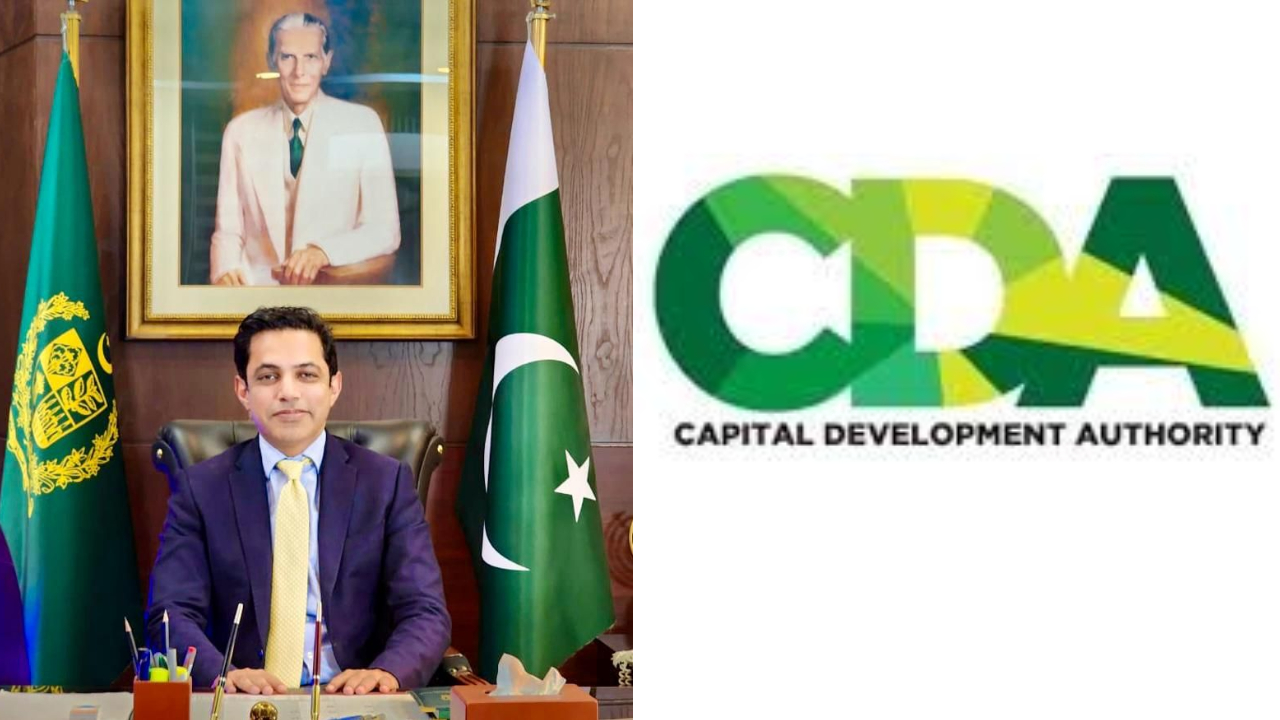
In this context, the dynamic leadership of Sohail Ashraf, Chairman CDA and Chief Commissioner Islamabad, represents an important opportunity to further accelerate institutional reform and place Islamabad on a clear trajectory towards becoming a truly modern, sustainable, smart, secure, efficient, inclusive, and globally admired model capital.
Sohail Ashraf Chairman CDA, Chief Commissioner Islamabad is known for his professional approach, administrative experience, emphasis on good governance, integrity, institutional discipline, and commitment to public service. His vision, wisdom and leadership is centred on transforming CDA from a conventional administrative organisation into a modern, technology enabled, performance oriented and citizen centric institution capable of meeting the challenges of a rapidly changing capital city.
His ultimate goal and objective is not simply to construct roads, buildings or sectors. It is to create an efficient urban ecosystem and a culture of excellence in which planning, development, governance, technology, environmental sustainability, financial management and citizen services work together to make Islamabad one of the best beautiful, most vibrant and well managed capitals in the world.
A New Vision for CDA and Islamabad
The transformation of Islamabad requires a long term vision supported by strong institutions, professional management and continuity in policy. Under the leadership of Chairman Sohail Ashraf, CDA will further pursue a comprehensive reform agenda based on the principle that a world class capital requires a world class institution. The vision will be to make CDA:
* Transparent and accountable;
* Financially sustainable;
* Digitally transformed;
* Citizen-centric;
* Environmentally responsible;
* Professionally managed;
* Performance-oriented;
* Innovation-driven;
* Technologically advanced; and
* Responsive to the changing needs of Islamabad.
At the same time, Islamabad will be developed as a capital that combines modern infrastructure with natural beauty, economic opportunity with environmental responsibility, and technological advancement with human centred urban development.
Strengthening Good Governance
Good governance is the key foundation of institutional transformation. An effective CDA should be able to operate according to clear policies, transparent procedures, measurable targets and strong accountability mechanisms under the leadership of Sohail Ashraf, Chairman CDA.
Under a performance-oriented governance model, every major department and directorate should have clearly defined Key Performance Indicators (KPIs), measurable targets and time bound deliverables. Monthly, quarterly and annual performance reviews should become an integral part of institutional management.
Internal audit, risk management, project monitoring and evaluation should be strengthened to ensure that public resources are utilised efficiently and development projects are completed within approved timelines, costs and quality standards. The principle should be simple:
Right policy, right decision, right person, right time and right outcome.
Merit based appointments, professional postings and placement of competent officers and officials according to their expertise can significantly improve institutional performance. The right person in the right position is one of the most important requirements for a successful public organisation.
Digitalisation towards Building a Smart CDA
The future of urban governance is digitalisation. Islamabad will be proud to be a model capital. CDA should therefore continue accelerating its digital transformation through an integrated Smart CDA and Smart Islamabad framework. Key priorities should be include:
* Complete digitisation of land and property records;
* GIS-based land management and urban planning;
* Online building plan approvals;
* Digitised building control services;
* Electronic office and file management;
* Online No Demand Certificate (NDC) processing;
* Integrated citizen complaint management;
* Online payments for taxes, fees and charges;
* Mobile applications for civic services;
* Digital project monitoring dashboards;
* AI-assisted traffic and infrastructure management;
* Real-time data analytics;
* Digital enforcement and inspection systems; and
* Integrated databases connecting relevant CDA departments.
Technology should not merely replace paper. It should re-engineer the entire way of government works. A citizen should not have to visit multiple offices, repeatedly submit documents or depend upon personal contacts to obtain a legitimate public service. Wherever legally and technically possible, services should be available through a single digital platform with clearly defined timelines and automatic tracking.
Such reforms will reduce delays, minimise discretionary practices, improve transparency and significantly enhance public confidence.
Citizen-Centric Service Delivery
The true measure of a public institution is not the size of its offices but the quality of services it provides to citizens.
CDA is committed to developing a culture in which citizens will be treated with respect, courtesy, fairness and professionalism. Every public service should have a clearly defined service standard and delivery timeline.
The One Window operation should be further modernised into an integrated Citizen Facilitation System, supported by digital services and effective grievance redressal mechanisms. Priority measures should be include:
* Modern One Window Operation Centres;
* Integrated online citizen portals;
* 24-hour complaint registration and tracking;
* Clearly defined service delivery timelines;
* Citizen Facilitation Centres;
* Special assistance for senior citizens and persons with disabilities;
* Regular citizen satisfaction surveys;
* Public consultation mechanisms;
* Departmental public hearings where appropriate; and
* Transparent monitoring of unresolved complaints.
The objective should be to transform the relationship between CDA and the citizen from an administrative interaction into a service partnership.
Smart Urban Planning and Sustainable Development
Islamabad was conceived as a planned capital and its original master planning philosophy remains one of its greatest strengths. However, population growth, changing economic activity, increasing vehicle ownership, climate change and evolving housing requirements demand continuous and scientifically informed urban planning. Future planning should be based on the principles of compact, connected, inclusive and sustainable urban development. CDA should be focusing on:
* Completion of existing sectors;
* Development of properly planned new residential sectors;
* Affordable housing;
* Appropriate vertical development where compatible with planning and infrastructure capacity;
* Transit-oriented development;
* Modern public transport;
* Intelligent traffic management;
* Parking plazas;
* Modern sports facilities;
* Food streets and recreational destinations;
* Tourist resorts and hospitality infrastructure;
* IT and technology parks;
* Family recreation centres;
* Pedestrian-friendly public spaces; and
* Climate-resilient infrastructure.
Development should never be measured solely by the number of structures constructed. It should be measured by quality of life, accessibility, sustainability, safety and convenience.
Housing and Sector Development
Affordable and properly planned housing should be remained important component of Islamabad’s future.
CDA should be accelerating the development and completion of residential sectors while ensuring that infrastructure and civic amenities are provided in an integrated manner.
A developed sector should be including:
* Quality roads;
* Reliable water supply;
* Sewerage and drainage;
* Electricity and other essential utilities;
* Schools;
* Healthcare facilities;
* Parks and green spaces;
* Commercial centres;
* Public transport connectivity;
* Community facilities; and
* Safe pedestrian infrastructure.
GIS-based planning, transparent allotment procedures, digital land records and legally compliant public-private partnerships can accelerate development while maintaining accountability and quality.
Well planned housing can help reduce pressure on informal settlements, discourage unplanned urban sprawl and create safe, inclusive and sustainable communities.
Protecting Islamabad’s Greatest Asset: Its Environment
Islamabad’s greatest competitive advantage is its natural environment and beautification.
The Margalla Hills, forests, green belts, parks, water bodies and extensive tree cover distinguish Islamabad from many other major cities. Environmental protection should therefore be treated not as an additional responsibility but as a core component of capital development policy. Strategic priorities should be including;
* Protection and restoration of the Margalla Hills ecosystem;
* Large scale tree plantation and urban forestry;
* Protection of green belts;
* Expansion and rehabilitation of parks;
* Restoration of natural water bodies;
* Modern waste collection and disposal;
* Waste segregation and recycling;
* Green building standards;
* Solarisation of suitable public facilities;
* Rainwater harvesting;
* Air quality monitoring;
* Water quality monitoring;
* Climate resilient landscaping; and
* Beautification of roads, medians, roundabouts and public spaces.
* Safari park
The guiding philosophy should be:
Development with nature, not development against nature.
Modern Solid Waste Management
A clean capital is a visible symbol of effective governance.
CDA should be continue to modernising solid waste management through scientific collection, transportation, segregation, recycling and environmentally responsible disposal.
The future system should be progressively incorporated ;
* Waste segregation at source;
* Recycling and resource recovery;
* Modern waste transfer stations;
* Technology-enabled collection monitoring;
* Mechanised street cleaning;
* Public awareness campaigns;
* Private-sector participation where appropriate; and
* Data-based monitoring of sanitation services.
Cleanliness should be maintained in Islamabad very promptly.
Sustainable Water Security
Water security is becoming one of the most serious challenges facing modern cities. Population growth, climate variability, declining groundwater resources and rising consumption require Islamabad will have a long term water security strategy.
The Islamabad Water Agency will play a central role in developing an integrated approach based on conservation, efficiency, infrastructure rehabilitation and diversification of water resources.
Key measures should be including;
* Rehabilitation of ageing water infrastructure;
* Reduction of leakage and non-revenue water;
* Smart water metering;
* Improved monitoring of tube wells;
* Expansion of storage capacity;
* Rainwater harvesting;
* Wastewater treatment and reuse;
* Protection of natural water bodies;
* Groundwater monitoring; and
* Public awareness regarding responsible water consumption.
Water must be treated as a strategic national resource rather than merely a municipal utility.
*Financial *Sustainability: A Self-Reliant CDA
A financially sustainable of CDA will be top most priority to ensure that all projects including development and non development projects should be completed in time.
Financial sustainability should therefore will be a central pillar of institutional reform.
A comprehensive strategy should be including;
* Improved revenue collection;
* Digitisation of financial systems;
* Better recovery of outstanding dues;
* Transparent commercial asset management;
* Efficient utilisation of CDA-owned land and properties;
* Transparent and competitive land auctions;
* Public-private partnerships in accordance with law;
* Diversification of revenue streams;
* Cost optimisation;
* Energy-efficient operations;
* Improved financial controls; and
* Long-term capital investment planning.
The objective should be to transform CDA into an institution that can increasingly generate, manage and reinvest its own lawful revenues while maintaining transparency and public accountability.
Financial strength is not an end in itself. It is a means to provide better public services and accelerate sustainable development.
Transparency and Public Trust
Public trust is the most valuable asset of any government institution. CDA should be continuing its policy of strengthening transparency through:
* Electronic procurement;
* Transparent tendering;
* Digital project monitoring;
* Independent financial and performance audits;
* Regular institutional performance reports;
* Digitised records;
* Clear regulatory procedures;
* Effective internal accountability;
* Appropriate open-data initiatives; and
* Robust mechanisms for reporting and addressing irregularities.
Transparency should be embedded into institutional systems so that good governance does not depend solely on the personal intentions of individual officers.
Investing in Human Capital
No institution can become excellent without excellent people. CDA’s employees are its most important institutional asset. Modernisation must therefore be accompanied by a comprehensive human resource development programme. Training priorities should be including;
* Leadership development;
* Urban planning;
* Project management;
* Digital governance;
* GIS and smart-city technologies;
* Artificial intelligence and data analytics;
* Financial management;
* Procurement;
* Environmental management;
* Customer service;
* Disaster management; and
* Professional and technical skills.
Performance recognition, merit based career progression, transparent promotion systems, employee welfare and professional development can create a motivated workforce. A culture should be developed in which employees understand that performance, integrity, professionalism and public service are valued and rewarded.
Innovation and International Best Practices
A modern capital must continuously learn. CDA’s training and institutional learning capacity will be further developed into a Centre for Urban Innovation and Research, focusing on emerging urban challenges and international best practices. Research could cover:
* Smart city technologies;
* Artificial intelligence;
* Urban mobility;
* Affordable housing;
* Climate resilience;
* Water security;
* Waste management;
* Digital governance;
* Urban forestry;
* Disaster preparedness; and
* Sustainable infrastructure.
Partnerships with universities, research institutions, international development organisations and other successful capital city administrations will provide valuable knowledge and help CDA develop solutions suited to Islamabad’s unique requirements.
Disaster Preparedness and Urban Resilience
Modern capitals must be prepared for emergencies, natural disasters and climate related events.
CDA should be continuing its strengthening:
* Emergency response systems;
* Fire and rescue capabilities;
* Urban flood management;
* Emergency communication;
* Disaster operations and coordination;
* Early-warning mechanisms;
* Emergency shelters and response planning;
* Community awareness; and
* Inter-agency coordination.
Preparedness saves lives, protects infrastructure and strengthens public confidence during crises.
Leadership as the Catalyst for Transformation
Institutional reform ultimately requires leadership that can translate vision into action. The role of Chairman CDA Sohail Ashraf is therefore very significant and important. A modern CDA under the dynamic leadership of Sohail Ashraf Chairman CDA is now committed to establish priorities, empower professional teams, enforce accountability, encourage innovation and maintain a relentless focus on service delivery as visionary
Leadership ensures that reforms do not remain limited to policy documents. They must become measurable improvements visible in the daily lives of citizens. The philosophy should be to lead from the front, empower the institution, respect merit, reward performance, enforce accountability and remain connected with the citizen.
If this approach will be consistently pursued, CDA will be emerged not merely as a development authority but as a benchmark for public sector institutional excellence in Pakistan.
Islamabad: From Capital City to Global Model
The ultimate ambition should be larger than making Islamabad cleaner, greener or more beautiful. The goal should be to create a capital that demonstrates what effective governance, thoughtful planning, environmental stewardship and modern technology can achieve. A model Islamabad should be offering;
World class infrastructure.
Efficient public services.
Clean and green surroundings.
Reliable water and sanitation.
Safe and accessible public spaces.
Smart mobility.
Affordable and quality housing.
Digital government.
Transparent administration.
Financial sustainability.
Environmental protection.
Cultural vibrancy.
Tourism opportunities.
Investment potential.
And, above all, a high quality of life for its citizens.
Conclusion
The transformation of Islamabad into a model capital of the world is an ambitious national objective, but it is achievable through visionary leadership of Sohail Ashraf, Chairman CDA through institutional discipline, professional management, modern technology, sustainable planning and an unwavering commitment to citizens. Under the dynamic leadership of Sohail Ashraf, Chairman CDA and Chief Commissioner Islamabad, the CDA is committed to further accelerate a comprehensive programme of institutional modernisation and urban transformation.
The journey towards a world class capital will be achieve as it requires continuity, consistency, accountability and a long term institutional vision.
The real success of CDA will ultimately be achieved not merely by buildings constructed, roads completed or projects launched, besides providing the people of Islamabad experience better services, cleaner surroundings, safer communities, efficient administration, improved mobility, reliable utilities, greater transparency and a higher quality of life. The goal should therefore be achieved through a modern CDA for a modern Islamabad.
A sustainable CDA for a sustainable Islamabad.
A smart CDA for a smart Islamabad.
A citizen-centric CDA for a citizen-friendly Islamabad.
And an institution of excellence for a capital worthy of Pakistan.🇵🇰
With strong leadership, professional human resources, digital transformation, financial sustainability, environmental stewardship, innovative urban planning and meaningful citizen participation, Islamabad will continue its journey from being one of the world’s beautiful planned capitals to becoming one of the world’s best governed, most sustainable, smartest and most liveable capitals. This is not merely an urban development agenda. It is a national vision to build a Federal Capital Islamabad that reflects Pakistan’s aspirations, demonstrates the country’s capacity for good governance, welcomes the world with confidence, and becomes a lasting source of pride for every Pakistani.
Under the dynamic leadership of Chairman CDA Sohail Ashraf, the vision of transforming Islamabad into a truly Model Capital of the World will become a defining chapter in the continuing development of Pakistan’s Federal Capital. 🇵🇰🌍