
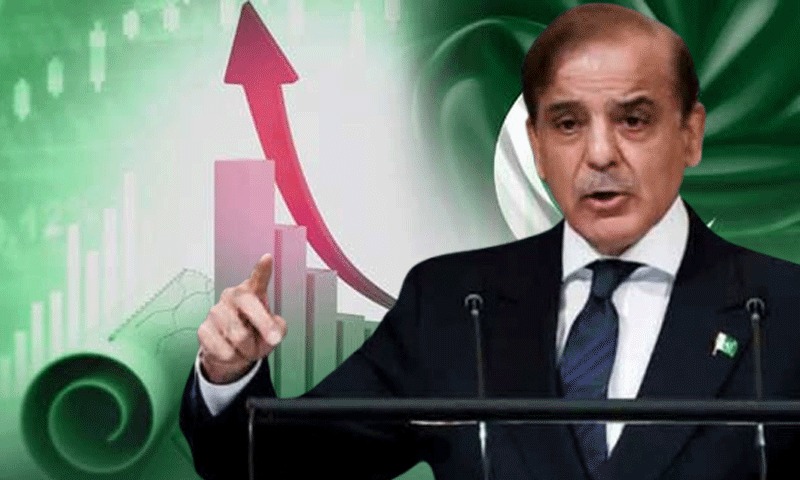
ISLAMABAD (TNS) The current government under the leadership of Prime Minister of Pakistan Shehbaz Sharif is committed to economic development after economic stability. The Prime Minister has made it clear that the government is committed to economic development after economic stability in the country. In the fiscal year 2024-25, $38.3 billion was sent in remittances,
The Prime Minister has termed the 26.6 percent increase in remittances as very welcome. Prime Minister Shehbaz Sharif expressed gratitude for the highest remittances in history in the last fiscal year,
Shehbaz Sharif said that the 26.6 percent increase in remittances is very welcome. The record increase in remittances is a reflection of the valuable services of Pakistanis abroad and their confidence in the Pakistani economy. The recent positive economic indicators are a reflection of the right direction of government policies.
On the other hand, the blue economy is the next frontier of economic recovery for Pakistan’s economic development. The global blue economy is worth trillions of dollars and if Pakistan succeeds in capturing even a fraction of it, it will be a game changer for its economic development and regional connectivity.
The blue economy is a cluster of opportunities, from commercial shipping to fishing, shipbuilding and recycling to renewable energy, from coastal tourism to offshore aquaculture, we have to take advantage of all these possibilities.
In addition, details of the loans taken by the current government in the past 18 months have come to light. An increase of Rs. 11,235 billion was recorded in loans during the first 18 months.
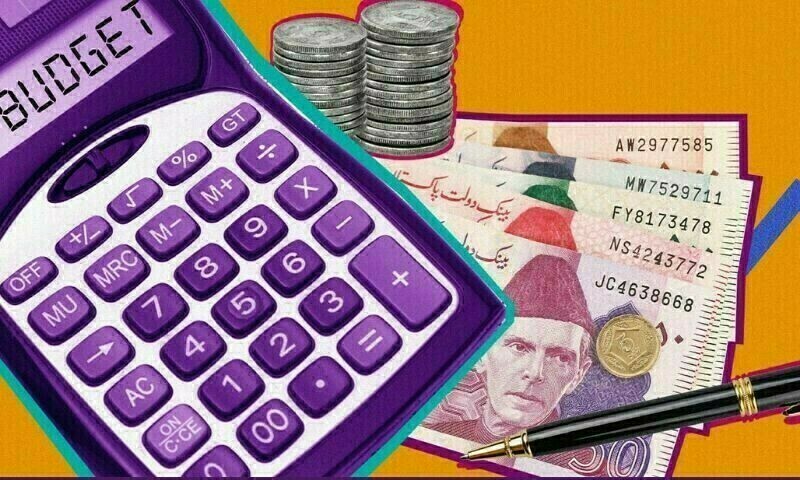
Based on the State Bank of Pakistan document, during the year from March 2024 to May 2025, the federal government’s domestic debt increased by Rs 10,784 billion and the federal government’s external debt by about Rs 451 billion, after which the federal government’s debt increased to Rs 76,045 billion by May 2025, while the federal government’s debt was Rs 64,810 billion by February 2024. According to the document, the central government’s domestic debt was Rs 42,675 billion by February 2024, which increased to Rs 53,460 billion by May 2025. Similarly, the federal government’s external debt was Rs 22,134 billion by February 2024 and the central government’s external debt was Rs 22,585 billion by May 2025.
It should be noted that for the development of the economy and public prosperity, it is necessary for every institution to fulfill its responsibility. Prime Minister Shahbaz Sharif says that joint efforts of all institutions play a key role in Pakistan’s economic stability.
The Prime Minister, while appreciating the effective steps taken to increase tax collections, said that all institutions must work together to stabilize the country’s economy. A detailed report on the ongoing operations by the FBR and IB against tax evasion and hoarding was presented to the Prime Minister.
According to the report, as a result of joint operations of the Intelligence Bureau and the FBR, recovery of Rs 178 billion has been made possible so far. An additional revenue of Rs 69 billion was generated from the merger of companies and recovery of arrears related to the telecommunications sector. Similarly, the Intelligence Bureau collected additional tax of Rs 10.5 billion by conducting 515 raids in the sugar, animal feed, beverages, and edible oil, tobacco and cement sectors.
He said that every institution should also fulfill its responsibility for the development of the economy and public welfare. According to the interim data of the last fiscal year, the FBR collected Rs 11.737 trillion against the revised target of Rs 11.900 trillion. The government had initially set a target of Rs 12.913 trillion in the budget, which was later reduced to Rs 12.33 trillion and then to Rs 11.9 trillion, indicating an overall shortfall of over Rs 1 trillion to meet the growing fiscal deficit.
FBR officials had attributed the poor performance to over-optimistic estimates of import volumes, inflationary pressures and expected high economic growth that failed to materialize. Remember that economic growth is not just about increasing production, but also about improving people’s lives in terms of health, education, and other essentials. Another important aspect is the increase in real income per capita, which reflects the average income of people.
Economic growth is the increase in the amount of goods and services produced by a country. Economic growth also includes economic stability, which means that the economy is less exposed to unexpected shocks and crises. The main goal is to reduce poverty rates and promote social justice.
Economic growth is not just about getting rich, but also about a fair distribution of economic opportunities and reducing inequality. An important aspect of economic growth is sustainability, which is ensuring that economic growth does not compromise the ability of future generations to meet their needs using today’s resources.
There are many methods used for economic development, one of which is an increase in GDP, but this is only one aspect. Other factors such as technological development, human capital, and institutional performance also play a role in economic development.
In addition to being a policy objective, economic development is also a means to achieve many other objectives such as creating employment opportunities, reducing poverty, and establishing a system of fair distribution of wealth, etc.
Although economic development is closely related to gross national product, it does not reflect economic development because an increase in gross national product is not the only factor for economic development. An increase in Pakistan’s national income also could not lead to economic development. In the 1960s, Pakistan’s national income grew at an average rate of 6.8 percent, but that rate could not be sustained and decreased to 4.8 percent in the 1970s. The average growth rate increased to 6.5 percent in the 1980s, but decreased again to 4.6 percent in the 1990s. Between 2000 and 2003, the growth rate of national income was only 3.4 percent per annum. In 2004, the pace of growth in national income accelerated again and between 2003 and 2008, GDP grew at an average rate of 7.1 percent per annum. In 2008, the economy slowed down again and the average growth rate of national income during 2008 to 2013 was around 3 percent. Whenever Pakistan’s national income grew rapidly, it could not be sustained and we could not convert the growth in national income into economic growth because during periods of economic growth, we could not increase savings, there could not be a fair distribution of wealth and infrastructure and technology could not be upgraded. This situation persists to this day.
Mere increase in national output is not enough for economic growth; this growth must be built on a strong foundation. Only then can the goal of economic growth be achieved. A country may have a high GDP growth rate, but still not achieve economic development. An example of this is Pakistan, whose GDP grew at a high rate in the 1960s and 1980s and from 2003 to 2007, but the country never achieved economic development status.
It should be noted that the FBR had also failed to achieve the twice-revised tax target in the last fiscal year. It should be noted that on the other hand, the FBR had also failed to achieve the twice-revised tax target in the last fiscal year. Similarly, a high per capita income is not a measure of economic development. For example, many Muslim countries have per capita incomes equal to or higher than those of developed countries, but they lack the necessary factors for economic development. Economic development is a process in which, along with an increase in the national product (GDP), social and institutional changes occur through which the process of development can be continued. Foremost among these changes are a reduction in absolute poverty, an improvement in the standard of living, a high literacy rate, an increase in the productivity of the labor force, an increase in the efficiency of other factors of production, the development of modern arts, the completion of material and commercial infrastructure, a high rate of savings and investment, an increase in employment opportunities, a positive attitude towards work and life, and a stable political system. Therefore, economic development is a qualitative and quantitative process. The main objective of economic development is to improve the quality of life of the people. In the modern concept of economic development, three essential values, sustainability of life, autonomy, and freedom, have been declared as the conceptual basis of economic development. Economists call the continuous increase in the production of goods and services in a country economic development and define it as follows: “Economic development is a process by which various forces, namely the discovery of new productive resources, the increase in capital goods, the development of the arts, the increase in the skills of the population, and changes in the structure of goods and services, become a means of increasing the real national product of the country. However, some other economists believe that the process of economic development is little more than just an increase in the real national product.” According to economists, economic development will occur when the standard of living of the people increases. “Economic development is a process due to which the real per capita income of a country continues to increase over a long period of time.” That is, economic development is concerned with a process due to which the people of a country or region are able to continuously increase the per capita production of goods and services by utilizing the available resources. In this way, by linking economic development with the need to eradicate poverty and destitution, many experts use the increase in real output per capita as a criterion for economic development because when real national output is considered as a measure of economic development, sometimes it may happen that the real national income of a country is increasing, but due to the rapid growth in population, the per capita income of that country cannot increase and the standard of living of the people cannot improve. As during the first five-year plan of Pakistan, due to the rapid growth in population, there was no increase in per capita income, although Pakistan’s national income had increased by 11% in the five years of this plan. If real national income and real per capita income are increasing, then it may be that the rich are getting richer and the poor are getting poorer. So it cannot be concluded that the increase in total real national income and per capita income has increased the prosperity of the people unless this increase results in a positive change in the distribution of income, which helps in eliminating or reducing poverty. For example, in the 1960s, Pakistan’s real national income and per capita real income increased at a high rate, but the country’s wealth was concentrated in the hands of a few families, so the people were burdened by poverty. Similarly, in the 1950s and 1960s, the real national income and per capita income of many countries of the world also continued to increase, but the standard of living of the people of these countries could not rise. Economists were forced to think that there must be something wrong with the traditional definition of economic development, so they stopped relying on real national income and per capita income and emphasized the need to control the widespread absolute poverty, the worsening situation of income distribution and the growing unemployment in developing countries. Thus, the modern definition of the term development came into being, according to which the elimination and reduction of poverty and deprivation, inequality in income distribution and unemployment in a developing economy was considered economic development. If these three factors are decreasing, then undoubtedly the country must be developing. In the 1960s and 1970s, many developing countries experienced high growth in real per capita income, but unemployment, income distribution, and the income of the bottom 40 percent of the population failed to improve. In some countries, they even worsened. The situation worsened in the 1980s as these countries faced serious problems with external debt, which forced them to limit spending on economic and social services. The economic think tank Economic Policy and Business Development has called for spending the debt on profitable investments. The report has called on the government to use the country’s debt better instead of unnecessary expenses and to carry out fundamental reforms for better use of this debt. Pakistan’s Rs 7.2 trillion debt should be used to increase economic activities. The country’s debt should not be spent on bank profits nor should it be wasted on providing subsidies to government institutions. It was further said that World Bank economists are also endorsing the EPBDT report, while according to the latest UNDP report, loans are being used for expenditure instead of investment. Due to government loans, the private sector is not getting loans, Pakistan is getting 28 percent of GDP annual loan, while out of 28 percent of loans, and only 2 percent of the loan is being spent on development expenses. The cost of doing business in Pakistan has reached 11 percent, while the cost of doing business in regional countries is at 5.5 percent. It was further said that banks are being given guaranteed profits compared to industries, loans should be used to increase business activities, and loans should be spent on increasing exports.