
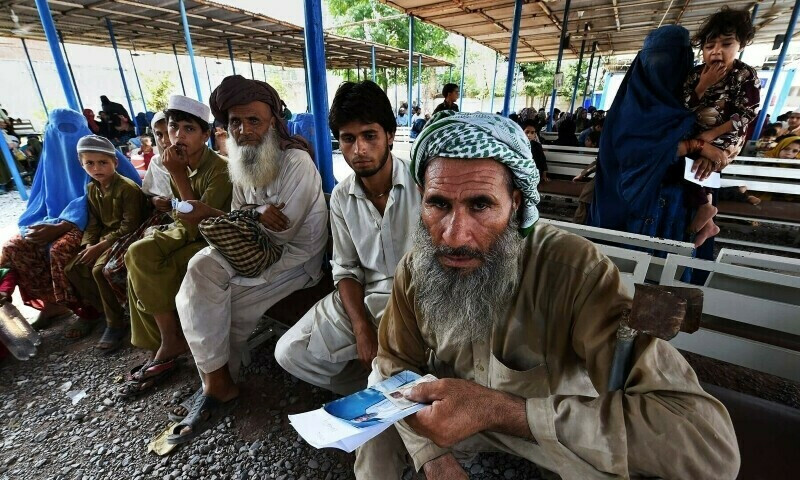
ISLAMABAD (TNS) The United Nations agency has expressed concern over the forced return of Afghan refugees. Recently, after an important meeting between the foreign ministers of Pakistan, Afghanistan and China in China, relations between Pakistan and Afghanistan are improving. The Afghan government had appealed to Pakistan to give some time for the expulsion of Afghan refugees. The United Nations High Commissioner for Refugees (UNHCR) has said that Pakistan has begun the process of deporting Afghan refugees ahead of schedule, which could result in the removal of more than one million Afghans from the country, the agency said in a statement. “UNHCR calls on the Government of Pakistan to stop forced deportations and adopt a humanitarian approach to ensure that the return of Afghans is voluntary, gradual and dignified,” it said. “Forcibly returning Afghans in this manner is a violation of Pakistan’s international obligations.” According to a decree issued by the Interior Ministry, the voluntary return of legal Afghan refugees will begin immediately, while the formal deportation process will begin after September 1. According to the report, the United Nations High Commissioner for Refugees (UNHCR) said that it is receiving reports of arrests and deportations of legally registered Afghan refugees across the country, although the deadline for their evacuation has not yet come. The move comes after the Interior Ministry announced on July 31 that PoR cardholders, who were the last Afghans legally residing in Pakistan without a visa, would be considered illegal residents after their cards expired on June 30. However, the federal government has informed the provinces that the formal repatriation and deportation of over 1.3 million PoR cardholders would begin from September 1. Meanwhile, the UNHCR, in a statement, expressed concern over the intention to forcibly return Afghan refugees holding PoR cards. The statement said that in recent days, it had received reports of arrests and detentions of Afghan nationals, including PoR cardholders, across the country. The UNHCR said it appreciated Pakistan’s hosting of Afghan refugees for over 40 years, but forcibly returning POR cardholders would not only be against Pakistan’s long-standing humanitarian policy but would also violate the international principle of non-refoulement, which states that no refugee can be returned to a country where his or her life or freedom would be threatened. The federal government has informed the provinces that the process of formal repatriation and deportation of over 1.3 million Afghan refugees holding Proof of Registration (POR) cards will begin from September 1. According to the report, the decision came after the Interior Ministry’s July 31 announcement that POR cardholders, who were the last Afghans legally residing in Pakistan without a visa, would be considered illegal residents after the cards expired on June 30. On the other hand, UNHCR spokesperson Qaiser Khan Afridi said It was reported that between August 1 and August 4, dozens of legal Afghan refugees were arrested and sent back to Afghanistan. The Interior Ministry did not respond to a request for comment. More than 1.3 million Afghans currently hold PoR cards, while another 750,000 have another registration document called the Afghan Citizen Card. Many Afghans have been living in Pakistan since the 1980s to escape the ongoing wars in Afghanistan. The UNHCR has warned that “such a large and hasty return could not only threaten the lives and freedom of Afghan refugees, but could also destabilize Afghanistan and the entire region.” Pakistani authorities say they will only allow Afghans with valid visas to stay in Pakistan. The evacuation is being carried out under the “Illegal Foreigners Repatriation Plan,” which was launched in late 2023. Pakistani authorities have in the past blamed some terrorist attacks and crimes on Afghans, who make up the largest immigrant community in the country. Afghanistan has denied the allegations and has refused to allow the return. The process is described as ‘forced deportation’. In addition to Pakistan, a new large number of Afghan citizens are being deported from Iran, which aid organizations have expressed concern about, which could further destabilize Afghanistan.Meanwhile, the Ministry of Interior sent a letter to the Chief Secretaries and IGs of all four provinces, Gilgit-Baltistan and Azad Jammu and Kashmir on August 4, providing details of the implementation of the current Illegal Foreigners Repatriation Plan (IFRP). It was said that the voluntary return of P&R card holders will be started immediately, while the regular deportation process will be effective from September 1, 2025. The return of other illegal foreigners holding Afghan Citizen Card (ACC) will continue as per the decision taken earlier under the IFRP. The letter has directed the Ministry of Kashmir Affairs, Gilgit-Baltistan and SAFRON to provide data of P&R card holders to the committees established at the provincial, divisional and district levels, NADRA has been given the responsibility to facilitate the de-registration of Afghan refugees at transit areas and border posts during their return, and the FIA has been asked to provide assistance in the return process at the designated border points. The ministry has directed the provincial governments and relevant agencies to prepare a map of all POR card holders and formulate action plans for their return, including identification of interim centers, travel arrangements and provision of financial resources. Meanwhile, a meeting of the provincial steering committee of Khyber Pakhtunkhwa was held on Monday to consider the implementation of the IFRP. According to the proceedings of the meeting, the committee directed the district administration, police and special branch to form joint teams and hold jirgas with Afghan elders to persuade them to return voluntarily. All deputy commissioners were also asked to re-map POR card holders. The committee decided that NADRA and the Provincial Disaster Management Authority (PDMA) should fully activate the transit points of Peshawar and Landi Kotal. The meeting also recommended that the Commissionerate of Afghan Refugees be directed to declare the refugee camps inactive as they are no longer of any use, and that the Commissionerate provide details regarding the types of registration and the number of people present in the camps. Regarding local transit centers for deportation, the committee clarified that the concerned Deputy Commissioner, in consultation with the military authorities and with the guidance of NADRA, will decide on the use of these points, these places will be used only for local level deportation while the Torkham border post will remain the central exit point. Pakistani authorities had already informed Afghan authorities in March this year that the validity of PoR cards will not be extended beyond June 30, 2025. According to UNHCR, as of June 30, 2025, there were more than 1.3 million Afghan refugees living in Pakistan, with the largest number living in Khyber Pakhtunkhwa (717,945), Balochistan (326,584), Punjab (195,188), Sindh (75,510) and Islamabad (43,154). In 2004-05, the government of Pakistan, with the help of the United Nations High Commissioner for Refugees (UNHCR), issued PoR cards to Afghan refugees, while in 2016, Afghan Citizen Cards (ACCs) were introduced through an amendment to the Foreigners Act, 1946. Earlier, on July 17, the Islamabad High Court rejected a plea seeking a stay on the evacuation of Afghan refugees holding Proof of Registration (PoR) cards. Justice Inam Amin Minhas remarked that the Afghans had to return home by June 30, after which no protection could be given to the refugees. Justice Inam Amin Minhas heard the petition of former Senator Farhatullah Babar of the PPP regarding the non-repatriation of Afghan citizens holding POR cards. The petitioner requested to stop the government’s actions until the decision of the case. The court said that the court will not interfere with the government’s policy. The government is saying that we did not sign the contract of the refugees. The court remarked that no protection can be given to Afghan citizens after June 30, and the court adjourned the hearing of the case. It may be recalled that on July 4 of this month, the Ministry of SAFRON had stopped all departments from taking action against Afghan refugees. The Ministry of SAFRON had issued a statement regarding Afghan citizens living in Pakistan, which said that the extension of the Proof of Registration (POR) cards of Afghan refugees is under consideration. No action should be taken and they should not be harassed until a final decision is taken regarding the extension of the POR cards.Moreover, a high-level meeting was held on June 28, 2025 regarding Afghan refugees holding POR cards, in which officials from the Ministry of SAFRON, Ministry of Foreign Affairs, Ministry of Interior and security agencies participated. The meeting considered extending the stay of Afghan refugees holding POR cards by 3 to 6 months. According to sources, a proposal to extend the stay of Afghan refugees holding POR cards by 6 months will be sent to the cabinet. There are also Afghan citizens who were born in Pakistan. The meeting was informed that the businesses and properties of POR card holders are present in Pakistan, and time is needed to sell the properties and wind up the businesses. It should be noted that a large number of Afghan refugees have been sent back to Afghanistan from Pakistan this year, in addition to this, a large number of Afghan citizens have also reached Kabul from Iran. After the important meeting between the foreign ministers of Pakistan, Afghanistan and China, the Afghan government had appealed to Pakistan to give some time for the expulsion of Afghan refugees. On 20 March 2025, Afghan Foreign Minister Amir Khan Muttaqi, while urging the gradual return of Afghan refugees from other countries, including Pakistan, said that we do not face any security issues across the country, but there are some issues that will make it difficult to prepare for the arrival of refugees at once. In early March, the Pakistani government decided to deport Afghan Citizens Card (ACC) holders, as well as all illegal foreigners, from the country by 31 March. On 30 March 2025, the head of the UN Refugee Agency in Pakistan expressed concern over the approaching deadline for Afghans holding Afghan Citizenship Cards (ACCs) to leave Pakistan and warned that the decision had ‘shaken’ the Afghan community. Philippa Candler, the representative of the United Nations High Commissioner for Refugees (UNHCR) for Pakistan, expressed her concerns. In her message, titled ‘A cry for mercy: Afghan refugees in Pakistan and a path to hope’, Philippa Candler said that there are 1.52 million registered Afghan refugees and asylum seekers in Pakistan, about 800,000 of whom hold Afghan citizenship, in addition to a large number who are living in the country without official identification. Philippa Candler said that she had met an Afghan family who had taken refuge here after fleeing Afghanistan in 2022, leaving everything behind in search of peace and security. She said that it was heartbreaking to see how scared they were to return. Their hopes and dreams have been shattered. Afghans who entered Pakistan were part of the workforce, they started businesses and contributed to the country’s economy. He wrote that over time, Afghan refugees have become integrated into Pakistani society. Despite their contributions to Pakistan, Afghans often face discrimination, limited access to formal employment, and a lack of legal rights that make their lives insecure and push many to the margins of society. The representative of the UN refugee agency said that the government’s latest guidelines reflect a significant disruption in the fabric of many communities. Faced with expulsion from the communities that have welcomed them and a possible forced return to Afghanistan, with few opportunities to restart their lives there, it is unlikely that they will be able to reintegrate into that society. Temporary camps have been set up in Landi Kotal and Peshawar to facilitate the return of the refugees. Afghan Foreign Minister Amir Khan Muttaqi, in a meeting with Pakistan’s special representative for Afghanistan, Mohammad Sadiq, in Kabul, had asked Pakistan to give more time to Afghan citizenship card holders, as the repatriation of so many people could create difficulties for his government.Meanwhile, Afghan citizen Lal Agha, a POR card holder residing in Pakistan with his Pakistani wife, has filed a writ petition for Pakistani citizenship. Advocate Azmat Ali Mubarak, on behalf of the petitioner, has requested that the government’s actions be stopped until the case is decided.
The petitioner has requested the Ministry of States and Frontier Regions, the Ministry of Interior and Narcotics Control, and NADRA to take a final decision on the extension of POR cards. The petitioner has been doing business in Pakistan without any complaints for 25 years. He wants to obtain Pakistani citizenship but has not received a response to his applications. Human rights groups and refugee protection agencies are concerned about the living conditions and security of Afghan refugees. A final decision should be taken on the extension of POR cards, and they should be directed not to harass Afghan citizens in Pakistan.