
ISLAMABAD (TNS) The government of Pakistan should immediately solve the problems of pilgrims going to Iran and Iraq. It is not just the money of the pilgrims that has sunk. Those who go to Karbala have an emotional connection with Imam Hussain (AS) and the pilgrims are currently suffering from mental anguish. Why can’t security be provided to the pilgrims going by road this year? Federal Interior Minister Mohsin Naqvi wrote in a post on the social media platform X that this decision has been taken in view of public safety and national security after detailed consultations with the Ministry of Foreign Affairs, the Balochistan government and security agencies. Mohsin Naqvi said that this time the pilgrims will be able to go to Iraq and Iran only by air and Prime Minister Shahbaz Sharif has directed the relevant authorities to arrange as many flights as possible for the convenience of the pilgrims. But according to travel agents, the pilgrims will have to spend an additional Rs 200,000 to 300,000 on air travel. Due to this ban imposed by the federal government, a large number of pilgrims are stranded in Quetta city. These pilgrims belong to different cities of Pakistan and have to travel to Iran and Iraq via buses from Quetta via the border city of Taftan in Chagai district. In Quetta, these pilgrims staged a sit-in protest at Shuhada Chowk on Alamdar Road against this ban. They demanded that they be provided with security and allowed to travel to Iran by road. The protesters said that most of the families stranded here are those for whom it is not possible to travel to Iran by plane. The government should reconsider its decision on this big and important issue and consider the suggestions and resolve the issues in a positive manner and remove the anxiety among the pilgrims. If a positive solution to the issue is not found, the anxiety among the people may intensify, which may be harmful to the current government. After successful negotiations between the government and MWM on the issue of the pilgrims’ Arbaeen march, it has been announced to postpone the march. Federal Minister of State for Interior Talal Chaudhry, Governor Sindh, MWM and MQM leadership said in a joint press conference that the ban on pilgrims’ walking was imposed due to security concerns, which was a painful but inevitable decision. The Sindh Governor said that he met the pilgrims late at night and presented the situation to the federal government. Keeping in mind the safety of the pilgrims, walking could not be allowed, however, a 7-point agreement was reached after consultation with all parties, which a joint committee will be established for its full implementation.
Among the 7 points agreed upon, a special flight operation for pilgrims will be started in two days. Refund of bus fares paid in advance will be ensured.
The Iraqi government will be contacted for extension of visa period.
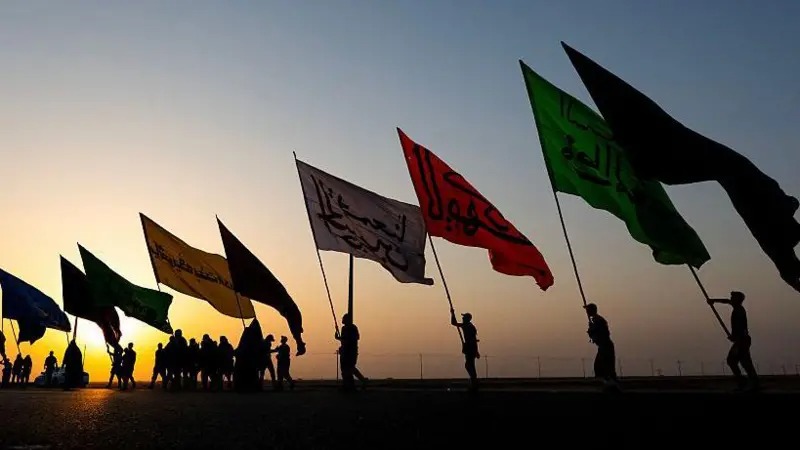
Alternative arrangements for land travel will also be considered. Immediate orders will be issued for students present at the border. The government apologizes to the pilgrims for the decision to stop the foot march. A permanent coordination committee should be established to resolve the problems of the pilgrims. MWM Vice Chairman Maulana Iqbal Rizvi announced that the mourning caravan is being postponed and has full confidence in the agreement reached with the government. All Muslims are devoted to the grandson of the Prophet (peace be upon him), Imam Hussain (peace be upon him), and this journey, whether by air, sea or land, will continue until the Day of Judgment. Thanking the Sindh Governor, he said that the demands of the pilgrims included visa extension, concessions in air travel, and refund of the money spent, which the government has assured. Talal Chaudhry said that the government was forced to take this decision keeping in mind the specific circumstances of this year, but there will be no restrictions on the travel of pilgrims in the future. It should be remembered that on August 4, 2025, Shia Ulema Council Pakistan Central Secretary General Allama Dr. Shabbir Hassan Maysami, while announcing a nationwide protest against the ban on land routes for pilgrims attending the Chehlum of Imam Hussain, said that the federal government should withdraw the decision to close land routes. The government is wasting the time of pilgrims by adopting a continuous attitude of delay. A major reason for the government’s ban on traveling to Iran and Iraq by land is that many people who go to these countries on pilgrimage visas go missing there and the government is trying to control this situation. It should be remembered that Federal Interior Minister Mohsin Naqvi has also assured Iranian and Iraqi authorities in this regard during his recent visit to Iran. The government maintains that keeping a record of those traveling by air is more effective and easier than by land. Federal Interior Minister Mohsin Naqvi said that due to security concerns, a ban has been imposed on the travel of pilgrims by road. However, this month alone, Federal Minister for Religious Affairs Sardar Muhammad Yousaf revealed that so far about 40,000 Pakistani pilgrims have either stopped there or gone missing after going to Iran, Iraq and Syria, of whom there is no official record. Therefore, from January 2026, travel to Iraq will be possible only through registered group organizers in order to prevent illegal travel and overstay. In this situation, the question arises whether the real reason is security concerns or the aim is to prevent those who illegally go to Iraq and overstay.On which the Central Executive Council of the Shia Ulema Council of Pakistan decided to go on a public protest. If the pilgrims going to Arbaeen are not provided with land routes, the pilgrims who were left behind in Iraq will start their journey in Pakistan and the processions of Imam Hussain (AS) may be stopped on the roads in protest. Allama Dr. Shabbir Hassan Maysami, Central Secretary General of the Shia Ulema Council of Pakistan, Allama Arif Wahidi, Central Vice President of the Shia Ulema Council of Pakistan, Allama Ramzan Tauqir, Central Vice President of the Shia Ulema Council of Pakistan, Allama Syed Sibtain Haider Sabzwari, Central Vice President of the Shia Ulema Council of Pakistan, Allama Mazhar Abbas Alvi, Central Vice President of the Shia Ulema Council of Pakistan, Allama Musa Raza Jaskani, Central Vice President of the Shia Ulema Council of Pakistan, Moazzam Ali Baloch, Advocate, Central Vice President of the Shia Ulema Council of Pakistan, Allama Syed Nazer Abbas Taqvi, Central Additional Secretary General of the Shia Ulema Council, Syed Sikandar Abbas Gilani, Advocate, Central Deputy Secretary General of the Shia Ulema Council of Pakistan, Zahid Ali Akhunzada, Central Secretary Information, Shia Ulema Council Pakistan, Allama Syed Ishtiaq Hussain Kazmi, Provincial President, Shia Ulema Council North Punjab, Syed Sajid Hussain Naqvi, Provincial President, Shia Ulema Council Central Punjab, Syed Javed Ali Shah, President, Shia Ulema Council Federal Area Islamabad, and other members expressed these views while holding a press conference at the National Press Club, Islamabad. Central Secretary General, Allama Shabbir Hassan Meysami, further said that a two-day meeting of the Central Executive Council of Shia Ulema Council Pakistan was held in Islamabad under the chairmanship of Quaid-e-Millat Jafariya Pakistan Allama Syed Sajid Ali Naqvi, in which the negotiations on the government’s decision to close land routes for the holy pilgrimage on the occasion of Arbaeen were considered and it was felt that no significant result could be achieved on this important issue in the contacts with the government and the government is wasting the time of the pilgrims by adopting a continuous attitude of delay. He had clarified that the decision to close the routes by the Federal Minister of Interior via tweet was made by eight crores. It is an insult to the Shia people, Pakistan will not run like this. Full and detailed negotiations were held with the rulers on the government’s delayed decision to close the land routes for pilgrims.
 However, the government showed extreme indifference to the most important issue of pilgrims. The rulers’ indifference to this serious issue forced us to now go to the people to seek public rights. According to the decision of the Central Executive Council, the Shia Ulema Council of Pakistan had decided to launch a nationwide protest movement from today. Later, members of the Central Executive Council of the Shia Ulema Council of Pakistan also held a protest demonstration outside the National Press Club and demanded that the government immediately withdraw the decision to close the land routes. On the other hand, the Chairman of Majlis Wahdat Muslimeen Pakistan, Senator Allama Raja Nasir Abbas Jafari, said that we will go to Ramadan in any case. If the government, state or relevant institutions are serious about solving the problems of pilgrims, then we are ready for any constructive discussion. Despite the presence of ISIS in Iraq, the Iraqi government provided facilities and security to the pilgrims. At Imambargah Shuhada-e-Karbala, Ancholi, Karachi, Allama Raja Nasir Abbas Jafari said that propaganda has been being done regarding pilgrims and pilgrimage for a long time. It was said that 40,000 people went there and disappeared. It was being defamed under a plan. The government should not defame the pilgrims. There is complete data on the pilgrims going to Iraq and Iran. The passports of the pilgrims are taken at the border there. During Muharram, the interior ministers of Iran, Iraq and Pakistan held a meeting. Pilgrims started preparing. Hotel bookings started. Preparations for caravans, including vehicle bookings, started here. Then suddenly the news came that the caravans would not go by land route. Billions of rupees have been lost due to the ban on pilgrims. This journey is our love, our worship, and a sign of our faith. The poor people will lose billions of rupees if this journey does not take place. More than 1 million pilgrims go on pilgrimage from the Balochistan border in a year. This improves relations between the provinces. The government cut off the pilgrims with this decision. We could have been given an alternative, cheap flights could have been operated, cheap ferry services could have been started, but no alternative route or any relief was given. The easy way to go to Karbala was closed for us. The students who are at the Ramadan border are also being stopped. They want to deprive us of worship. We can also open the way to Afghanistan, Mashhad is very close from there, Shiites and Sunnis as well as non-Muslims go on pilgrimages. If the state or relevant institutions are serious about solving the problems of pilgrims, we are ready for any constructive dialogue. Despite the presence of ISIS in Iraq, the Iraqi government provided facilities and security to the pilgrims. They had said that our demand is that we be allowed to go. In the past, people have made all kinds of sacrifices to go to Karbala. The ban is an attack on our fundamental rights. Those who are in power should be allowed to go for pilgrimage. Our question is who is responsible for providing security. Many pilgrims have reached Taftan and Ramdan with their own resources. The government should create facilities for the people.It should be noted that after several attacks on pilgrims in Mastung district, adjacent to Quetta, a few years ago, they have been taken from Quetta to the border city of Taftan in convoys under security and pilgrims coming from there are brought back under security. It should be noted that there have been several incidents of militants killing people from Punjab after identification in Balochistan, which has seen a significant increase in recent times. In addition, there have been several incidents of alleged sectarian attacks on pilgrim buses in Balochistan in the past. According to travel agents, about 200,000 to 250,000 people (400,000 to 450,000 buses) travel to Iraq by road from Pakistan every year on the occasion of Arbaeen. According to him, a large number of pilgrims prefer to travel by road because it costs less money. Going to Iraq by road on the occasion of Arbaeen costs about 150,000 to 170,000 rupees, and if the same journey is made by air, it costs 350,000 to 400,000 rupees. When I spoke to people from different cities of Pakistan who wanted to go to Arbaeen by road, their disappointment was evident in their tone. These pilgrims say that ‘we who go by road are already helpless. There is neither the ability nor the thought of going by plane. Pilgrims wishing to go to Arbaeen said that they have given about 1.75 million rupees (a package of one lakh 75 thousand per person) to Salar and the visas of all these people have arrived, but now after the government decision, ‘Salar says that one lakh rupees each of you has been spent on bus and hotel arrangements, so it is not possible to return this money soon.’ People wishing to go by road have been issued visas for Iraq, the fee of which is about 90 thousand, which is non-refundable and these were e-visas that will expire in 20 to 30 days. ‘Neither can people go after Arbaeen nor can these fees be refunded, all the loss is loss. Earlier, due to the Iran-Israel war, the visas of the pilgrims for Ashura had also expired, which caused a loss of millions. According to travel agents, most of these pilgrims have also got visas for Iran, which do not require any fees, but a double-entry visa costs about three to four thousand rupees and the Iran visa is to be stamped from Monday. As soon as Salar gets his passport, he should have started his journey towards the border from two or three zeros. Like last year, this year too, the Iranian government had a condition that Pakistani pilgrims bring their buses. On the occasion of Arbaeen, two to two and a half lakh pilgrims from Pakistan travel by road, for which about four to four and a half thousand buses are booked. The number of those who go by air is less, but most of the low-income and middle class from Punjab, Sindh and Khyber Pakhtunkhwa travel by bus. Each bus costs about 22-25 lakh rupees, for which advance payments have been made. In this regard, the bus companies had also obtained bus permits from government agencies, the fee of which is about 60 thousand rupees per permit, and a security deposit of one hundred thousand had also been paid. A schedule of 200-400 buses has been issued in Quetta, everything from confirmed hotel bookings in Iran and Iraq has been paid, which will not be refunded now. This is a loss for the pilgrims, a loss for travel agents, a loss for everyone including bus owners and transport companies. The government should have told us that we will not allow travel by road. Pilgrims going by road already have limited money and they cannot afford to pay another two to three hundred thousand rupees at once. The government should subsidize air travel for pilgrims this year so that they can go to Iraq and perform the pilgrimage at the same cost as by road.