
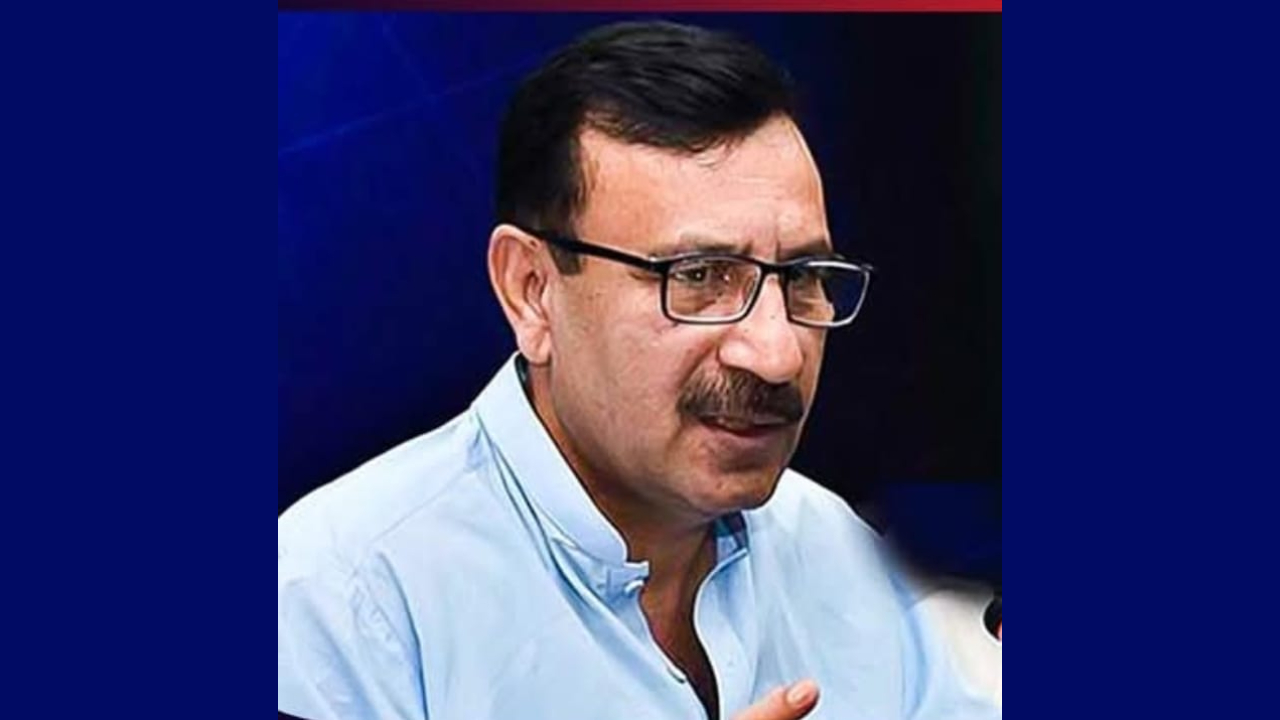
ISLAMABAD (TNS) When Integrity Defies Power: The Story of Muhammad Asim Khichi By Saqib Khan Khattar A quiet yet remarkable revolution has unfolded within Pakistan’s media industry, led by one man—Muhammad Asim Khichi. An honest bureaucrat, he took on multi-billion-rupee corruption, rescuing a state institution from collapse and setting an extraordinary precedent for accountability. Despite threats, intimidation and political pressure, Khichi stood firm, emerging as a beacon of integrity in a system long overshadowed by darkness.
Khichi, currently the Managing Director of the Associated Press of Pakistan (APP), is a career bureaucrat and senior Grade-20 officer of the Ministry of Information and Broadcasting. Since assuming charge of APP in 2023, he has guided the organisation out of financial and administrative crises while exposing entrenched corruption worth billions of rupees. At a time when media institutions in Pakistan face relentless political and financial pressures, Khichi’s work demonstrates that honesty and professional competence can still drive meaningful change.
Earlier in his career, Khichi served in several key positions. In 2021, he was appointed Director General of Radio Pakistan, where he sought to modernise operations. His statement—“The employees of Radio Pakistan are a national asset, and this institution must be aligned with modern standards”—captures his reformist vision. Under his leadership, operational efficiency improved, marking a milestone in Pakistan’s broadcasting history. His administrative expertise, combined with an acute understanding of digital media, enabled him to embrace innovation at Radio Pakistan—an approach he later carried into APP.
When he took charge of APP in 2023, the agency was beset with severe difficulties. Khichi initiated reforms immediately: moving the website to local servers (saving $9,000 annually), generating Rs 2.4 million in revenue, and expanding APP’s digital reach to millions. Today, APP has 10.3 million followers on Facebook, 10 million on TikTok, 1.5 million on X (Twitter), more than 319,000 on Instagram, and 137,000 subscribers on YouTube. Speaking at a conference in Guangzhou, China, Khichi remarked: “In the digital era, connectivity, diverse content creation, and global dialogue are indispensable.” APP also began pursuing news-exchange agreements with 11 international agencies, awaiting cabinet approval.
Khichi consistently described APP as a “strategic media entity” vital for shaping Pakistan’s national narrative. His international engagements further elevated its profile. In 2025, he held discussions with Kazakhstan’s ambassador Yerzhan Kistafin, officials from Iran’s IRNA, and the Kyrgyz ambassador, focusing on regional cooperation and technical collaboration. These steps underscored efforts to make APP globally relevant.
But his most significant achievement came in 2025: the exposure of a Rs 1.24 billion corruption scandal inside APP. Investigations revealed ghost employees, fraudulent recruitment and embezzled provident fund accounts. Audit reports for 2023–24 and 2025–26 confirmed the findings. It was no easy task. Khichi faced direct death threats; one accused, Chavez Irshad, threatened to blow up his family if inquiries continued.