
Khanewal (TNS) The politics of Khanewal has always been a saga unto itself. The soil of this district is fertile; its fields sway with wheat and cotton alike. Yet, paradoxically, the politics that sprouted from this very soil often remained barren. Prominent families rose to power, lofty promises echoed across campaign stages, and visions of prosperity were painted in bold strokes. But as soon as the motorcades departed from their ancestral deras, the same old wounds reappeared — unpaved streets, crumbling schools, empty hospitals, and youth left chasing livelihoods in far-off cities.
For decades, the politics of Khanewal was dominated by makhdooms, waderas, and landlords who wielded access to corridors of power. The question, however, persisted: what did the common man gain? The answer, unfortunately, was little.
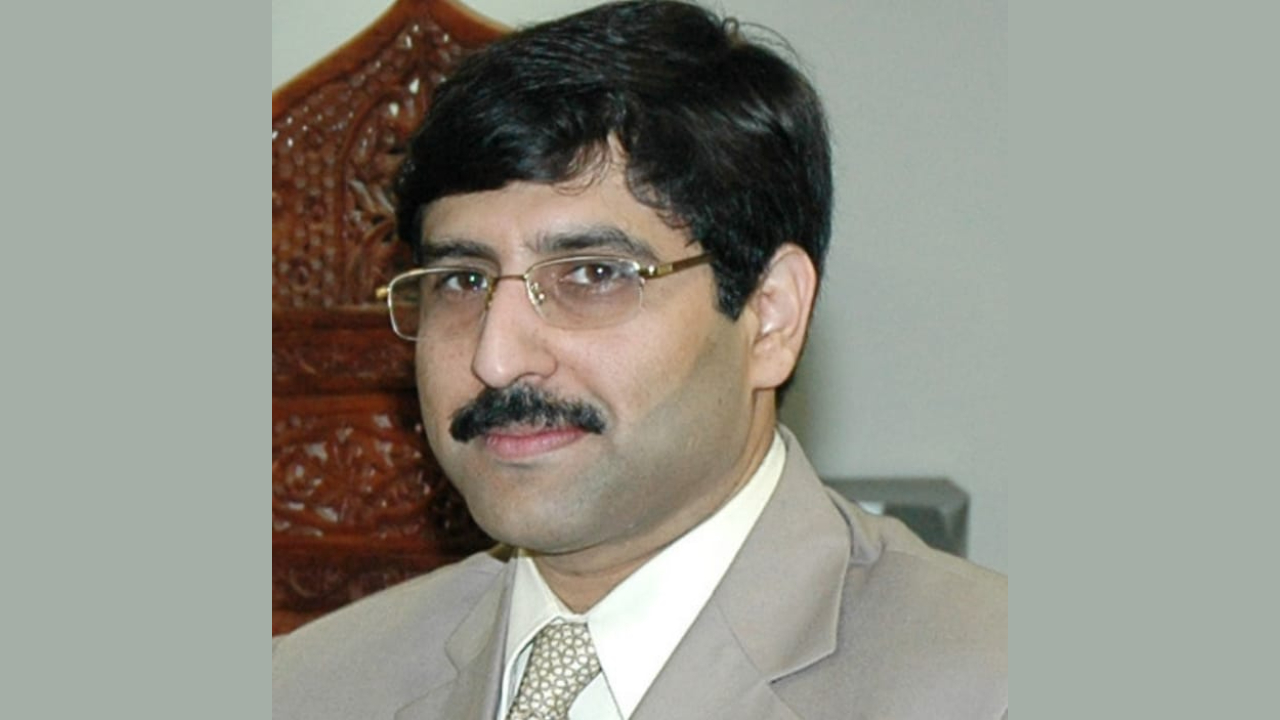
It was in this setting that Sardar Hamid Yar Hiraj rose to leadership. Many assumed his story would be no different — another round of manifestos printed, slogans raised, and hopes dashed. Yet time told a different tale. Unlike his predecessors, Hiraj did not treat politics as an exercise in rhetoric. His brand of politics came to be associated with service, projects, and tangible transformation.
Take Abdul Hakim and Makhdoom Pur — areas that had long epitomised neglect. For decades, residents there lacked even the most basic facilities. Today, the sirens of Rescue 1122 ambulances pierce the silence where once patients died waiting for help that never came. This is no small shift; it marks a change in the very relationship between citizen and state.
Hiraj’s contributions extended beyond his district. When appointed Federal Minister and later as Chairman of the Earthquake Reconstruction and Rehabilitation Authority (ERRA), the institution, often criticised as a bureaucratic graveyard, became functional. Where disaster relief funds in Pakistan usually vanish into corruption, ERRA under his stewardship stood out for transparency and delivery. Thousands of families regained shelter, schools and hospitals were rebuilt, and livelihoods restored. That is not the legacy of an ordinary minister; it is the mark of leadership with intent.
January 7, 2022, proved another turning point. Taking oath as provincial minister in Usman Buzdar’s cabinet, Hiraj brought his focus back to Khanewal. Projects that had for years existed only as bullet points in campaign speeches began to materialise. Rescue 1122 stations in Abdul Hakim and Makhdoom Pur, four motorway interchanges in a single constituency — an unprecedented record — a new grid station in Makhdoom Pur, NADRA and passport offices, upgraded schools and hospitals: all of these became part of the district’s landscape.
But perhaps the most visible symbol of change has been infrastructure. Billions of rupees have been invested in carpeting hundreds of kilometres of roads — Kacha Khoh to Abdul Hakim, Piruwal to Makhdoom Pur, Khanewal to Makhdoom Pur, Khaliqabad to Kabirwala, and Abdul Hakim to Kabirwala. These are not mere strips of asphalt; they are physical embodiments of a political philosophy — that representation must translate into service.
This raises a broader question: why does a politician choose to tread this path? In Pakistan, politics is often viewed as a game of power and personal enrichment. Development funds are too frequently treated as private inheritance. Hiraj’s record, however, appears to defy that pattern. Was it driven by a genuine spirit of service, or by the logic of political survival? Likely both. Yet for the public, the distinction may not matter. If the bargain of votes in exchange for schools, hospitals, and roads delivers, then it is a bargain worth making.
Today, the people of Khanewal speak of their district with a new sense of pride. They do not attribute this to fate or chance but to leadership that chose action over rhetoric. To them, Hamid Yar Hiraj is not merely a politician; he is the architect of a new beginning.
Of course, no political record is beyond criticism. Skeptics argue that these projects are strategic investments for electoral returns. Yet even this critique concedes one undeniable fact: promises have been fulfilled in brick and mortar. Unlike the hollow commitments of so many before him, Hiraj’s imprint is visible in schools where children learn, in hospitals where patients are treated, in roads where commerce flows.
In Pakistan’s political history, few districts can claim that their people describe a leader as their “last hope.” In Khanewal, this sentiment is real. The refrain heard across its villages is simple: the destiny of Khanewal is inseparable from the name of Sardar Hamid Yar Hiraj.
Politics, after all, is remembered not by the slogans raised, but by the lives transformed. And in Khanewal, the roads, the classrooms, the rescue sirens — they all speak louder than speeches ever could.