
ISLAMABAD (TNS) The independence of occupied Kashmir is the need of the hour, while the solution is present in the UN resolutions. The long-standing issue should be resolved in accordance with the UN resolutions. After the establishment of Pakistan and India in 1947, several resolutions have been passed in the UN Security Council regarding the Kashmir dispute. After the establishment of Pakistan and India in 1947, several resolutions have been passed in the UN Security Council regarding the Kashmir dispute, but even after seven decades, this dispute could not be resolved. The UN Security Council passed the first resolution on the Kashmir dispute in January 1948 and so far more than a dozen resolutions have been passed to resolve this dispute. In the 38th resolution passed in the Security Council on January 17, 1948, the representatives of Pakistan and India were prevented from making such statements on the deteriorating situation in Kashmir, which would further aggravate the situation. The resolution further stated that the Kashmir dispute was under consideration by the Security Council. Resolution No. 39, passed on January 20, 1948, established a three-member commission to resolve the Kashmir dispute. The commission was to be composed of one member from India, one from Pakistan, and one from both by mutual consent. The commission was to make recommendations to the Security Council through a joint letter to establish peace in the region. After hearing the arguments of Pakistan and India in Resolution No. 47, the Security Council increased the number of members of the special commission formed under Resolution No. 39 to five. Representatives of Argentina, Belgium, Colombia, Czechoslovakia, and the United States were also included in the commission. The resolution, passed on April 21, 1948, instructed the commission to go to the region and restore peace between the two countries and make arrangements for a plebiscite to be held under the supervision of the United Nations. The resolution called for three steps to be taken to resolve the dispute. Pakistan was asked to recall its citizens who had gone to fight in Kashmir, while India was asked to gradually reduce its army and keep only as many troops in Kashmir as are required to maintain peace and order. Both countries were asked to ensure that Kashmir was decided through a plebiscite in accordance with the will of the Kashmiris. Resolution No. 51, passed on June 3, 1948, asked the United Nations Commission to go to the disputed areas and implement the instructions given by the Security Council.
It may be recalled that Indian forces entered Srinagar on October 27, 1947, in a clear violation of international law and the freedom of the Kashmiri people, which also paved the way for the Indo-Pak conflict in Asia. Kashmir is an internationally recognized dispute and now it is time for the permanent members of the United Nations to play their role for a peaceful resolution of the Kashmir issue. India has no legal basis to justify its occupation and genocide in occupied Jammu and Kashmir, while Pakistan has all the legal basis and justification to pursue the Kashmir case at all international forums. In accordance with the UN Security Council resolution and the wishes of the Kashmiri people, a peaceful resolution of Kashmir is the only way to maintain peace and stability in the region. Since the establishment of Pakistan and India in 1947, several resolutions have been passed in the UN Security Council regarding the Kashmir dispute, but even after seven decades, this dispute has not been resolved. The UN Security Council passed the first resolution on the Kashmir dispute in January 1948 and so far more than a dozen resolutions have been passed to resolve this dispute. In the 38th resolution passed by the Security Council on January 17, 1948, the representatives of Pakistan and India were prevented from making statements on the deteriorating situation in Kashmir that would further aggravate the situation. The resolution further stated that the Kashmir dispute was under consideration by the Security Council. Resolution No. 39, passed on January 20, 1948, established a three-member commission to resolve the Kashmir dispute. The commission was to be composed of one member from India, one from Pakistan, and one from both by mutual consent. The commission was to make recommendations to the Security Council through a joint letter to establish peace in the region. After hearing the arguments of Pakistan and India in Resolution No. 47, the Security Council increased the number of members of the special commission formed under Resolution No. 39 to five. Representatives of Argentina, Belgium, Colombia, Czechoslovakia, and the United States were also included in the commission. The resolution, passed on April 21, 1948, instructed the commission to go to the region and restore peace between the two countries and make arrangements for a plebiscite to be held under the supervision of the United Nations. The resolution called for three steps to be taken to resolve the dispute.Pakistan was asked to withdraw its citizens who had gone to fight in Kashmir, while India was asked to gradually reduce its army and keep only as many troops in Kashmir as were required to maintain peace and order. Both countries were asked to ensure that Kashmir was decided through a plebiscite in accordance with the will of the Kashmiris. Resolution No. 51, passed on June 3, 1948, asked the United Nations Commission to visit the disputed areas and implement the instructions given by the Security Council. The resolution also asked to include a letter written to the Security Council by the then Foreign Minister of Pakistan. In Resolution No. 80, after the reports of the United Nations Commission and Representative General McNaughton, the Security Council urged both countries to adhere to the ceasefire agreement and to keep Jammu and Kashmir a demilitarized zone. The resolution of March 14, 1950, asked India and Pakistan to withdraw their troops to the Line of Control. The Northern Areas were administered by the United Nations and it was decided to elect a representative from the United Nations to hold a plebiscite.
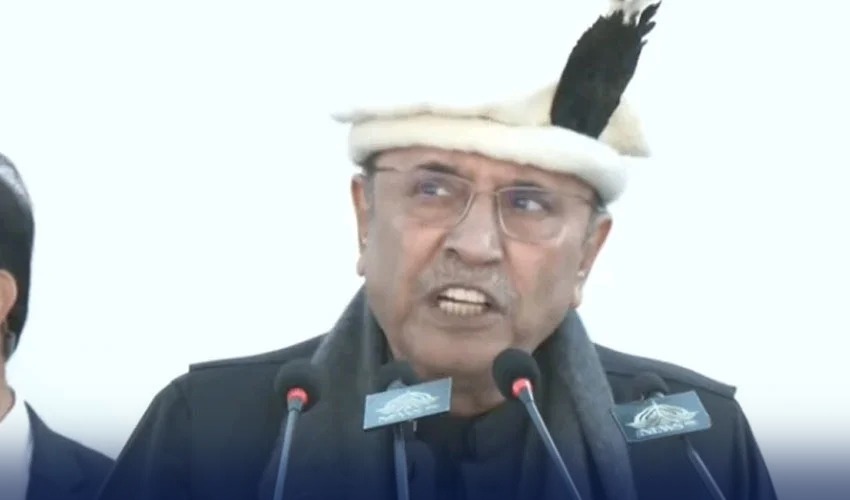
 In Resolution No. 91, the report of the UN representative Sir Owen Dixon outlined the differences preventing the holding of a plebiscite in Kashmir. The Security Council accepted the resignation of Sir Owen Dixon and asked his replacement to submit a report within three months and directed Pakistan and India to cooperate with the UN representative. The report of March 31, 1951, further stated that a group of military observers would monitor the ceasefire. In Resolution No. 96, the report of the UN representative Frank Graham was presented in the resolution of November 10, 1951 and he said in his address to the Security Council that India and Pakistan had agreed to withdraw their troops from Kashmir, resolve the Kashmir dispute by mutual consent and hold a plebiscite under the supervision of the United Nations. In Resolution No. 98, it was agreed in the negotiations supervised by the United Nations that India and Pakistan would be able to maintain a certain number of troops on the Line of Control. In the resolution passed on December 23, 1952, this number was fixed at 3,000 to 6,000 for Pakistan, while for India it was fixed at 12,000 to 18,000. In Resolution No. 122, passed on January 24, 1957, this resolution stated that the Legislative Assembly of the All Jammu and Kashmir National Conference could not take any decision regarding the future of the disputed Jammu and Kashmir. The resolution further stated that according to Security Council Resolution No. 91, the territory of Jammu and Kashmir was disputed. In Resolution No. 123, passed on February 21, 1957, due to the tense situation in Jammu and Kashmir, the Security Council asked President Gunnar Jarring to visit Pakistan and India and give his suggestions for a solution to the dispute. In Resolution No. 126, adopted on December 2, 1957, the report of the President of the Security Council, Gunnar Jarring, directed India and Pakistan to live in peace and asked the UN representative to visit Pakistan and India and suggest measures for further progress in this dispute. In Resolution No. 209, adopted on September 4, 1965, the resolution called on India and Pakistan to immediately cease hostilities due to the deteriorating situation on the Line of Control between Pakistan and India. The resolution asked both countries to cooperate with the United Nations Military Observer Group and submit a report to the Secretary-General within three days. In Resolution No. 210, adopted on September 6, 1965, according to the report of the United Nations Secretary-General, the resolution called on India and Pakistan to cease hostilities and withdraw their forces to the positions of August 5, 1965. The resolution also called for a regular review of the Kashmir dispute. In Resolution 211, despite the Security Council’s instructions for a ceasefire in Resolutions 209 and 210, when there was no ceasefire between India and Pakistan, another resolution was passed on September 20, 1965, calling for a ceasefire by 7:00 a.m. (GMT) on September 22 and for the armies of both countries to return to their positions prior to August 5.Resolution No. 214, adopted on September 27, 1965, expressed concern over the failure of India and Pakistan to cease hostilities and asked the parties to abide by the ceasefire agreement. Resolution No. 215, adopted on November 5, 1965, requested the representatives of both countries to meet the Secretary-General to formulate a plan for the withdrawal of troops in response to the failure of India and Pakistan to observe the ceasefire. Resolution No. 307, adopted on December 21, 1971, stated that after discussions with the representatives of India and Pakistan, the Security Council desired that a complete ceasefire be observed in Jammu and Kashmir until the withdrawal of troops was completed. Resolution No. 1172, condemned the nuclear tests by India and Pakistan and ordered both countries not to conduct further tests. The resolution also offered the Security Council assistance in resolving the Kashmir dispute between Pakistan and India. Will another resolution be passed on the Kashmir dispute or will Pakistan and India be asked to resume bilateral talks to resolve the Kashmir dispute? On the other hand, President of Pakistan Asif Zardari, in his address to the 78th Independence Day celebration of Gilgit-Baltistan, said that atrocities on Muslims in India have reached their peak, the Muslim majority is being converted into a minority, the freedom of occupied Kashmir is the need of the hour, the long-standing issue should be resolved in accordance with the resolutions of the United Nations. Occupied Kashmir has been suffering from Indian atrocities for a long time. The freedom of occupied Jammu and Kashmir is the need of the hour. The genocide of Kashmiris in India has reached its peak. A ceremony was organized on the 78th Independence Day from the Dogra Raj of Gilgit-Baltistan (GB), in which President Asif Ali Zardari inspected the parade. President Asif Zardari was given a traditional cap by the Governor of Gilgit-Baltistan at the Independence Day celebration. The President attended the ceremony as the chief guest. The President was welcomed by the Governor and Chief Minister of Gilgit-Baltistan. The President of Pakistan said that history can never forget your bravery. In 1947, you joined Pakistan by waging jihad. 1,700 of your soldiers were martyred in the 1947 war. President Zardari said that as we celebrate your Independence Day, let us renew our resolve to make Gilgit-Baltistan an example of progress, justice and equality.
 Your region has great potential not only for the country but also for the whole world. The President also mentioned the people of occupied Kashmir and said that while you are enjoying freedom and rights under the flag of Pakistan, they are still under occupation. We stand with them until they too are able to live with freedom in accordance with the resolutions of the United Nations Security Council and the aspirations of the Kashmiri people. During the last 7 decades, the people of Gilgit-Baltistan have moved forward side by side with Pakistan. The President said, “You protected our borders, supported our journey of development, and hoisted the flag of Pakistan on the highest peaks of the world. This region is not only the crown of Pakistan but also our northern gateway and a symbol of our long-standing friendship with China. Shaheed Bhutto abolished the FCR, our government gave you a legislative assembly, there should be schools in every valley of yours, there are minerals in Gilgit-Baltistan, tourism can be promoted in Gilgit-Baltistan. Gilgit-Baltistan should get its own airline, these mountains are your and my capital, today is the era of communication. CPEC is a manifestation of Pakistan’s development, China is our friend and partner country, CPEC Phase II is successfully completing its stages, we want to see Gilgit-Baltistan developed like other provinces. If Gilgit-Baltistan develops, then Pakistan will develop.” He said that in India today, atrocities are being committed against all minorities, including Muslims, that is why today we realize that we owe them the work done for us by Quaid-e-Azam and Allama Iqbal. Thank you. Asif Ali Zardari said that the freedom of occupied Jammu and Kashmir is the need of the hour. He strongly condemned India’s usurping occupation of occupied Jammu and Kashmir and called on the international community to play its role in resolving the Kashmir issue in accordance with the resolutions of the United Nations. Earlier, Prime Minister Shahbaz Sharif said in his message that on November 1, 1947, the people of Gilgit-Baltistan achieved independence from the Dogra Raj. The brave people of Gilgit-Baltistan demonstrated their patriotism and joined Pakistan. This day commemorates this great sacrifice that changed the history of the region. The federal government is committed to the development of Gilgit-Baltistan. Gilgit-Baltistan’s 78th Independence Day was celebrated. The people of Gilgit-Baltistan achieved independence from the Dogra Raj on this very day in 1947. Gilgit-Baltistan, covering 72,000 square kilometers, achieved independence on November 1, 1947 when the Maharaja of Kashmir landed Indian forces in Kashmir on October 27. On the night of October 31, 1947, The Gilgit Scouts, led by Subedar Major Raja Babar Khan, took Brigadier Ghansara Singh, the appointed Governor of the Maharaja of Kashmir in Gilgit, into custody and liberated Gilgit from the Maharaja of Kashmir and Indian rule on November 1. Through the struggle of the Gilgit Scouts and the local people, Gilgit-Baltistan was placed under the administrative control of the Federal Government of Pakistan, which continues to function as an important administrative unit of the Federally Administered Pakistan to this day.Dialogue between India and Pakistan can be the only solution to this conflict. Both countries need to respect the wishes of the Kashmiri people to resolve their differences. It is also necessary to include the Kashmiri people in the resolution of this conflict. A permanent solution can be found only by keeping in mind the wishes and demands of the Kashmiri people. The international community can also play an important role in resolving this conflict. By putting pressure on India, it can be brought to the negotiating table.