

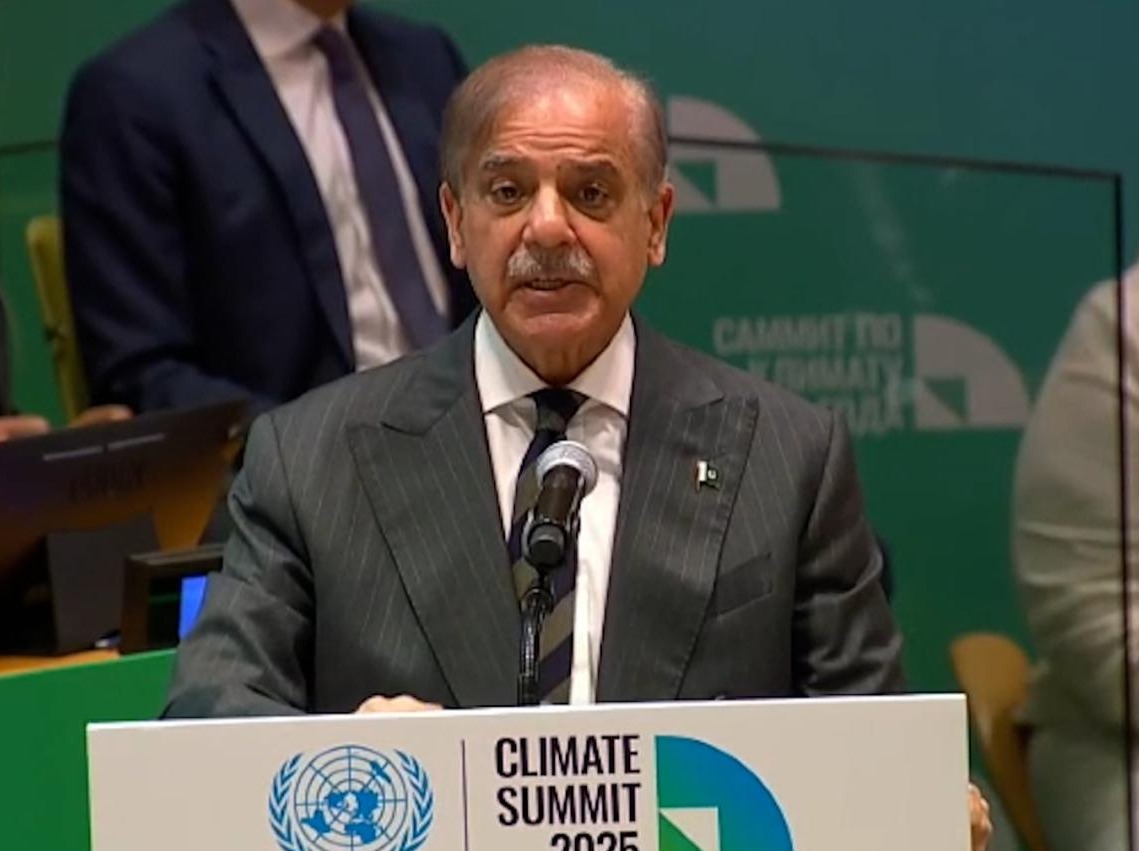
ISLAMABAD (TNS) Pakistan was severely affected by the effects of climate change this year and faced 15 percent more rainfall than usual, making it one of the countries in the world least prepared to deal with the effects of climate change.
Pakistan, which is responsible for only 0.5 percent of the world’s historical carbon emissions, ranks 152nd in the world in terms of preparedness to deal with climate impacts. Prime Minister Shehbaz Sharif says that Pakistan is among the ten countries where these disasters will continue to occur in the future, so we have to prepare for this. The federal government and the government of Gilgit-Baltistan have to work on this day and night. There should be an advanced warning system to deal with disasters. The country also faced natural disasters in the form of floods during 2022. The relevant institutions will have to take coordinated measures to deal with climate problems.
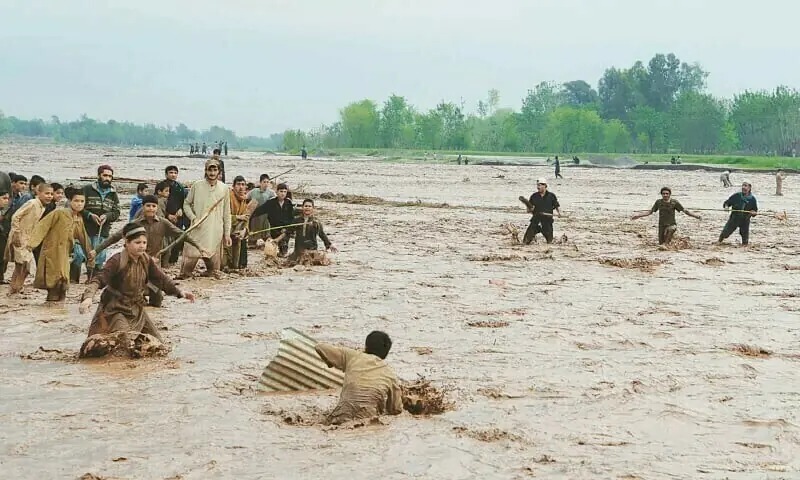
Climate change is now being taken seriously in Pakistan, but there is a lack of international financial assistance and long-term planning. The record-breaking temperature of 48.5 degrees Celsius in northern Pakistan and the subsequent deadly rains in July are another clear reminder of the dangers Pakistan is facing with a global warming of only 1.3 degrees Celsius.
On the instructions of Prime Minister Shehbaz Sharif, Pakistan hosted the Climate Change Conference Pakistan has made a comprehensive plan for COP30 under which Pakistan will submit a demand for climate financing of $50-60 billion per year Pakistan submitted its new National Climate Targets (NDC 3.0) to the United Nations, which includes a demand for $565.7 billion in climate financing for environmental goals by 2035.
Due to climate change, Pakistan may face the most severe cold in decades this year due to ‘La Nina’, which may create further difficulties for flood-affected families living especially in the northern areas.
A recent report prepared by the Inter-Sector Coordination Group and its partners has stated that this year Pakistan is likely to experience a colder than normal due to ‘La Nina’ climate change, this severe cold may cause further difficulties especially for flood-affected families living in the mountainous areas of Khyber Pakhtunkhwa and Gilgit-Baltistan.
Meteorologists have warned that La Nina occurs when sea surface temperatures in the Pacific Ocean drop abnormally, causing severe weather changes around the world. The weather forecast issued by the United Nations Humanitarian Agency (OCHA) for October said that slightly negative phases of El Niño and the Indian Ocean Dipole will affect rainfall in Pakistan. According to the report, less than normal rainfall is expected in northern Punjab, Khyber Pakhtunkhwa, Azad Kashmir and Gilgit-Baltistan, while rainfall is likely to be normal in southern areas such as Sindh, Balochistan and southern Punjab. The possible impacts of this weather phenomenon include disruption of Kharif crop harvesting due to torrential rains, risk of dengue spread in stagnant water, increased chances of glacial lake outburst in upland areas, impact on irrigation systems due to water shortage in rivers, increase in smog and air pollution in plains, and negative impacts on animal health and fodder availability. The report also notes that the post-flood situation is deteriorating, while the capacity of the government and aid agencies is also weakening.
The report states that despite a strong local and international response to the onset of the crisis, the presence and capacity of humanitarian agencies on the ground has declined after three months, initial emergency aid and reserves have been depleted, and agencies are now seeking more funding for long-term relief efforts to ensure the provision of basic services from the humanitarian phase to the early recovery phase. The report expresses the greatest concern about the long-term loss of livelihoods, which has become a threat to the recovery and self-reliance process, with fields submerged, crops destroyed, livestock and fodder washed away, while agricultural machinery and equipment were damaged or destroyed, making it difficult for farmers to restore their livelihoods.According to a recent geospatial analysis by the United Nations Food and Agriculture Organization (FAO), Punjab, a key food producing province, has seen nearly 1.2 million hectares of land submerged, destroying key crops of rice, cotton and sugarcane. The disaster struck at a crucial time for the Rabi crop, posing a serious threat to food security, livelihoods and resilience. In many flood-affected areas, waterlogging is still causing serious health problems, including water-borne diseases such as cholera, diarrhoea and typhoid, and mosquito-borne diseases such as malaria and dengue, which spread rapidly in these conditions. With over 229,760 homes destroyed or severely affected, many families are still forced to live in the open, where they have inadequate facilities to protect them from the harsh weather and mosquito-borne diseases. Schools and health centers are deprived of essential supplies and in many places buildings are covered in a thick layer of mud, due to which educational activities and medical services cannot be restored, food and fodder stocks have either been washed away or rotted in the water, which is increasing malnutrition and forcing the affected population to rely on relief rations.
Under the United Nations Framework Convention on Climate Change, each country submits its environmental targets every five years, Pakistan submitted NDC 3.0 to the UNFCCC on September 23, 2025. Pakistan achieved the target of reducing greenhouse gases by 37 percent under NDC 2.0 between 2021 and 2025, and Pakistan achieved this target without any international financial assistance. Under the new targets, Pakistan has set a target of 1.28 billion tons of greenhouse gas emissions by 2035 instead of 2.559 billion tons. During this period, Pakistan will reduce its own resources by 17 percent, while international financing and technology provision of $565.7 billion has been declared mandatory for the remaining 33 percent reduction. Pakistan has demanded $565.7 billion in climate financing from the international community. According to the document, more than 38,000 MW of renewable and clean energy is expected in Pakistan by 2035. Similarly, by 2030, 30 percent of new vehicles in the country will be electric and 3,000 electric charging stations will be established. Under the Energy Efficiency Policy, Pakistan has also set a target of reducing emissions by 35 million tons by 2030, while global cooperation has been called for affordable eco-friendly technology and capacity building.
Pakistan’s focus at COP30 will be on climate financing, with Pakistan seeking $50-60 billion in climate financing per year.
Projects from all four provinces, Gilgit-Baltistan and Azad Kashmir will be presented at COP30, while projects such as climate smart agriculture, glacier protection and water recharge will be presented. The Ministry of Climate Change will provide administrative and technical support to the provinces in these projects, which the Ministry of Climate Change has declared as the main agenda of the Climate Financing Conference. According to officials, Pakistan has received $500 million in climate finance in the form of various projects. According to the World Bank report, Pakistan needs $348 billion in climate financing by 2030. Pakistan needs large-scale financial assistance to deal with environmental threats. Pakistan will seek solid support from the international community for climate financing. It may be recalled that on September 25, International Monetary Fund (IMF) representative Maher Bensi had said that negotiations will also be held with Pakistan on the first review of climate financing, while sources in the Ministry of Finance said that in the first phase, Pakistan will share economic data with the IMF in technical negotiations. Data from January to June 2025 will be shared in the technical negotiations.
Predictions of up to 30 years regarding climate change have proven to be correct. In 1996, the IPCC predicted a sea level rise of about 8 centimeters (about 3 inches). It has been revealed that predictions about climate change 30 years ago have proven to be surprisingly correct. Researchers at MIT, the University of California, and NASA found that 14 of 17 cloud models built between 1970 and 2007 predicted subsequent global temperatures with a high degree of accuracy, or about 82% of the models were accurate. The study concludes that the warming we have seen is roughly what climate models predicted 30 years ago. Researchers at Tulane University found that in 1996 the IPCC predicted about 8 centimeters (about 3 inches) of sea level rise, which actually happened to be 9 centimeters over the next 30 years,Surprisingly, it came out to be around 8. Research reports such as Carbon Brief and Yale Climate Connections also prove that models released since 1973 have predicted the effects of greenhouse gas changes quite accurately, although some models made more or less accurate predictions, but the overall trend was correct. NASA research also shows that models released after 1970 showed considerable skill in predicting future temperatures, and when errors in the assumed environmental factors in the models were corrected, the number of models that made accurate predictions reached 14. According to the Climate Risk Index released by the German Watch NGO, Dominica, China and Honduras are the countries most affected by extreme weather events. The index released by them also revealed that in the last 30 years, about 800,000 people lost their lives due to storms, floods, droughts, heat waves and forest fires. The economic damage from these natural disasters is estimated at around $4.2 trillion (4.07 trillion euros), the German Watch report says. “The Climate Risk Index aims to align international climate policy with the real risks that countries are facing.” Countries that face different types of risks can rise higher in this ranking. On the one hand, there are human impacts such as deaths, injuries, displacement and displacement, and on the other, severe economic damage. The report examines both types equally. Dominica, the Caribbean country most prone to hurricanes and which tops the ranking, has suffered major economic losses from hurricanes in a 30-year study by German Watch. Hurricane “Maria” in 2018 was cited, which caused up to $1.8 billion in damage, which was 270% of Dominica’s GDP. The island nation has also suffered a relatively high death toll, which is all the more significant given its small population. China is second on the list because large parts of its vast population are affected by recurring heatwaves, storms and floods. Floods in 2016 killed more than 100 people and displaced millions.
Honduras, which is third on the list, is particularly vulnerable to the effects of extreme climate change as it is one of the poorest countries in the world. Hurricane Mitch in 1998 killed more than 14,000 people and destroyed 70% of the country’s crops and infrastructure.
“This event is more than two decades old, but its effects were so profound that we still talk about it today,” says Diego Obando Bonilla, a climate expert at the University of Zamora in Honduras. It caused $7 billion in damage, which has slowed the country’s development. A sector that is particularly vulnerable to hurricanes and droughts in Honduras The index also includes developed countries such as Italy, Greece and Spain. Floods in China in 2016 killed more than 100 people and displaced millions. Although countries in the global south face the greatest risks, the index also includes developed countries such as Italy, Greece and Spain. In 2022, in particular, these countries rose further in the ranking due to severe heat waves. The results recorded in the report show that all countries around the world are being affected by climate change, whether in the global north or the south, Adil said. “This means that the global north is not yet fully prepared to deal with and adapt to disaster risks.” The report cites the severe floods in Ahrtal, Germany, in 2021, and Valencia, Spain, in 2024, as examples of European authorities being too slow to declare a state of emergency. With devastating consequences. In both cases, more than 100 people died. The global North has a dual responsibility not only to effectively manage its own risks but also to help the global South, as these countries are responsible for the lowest carbon emissions in the world. This also applies to their efforts to reduce costs. Because as long as polluting countries continue to use fossil fuels, the severe impact of climate change that is visible on the Global Climate Risk Index will occur again and again with greater intensity. COP30 establishes a formal council to consult with society and local authorities on solutions to adapt to climate change The 30th United Nations Conference on Climate Change COP30 President Ambassador André Correa do Lago has announced that a formal council has been established to consult with society and local authorities on solutions to adapt to climate change.According to the Korea Declaration, climate change adaptation is one of the main priorities of COP30. This global conference will be held in November 2025 in the city of Belém (State of Pará) in the Amazon region of Brazil. The new “Adaptation Council” will include several prominent Brazilian figures, who will facilitate effective dialogue with civil society and local authorities.
Chief Minister of Punjab Maryam Nawaz, Senior Minister of Punjab Marriyum Aurangzeb will also participate. Prime Minister Shehbaz Sharif is likely to not attend the COP30 conference in Brazil due to his busy schedule. The Prime Minister has nominated Federal Minister for Climate Change Mosaddiq Malik in his place. The Federal Ministry of Climate Change has completed preparations to participate in the conference. During the conference, Pakistan will demand climate financing of fifty to sixty billion dollars every year. Projects of all four provinces, GB and Azad Kashmir will also be presented. According to officials of the Ministry of Climate Change, Pakistan needs climate financing of three hundred and forty-eight billion dollars by 2030.
Prime Minister Shahbaz Sharif nominated Federal Minister for Climate Change Mosaddiq Malik to represent Pakistan at the conference in his place. Dr. Mosaddiq Malik has left for Brazil. 18 scientists affiliated with the World Weather Attribution Group, based at the Grantham Institute of Imperial College, UK, have declared that this unusual situation was the result of human activities, which further exacerbated the climate change crisis. The group, which included experts from universities and meteorological departments in Pakistan, the UK, France and the Netherlands, said that the recent floods were caused by heavier than usual rainfall, and blamed human activities for this unusual weather. The monsoon season in Pakistan begins in late June and ends in September. This season brings 70 to 80 percent of the country’s annual rainfall, but often leads to floods. Although monsoon rains are very important for replenishing water reservoirs, they have become more intense in recent years. Dr Maryam Zakaria, from the Centre for Environmental Policy at Imperial College London, said Pakistan’s monsoon has become so intense that even months with relatively heavy rainfall are now causing more deaths. The rainfall analysed in the report was not ‘record-breaking’, but it does point to a wider trend, with climate change making floods increasingly dangerous. The floods, which followed heavy monsoon rains, have hit Pakistan’s northern regions hard. A state of emergency has been declared in several districts of the country, with floodwaters flooding roads, destroying homes and destroying crops. The analysis found that between June 26 and August 3, 300 people died across the country, with 242 of those deaths occurring in northern Pakistan. Historical rainfall data showed that recent rainfall in northern Pakistan was not particularly unusual compared to other years. In today’s climate, where global temperatures have risen by 1.3 degrees Celsius, similar 30-day intense monsoon events are expected every five years. The report said that if humans had not warmed the atmosphere by burning fossil fuels, rainfall would have been much less intense. The researchers found that by combining weather data with climate models, climate change has made intense monsoon rains about 15 percent more intense.
Pakistan, which is responsible for only 0.5 percent of the world’s historical carbon emissions, ranks 152nd in the world in terms of climate preparedness, a number that makes heatwaves, droughts and floods more severe. Urgent action is needed to protect communities from these risks. Monsoons in Pakistan will continue to become more intense until the world shifts from fossil fuels to renewable energy. Every tenth of a degree increase in temperature will make monsoons more intense, highlighting the urgent need for a rapid transition from fossil fuels to renewable energy. Pakistan urgently needs international financial support for climate adaptation, and the country needs $40-50 billion annually to cope with climate impacts. Unless large-scale adaptation measures are taken, extreme weather events could cost Pakistan an estimated $1.2 trillion by 2050, according to a previous UN report.At the COP29 meeting, rich countries, which are responsible for the most carbon emissions, agreed to increase climate finance to $300 billion by 2035 for developing countries. There is still a large gap between the current aid provided by developed countries and the amount needed. The report, citing the United Nations, said that developed countries are currently providing only $28 billion annually, which is $187 to $359 billion less than the amount needed. More than 1,700 people died in the 2022 floods, which is evidence of how vulnerable Pakistan is to climate change, but three years later, monsoon floods are still causing deaths. It should be noted that the Meteorological Department has predicted strong winds, snowfall and rains in the upper parts of the country during this week. A new series of rains is likely to start in the upper parts of the country from November 4, which is likely to continue till November 5. According to the Meteorological Department, a series of westerly winds will enter the upper parts of the country from tonight, which will cause rains, strong winds and snowfall with thunder and lightning at some places. Rain is expected in Chitral, Dir, Swat, Kohistan, Abbottabad and Haripur from November 4 to 5, while rain and snowfall in the mountainous areas are likely in Swabi, Peshawar, Mardan, Kohat, Kashmir and Muzaffarabad. Similarly, clouds are also expected in Islamabad, Rawalpindi, Murree, Attock, Chakwal, Talagang, Jhelum and Sargodha. Thunderstorms have also been forecast in Khushab, Gujranwala, Sialkot, Narowal and Lahore. Temperatures are expected to drop significantly during the rains, and smog and fog are also likely to decrease.