

ISLAMABAD (TNS) Pakistan is and will always remain committed to restoring peace, justice and dignity for the Palestinian people and achieving their right to self-determination. Pakistan demands that unhindered humanitarian assistance be provided to the Palestinian people and steps be taken for the reconstruction of Gaza. An important meeting of the Foreign Ministers of Arab and Islamic countries on Gaza was held in Istanbul, Turkey, in which Pakistan was represented by Deputy Prime Minister and Foreign Minister Ishaq Dar and once again reiterated its principled position. He said that an independent and sovereign Palestinian state is indispensable for permanent peace in the region. An independent and sovereign Palestinian state should be established according to the pre-1967 borders.
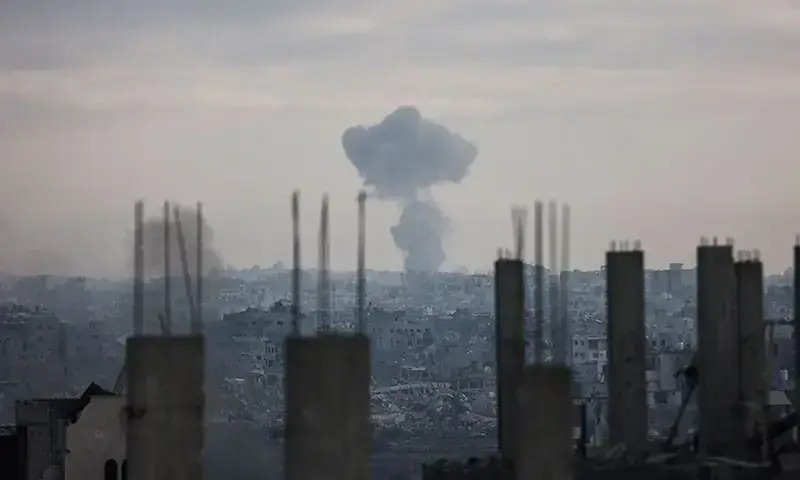 The capital of the independent Palestinian state should be Al-Quds Al-Sharif. The Istanbul meeting will be attended by the foreign ministers of Turkey, the United Arab Emirates, Indonesia, Qatar, Pakistan, Saudi Arabia and Jordan. These are the same countries whose representatives will be present at the United Nations General Assembly on September 23 with US President Donald Trump. Turkey and Israel have been strained since the Gaza war, with President Tayyip Erdogan sharply criticizing Israeli attacks, Turkey playing a key role in persuading Hamas to accept Donald Trump’s peace plan, and Ankara expressing its desire to join the proposed International Stabilization Force (ISF) to monitor the ceasefire in Gaza. However, Israel has made it clear that it will not accept the presence of Turkish forces in Gaza. Other countries considering joining the force include Jordan, Egypt, Indonesia and Pakistan. At the Istanbul meeting, Arab and Islamic countries agreed on the urgent need to rebuild Gaza. Pakistan reiterated its principled position and stressed that the Palestinian issue should be resolved in accordance with UN and OIC resolutions. The participants held detailed consultations on a sustainable ceasefire and a plan of action for lasting peace in Gaza. The meeting condemned the continuous violations of the ceasefire by Israel and demanded the provision of immediate and uninterrupted humanitarian aid to the Palestinian people. The Foreign Ministers’ meeting stressed the withdrawal of Israeli forces from the occupied Palestinian territories. Before the meeting, Ishaq Dar also met with Turkish Foreign Minister Hakan Fidan. The two leaders reiterated their commitment to further enhance cooperation in the political, economic and defense sectors. They reiterated their commitment to continue joint efforts to establish lasting peace in the Palestinian issue, especially in Gaza. The two leaders also agreed to maintain close contact on regional and global issues, including continuing moral, diplomatic and humanitarian support for the Palestinian people. DG ISPR Lt. Gen. Ahmed Sharif Chaudhry has said that the army does not want to get involved in politics, it should be kept away from politics and the decision to send a peacekeeping force to Gaza will be taken by the parliament. Under the ceasefire agreement between Hamas and Israel brokered by the US, a coalition consisting of mostly Arab and Muslim countries is expected to deploy forces in the Palestinian territory. The international stabilization force will be responsible for training and supporting the elected Palestinian police in Gaza, which will be supported by Egypt and Jordan, while the force will also aim to secure the border areas and prevent Hamas from smuggling weapons. Jordanian Foreign Minister Ayman Safadi said that we all agree that if this stabilization force is to do its job effectively, it must have a Security Council mandate. Jordan made it clear that it will not send its troops to Gaza. Safadi said that we are very close to this issue, so we cannot deploy troops in Gaza, but he said that his country is ready to cooperate with this international force. On the other hand, German Foreign Minister Juan Waddefuhl also supported the UN mandate for the force and said that it should be established on a clear basis in international law. “We believe this is of great importance not only for those countries that are ready to send troops to Gaza, but also for the Palestinians themselves, while Germany would also like to have a clear mandate for this mission,” he said. It should be noted that last month, UN experts warned that the plan would “replace the Israeli occupation with a new occupation led by the US, which is contrary to the Palestinian right to self-determination.” The UN has deployed international peacekeeping forces in the region for decades, including a force in southern Lebanon, which is currently working with the Lebanese army to ensure the implementation of the November 2024 ceasefire between Hezbollah and Israel.Foreign Office Spokesperson Tahir Indrani said that the leaders jointly called for the provision of immediate humanitarian assistance to the Palestinians and condemned the ceasefire violations by Israel. According to the Foreign Office Spokesperson, they called for the withdrawal of Israel from the occupied Palestinian territories, and stressed the reconstruction of Gaza. Pakistan reiterated its principled position that Palestine should be established as an independent, viable and contiguous state, a Palestinian state based on the pre-1967 borders with Jerusalem as its capital. This position has been adopted in UN and OIC resolutions. Earlier, Ishaq Dar met his Turkish counterpart Hakan Fidan on the sidelines of a ministerial meeting on Gaza in Istanbul, during which they also agreed to continue working jointly on the Palestinian issue. The Deputy Prime Minister, in his meeting with his Turkish counterpart, reiterated Pakistan’s commitment to further strengthen cooperation with Turkey in political, economic and defense sectors. According to the Foreign Office spokesperson, both sides agreed to continue working together on the issue of Palestine, especially for the establishment of lasting peace in Gaza. The leaders reiterated the strong bonds of brotherhood and mutual cooperation, which have always been the foundation of Pakistan-Turkey relations, and agreed to maintain close coordination on regional and international issues. Hamas and Israel signed a ceasefire agreement on October 9, under which Palestinian prisoners were to be released in exchange for the release of Israeli prisoners. The agreement was the first phase of US President Donald Trump’s plan aimed at ending the Israeli aggression on Gaza, while Pakistan was among the eight Arab and Muslim countries that worked with Trump on this plan. However, despite signing the agreement, Israel has resumed attacks on Gaza. The meeting will bring together foreign ministers from countries that met with Trump on the sidelines of the UN General Assembly on September 23, including Turkey, the United Arab Emirates, Indonesia, Qatar, Pakistan, Saudi Arabia, and Jordan. Turkish President Recep Tayyip Erdogan said that the Palestinian resistance group Hamas appears determined to adhere to the ceasefire, while it is very important for Muslim countries to play a leading role in the reconstruction of Gaza. Addressing participants in the annual economic meeting of the Organization of Islamic Cooperation (OIC) held in Istanbul, Recep Tayyip Erdogan said that Hamas seems determined to adhere to the agreement. During his speech, he stressed that it is very important for the Organization of Islamic Cooperation to play a leading role in the reconstruction of Gaza.
 He said that at this time we need to deliver more humanitarian aid to the people of Gaza and then start the reconstruction process because the Israeli government is doing its best to stop all this. A day before the meeting, Turkish Foreign Minister Hakan Fidan met with a Hamas delegation led by senior negotiator Khalil al-Hayya. The Turkish Foreign Minister said that it is necessary to end the massacre in Gaza, and that a ceasefire alone is not enough. He stressed that a two-state solution is necessary to resolve the Israel-Palestine conflict, adding that we must recognize that Gaza should be ruled by the Palestinians and that we must act with caution in this regard. Earlier, Deputy Prime Minister and Foreign Minister Ishaq Dar also agreed to continue working together on the Palestinian issue during a meeting with his Turkish counterpart Hakan Fidan on the sidelines of a ministerial meeting on Gaza in Istanbul. It should be noted that an important meeting of foreign ministers of Muslim countries is being held in Istanbul today, in which measures to establish lasting peace in the region, including the autonomy of Gaza, the complete withdrawal of Israeli forces and the implementation of the ceasefire agreement, are expected to be considered. UN Secretary-General Antonio Guterres has said that Gaza has been the most dangerous place for journalists in any conflict. In his statement released on the UN website on the occasion of the International Day to End Impunity for Crimes against Journalists, Antonio Guterres said that journalists around the world are facing increasing risks in their search for the truth — including verbal abuse, legal threats, physical attacks, imprisonment, and violence — and some journalists even lose their lives. He said that on the occasion of the International Day to End Impunity for Crimes against Journalists, we demand justice. Gaza has been the most dangerous place for journalists in any conflict. I reiterate my call for an independent and impartial investigation. Nearly nine out of ten murders of journalists around the world remain unsolved. Impunity anywhere is not only an injustice to the victims and their families, but it is also an attack on freedom of expression, an invitation to further violence, and a threat to democracy. All governments must investigate every case, bring every perpetrator to justice, and ensure that journalists everywhere can do their work freely, Guterres said. The statement added that we are also facing a worrying increase in online abuse against women journalists, which often goes unpunished and often causes harm in the real world.A report released by the UN Special Representative for Palestine has revealed that 63 countries, including the US, UK and Germany, have been involved in or assisted in Israel’s two-year genocide in the Gaza Strip. The report, prepared by Francesca Albanese, states that Israel did not carry out these actions alone but with the help of ‘third party countries’. The genocide in Gaza was not just an Israeli operation but part of a global complicity in the crime. It further said that powerful countries, which continued to promote colonial and racial capitalism, allowed such violent attacks to continue, instead of ensuring that Israel respected the basic human rights and right to self-determination of the Palestinians. Many countries provided Israel with assistance and protection from retaliation, allowing it to further consolidate its settler apartheid system in the occupied Palestinian territories. The genocide in Gaza should be understood as an internationally enabled crime, with most Western countries not only enabling Israel’s genocidal campaign but also making it legitimate and routine. The report said that by portraying Palestinian civilians as ‘human shields’ and portraying the attacks on Gaza as a ‘war of civilization and barbarity’, these countries reinforced the Israeli narrative and justified violations of international law. The report said that the successful actions taken against apartheid in South Africa, against Rhodesia and other colonial governments show that justice and the right to self-determination can be achieved through international law. The failure to hold Israel accountable for its long-standing crimes despite clear orders from international courts reveals the double standards of the international community. It added that countries have a range of options to prevent violations of international law, including the use of force, arms and trade embargoes, denial of safe passage, and legal action. According to the UN report, support from other influential countries allowed Israel to continue its attacks, as demonstrated by the adoption of the Israeli narrative and the US vetoing of anti-Israel resolutions in the UN Security Council. The report said that Israel was not excluded from sports, culture and other international forums.These countries treated the situation as a humanitarian crisis that needed to be managed, not resolved, and by not demanding that Israel end its illegal occupation, they created more space for the attack on Gaza. In February 2024, Australia, New Zealand, Canada, the United Kingdom, Germany, and the Netherlands condemned Israel’s attack on Rafah, but also stopped funding UNRWA. According to the report, although Arab and Muslim countries supported the Palestinians, their efforts were not decisive. There was also no progress in legal proceedings, as only 13 countries supported the South African case (in the International Court of Justice), while many Western countries continued to refuse to believe that genocide was taking place in Gaza. According to the report, despite clear evidence of genocide, many countries are still trading arms with Israel. Israel depends on arms imports for a large part of its economy, with the United States, Germany, and Italy among the main suppliers. According to the report, under the third Memorandum of Understanding (MoU) between the US and Israel, $3.3 billion in military aid and $500 million in missile defense are provided annually until 2028.
Since October 2023, the US has sent 742 shipments of weapons and ammunition to Israel and approved billions of dollars in new arms sales. From October 2023 to October 2025, 26 countries have sent at least 10 shipments of weapons to Israel, including China, Taiwan, India, Italy, Austria, Spain, the Czech Republic, Romania and France. Although the UK did not directly provide weapons, it allowed the US supply line to reach Israel through its bases in Cyprus and carried out 600 reconnaissance flights over Gaza in the last 2 years.
The report said that these countries are not only facilitating Israel but are also participating in genocide by not providing adequate aid to the people of Gaza. Since October 2023, Israel has imposed a complete blockade, with an average daily number of aid trucks arriving between October 2023 and January 2025 of 107, less than a third of the pre-2023 level. By August 2025, famine had been officially confirmed in Gaza. Israel’s genocidal campaign has deliberately disrupted the humanitarian aid system, with attacks on UNRWA warehouses, schools, clinics and food centres. Countries such as Canada, the United Kingdom, Belgium, Denmark and Jordan have instead resorted to costly, ineffective and dangerous airdrops of aid. It has been further stated that naval aid missions and civilian organisation convoys attempting to break the Israeli blockade have been illegally intercepted by Israel in international waters, while other countries have remained silent. According to the report, Israel’s economy is heavily dependent on foreign trade, but no Western country has stopped trading with Israel, but rather has increased trade with many. Germany recorded more than $836 million, Poland $237 million, Greece $186 million, Italy $117 million, Denmark $99 million, France $75 million, Serbia $56 million, the United Arab Emirates $237 million, Egypt $199 million, Jordan $41 million, and Morocco $6 million. Only Colombia took practical steps by banning coal exports to Israel in 2024. Even when the genocide was clear, most Western countries continued to provide Israel with military, diplomatic, economic, and ideological support, even when Israel used famine and humanitarian aid as weapons. The atrocities of the past two years are not a coincidence but the result of a long-standing global partnership of crime. According to the report, countries that remain silent and neutral in support of Israel can also be considered complicit or aiding in genocide. The UN representative recommended the following measures: press for a complete and permanent ceasefire and ensure the complete withdrawal of Israeli forces; immediately lift the siege of Gaza and provide humanitarian aid and shelter through land and sea convoys; immediately reopen Gaza’s airport and port so that aid can reach it effectively; recognize the Palestinian right to self-determination and declare it the basis for a lasting peace; suspend all military, commercial and diplomatic relations with Israel; investigate and punish all individuals, institutions and companies involved in genocide, incitement or war crimes; and take steps to rebuild Gaza and compensate the victims. This includes fully cooperating with the International Criminal Court, the International Court of Justice, UNRWA and other United Nations bodies, and suspending Israel’s membership under Article 6 of the UN Charter. Uniting for Peace also recommended taking action under General Assembly Resolution 377 (5) to ensure the end of the Israeli occupation.