

ISLAMABAD (TNS) The Migration, once traditionally seen as a humanitarian, relief-oriented, and economic welfare activity, is now increasingly recognized as a tactical device shaped by geopolitical rivalries. Due to strategic shifts in global power, states and even non-state actors have begun to recognise the destabilising capacity of refugee flows. In contemporary geopolitics, migration is no longer solely the movement of vulnerable populations; it has become a subtle yet powerful tool capable of generating political pressure, manipulating public opinion, and influencing the behaviour of rival governments. The growing use of blended strategies where military, informational, economic, and irregular methods intersect has further opened avenues for the intentional control of migration to alter the actions and decisions of the state.`
 Weaponized migration refers to the deliberate and purposeful generation, encouragement, or direction of displacement waves in order to achieve political, military, or diplomatic objectives. Scholars depict several techniques through which this occurs, such as coercive engineered migration, which is actually pressured displacement, where states push migrants toward a rival state to burden its political and economic system; moreover, it is about the strategic release of refugees during conflict to reshape demographics or punish certain communities. Another tactic is using migrants as a diplomatic pressure card or negotiation tool, which is often seen when states threaten to “open the borders” if their demands are ignored. These actions are frequently bolstered by securitisation narratives, where governments describe migrants as national security threats to justify their exceptional policies and actions.
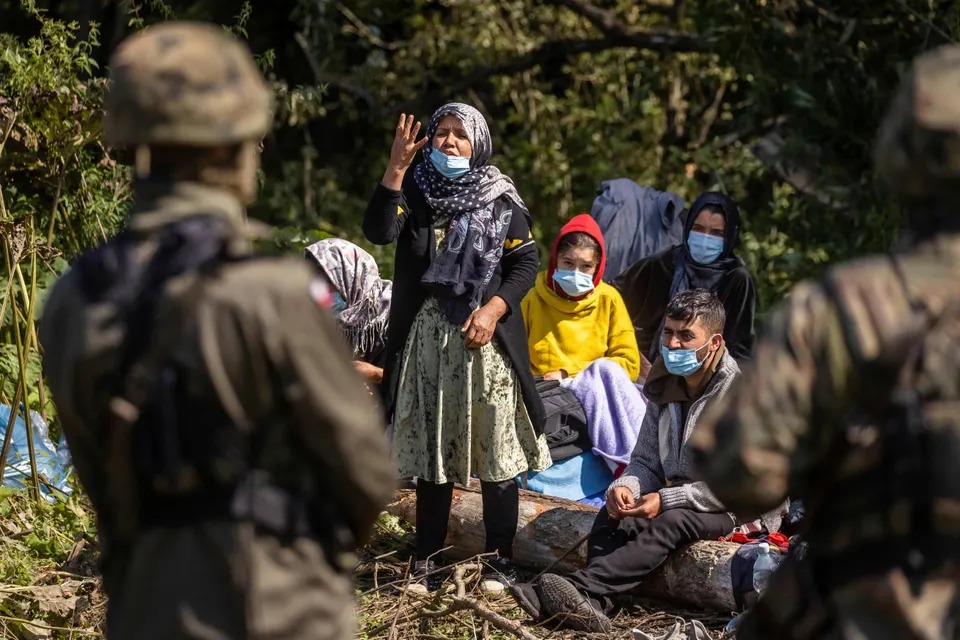
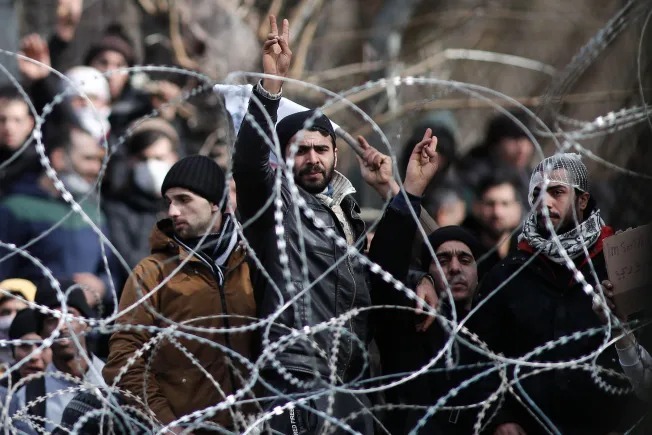
Recent incidents around the globe illustrate how migration is becoming more and more of a geopolitical instrument. For instance, Belarus enabled the movements of migrants towards Poland and Lithuania in 2021- 2022 by facilitating their visas, flights, and transportation. It was an effort to disrupt the EU and to counteract sanctions. It was referred to as a hybrid attack by the European Union, as it combined legal manipulation and demographic pressure. Likewise, it was claimed by Finland that Russia is pushing migrants towards its borders in order to evaluate its reaction and impact the domestic discourse. Turkey has frequently used its status as host to millions of Syrian refugees to pressure the European Union for financial assistance and political concessions, threatening to let mass-scale migration during several occasions toward Europe. These cases show how migration is highly used as a tool in global politics.
Pakistan’s experience provides a distinct perspective for comprehending different challenges associated with migration. Even though Pakistan has not encountered intentional manipulation of migrant flows by another state, it has faced deep political exploitation where Afghan refugees were framed as threats. Political actors, media outlets, and administrative institutions increasingly frame refugees as security risks linked to terrorism, smuggling, or demographic strain. These narratives have influenced and guided the decision-making, heightened border control measures, and justified accelerated deportation initiatives. In this scenario, migration becomes a tool of internal political rivalry even without direct deportation campaigns.
 Information manipulation and communication distortion often heighten the weaponisation of migration. Media narratives, false reporting, and exaggerated figures are often deployed to intensify fear, create social divisions, or justify strict governmental measures. In Belarus, migrants were portrayed as invaders through online content, which eventually fuelled fear and anxiety among the public and legitimized hardened border responses. In Pakistan, rowing concerns about security and frequent instances of unauthorized Afghan refugees being linked to illicit activities, militancy, and organized crime have been the main cause of increased public apprehension and have supported the state’s argument for more strict and deportation policies. Through these information techniques, states and political actors strengthen the strategic use of migration and manipulate public attitudes to obtain their required outcomes.
Due to weaponised migration,judicial and moral dilemmas are also raised because this practice highly contradicts the principles of International law, primarily the obligation of non-repatriation, which forbids sending refugees back to danger. States may use legislation strategically to pressure adversaries or validate harsh policies, converting law itself into a battlefield, what scholars call “lawfare,” which is actually judicial coercion. These actions make it difficult to differentiate between genuine security concerns and humanitarian obligations, making it challenging for states to ensure refugee rights while handling perceived threats.
States are supposed to find more methods to manage threats, but this should be done while addressing the welfare obligations. While handling the risks, there should be no compromise on the rights of refugees. Efficient approaches in this regard include the placement of detection tools, the enhancement of boundary regulation and mitigating the conflict, promoting regional cooperation, and demoralising the political influence over the refugee narratives. In the context of Pakistan, organised documentation procedures, collaboration with UNHCR, and responsible media reporting are quite necessary in order to reduce tensions while respecting the dignity of uprooted groups, but Pakistan should also concentrate on early warning systems and border management strategies to effectively address the potential security concerns.
Migration, once a humanitarian cause, has evolved into a primary component of hybrid warfare as it guides state behaviour, influences public perception, and impacts security. When migration is not intentionally weaponised by external actors, it can be politicised and framed as a threat that eventually leads to ways that can profoundly impact the internal division. Analysing these phenomena necessitates acknowledgement of coercive potential as well as moral obligations that are associated with refugee protection. In a rapidly changing international landscape, states are required to handle these complexities carefully in order to prevent the exploitation of migration as an instrument of conflict.
(The writer Mafaza Ahmed is a student at the International Islamic University Islamabad, Class: BSIR-4(A)Semester,4th Department of Political Science and International Relations) )