
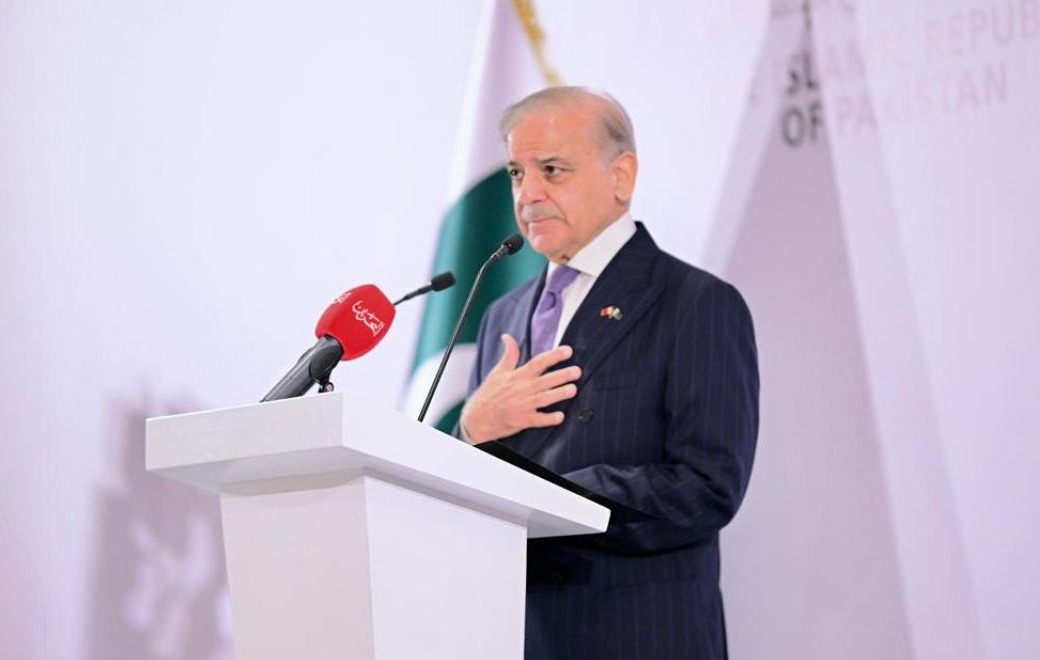
ISLAMABAD (TNS) Pakistan’s goal of becoming a trillion dollar economy by 2035 depends on concrete steps that will help increase the very low volume of bilateral trade. The annual volume of bilateral trade between Pakistan and the Gulf countries is worth three billion dollars. Shahbaz Sharif has done a good job in increasing the prospects of economic recovery in Pakistan. It is hoped that in the future, keeping in mind the rapidly changing partnership with the GCC economies, he will maintain this trend of advancing economic policies. Prime Minister of Pakistan Shahbaz Sharif’s challenging visit, in which important policy-making decisions were made. During this time, Shahbaz Sharif took strategic steps and deepened relations with Saudi Arabia, the United Arab Emirates, and Qatar in the field of investment and trade. These Gulf Cooperation Council member economies have also expressed their willingness to contribute to Pakistan’s economic recovery and stability.
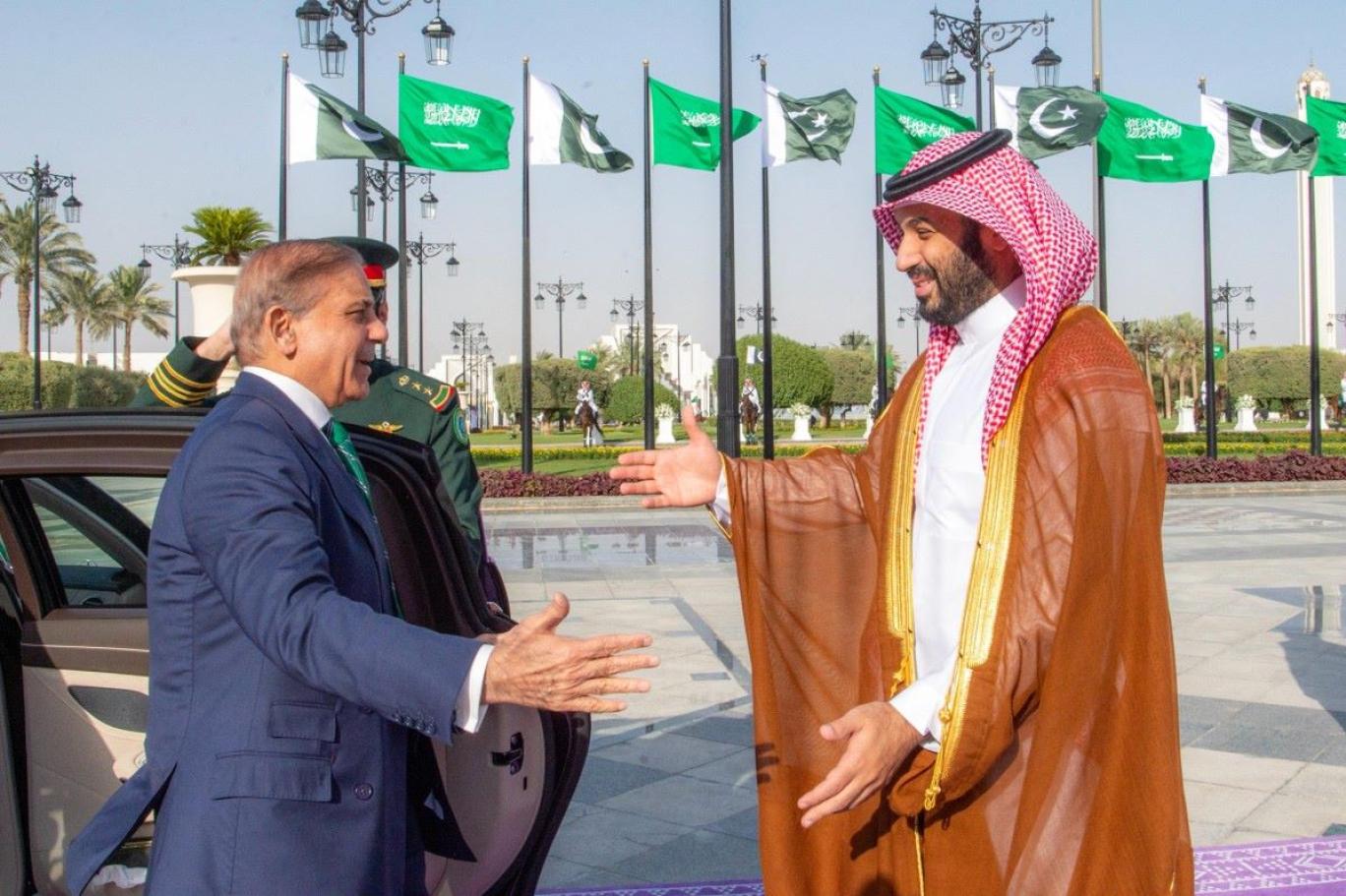 Pakistan has always given top priority to economic, defense, and cultural relations with Saudi Arabia and other Gulf countries. These historic relations are based on shared religious and cultural ties, mutually beneficial economic needs, and shared interests in regional stability and global peace. The Gulf Cooperation Council countries play a significant role in Pakistan’s economy, being a major source of energy imports and foreign exchange. The largest number of Pakistani workers reside in these countries. In particular, the ongoing process of economic diversification and regional reconciliation in the Gulf states under the Saudi Vision 2030 has the potential to provide immense opportunities for Pakistan through which the GCC can be attracted to invest in the development sector, while it is also an important opportunity for sending skilled people to the GCC states and exporting commercial goods. Pakistan’s political and military leadership is aware of the importance of investment from GCC economies and is aware that it can play an important role in moving the country’s crisis-ridden economy towards sustainable development. Important steps taken in this regard include the establishment of a ‘Special Investment Facilitation Council’, which has been tasked with attracting foreign direct investment from GCC countries in the sectors of agriculture, minerals and mining, information technology, and defense production. Along with this important step, Pakistan has established a Sovereign Wealth Fund (SWF) and signed a Comprehensive Economic Partnership with the United Arab Emirates. A partnership agreement has also been reached. The agreement between Pakistan’s political and military leadership on the key economic role of the GCC can be seen in the context of the concrete progress that has been made on the economic, political, security, and foreign policy fronts in the current era. After assuming the office of Prime Minister, Shehbaz Sharif faced considerable difficulties. Together with the coalition leaders, the security establishment, and key foreign partners, he successfully coped with this complex situation. As a result, Pakistan has become stable. Since the appointment of General Asim Munir as the army chief, the political crisis has slightly subsided. A new staff-level agreement of three billion dollars has been signed with the International Monetary Fund, which covers a period of nine months. Although terrorism is once again rising, there is now a better security structure to deal with this threat. And work on the China-Pakistan Economic Corridor has also resumed, while relations with the US are back on track. Importantly, civil and military cooperation has now extended to the economic arena, further accelerating Pakistan’s economic partnership with GCC economies. Since 2019, Saudi Arabia, China, and the United Arab Emirates have provided Pakistan with billions of dollars in soft loans to boost its foreign exchange reserves. These loans were originally granted to meet IMF conditions, which have since been extended.
The recent agreement with the IMF was made possible only after Saudi Arabia deposited $2 billion with the State Bank of Pakistan. A key meeting of the Executive Board of the International Monetary Fund (IMF) will be held today to consider approving a $1.2 billion tranche for Pakistan. The meeting is taking place as per the official schedule issued by the institution. This development comes almost two months after the IMF and Pakistan reached a staff-level agreement on the second and first review reports of the $7 billion Extended Fund Facility (EFF) and the $1.4 billion Resilience and Sustainability Facility (RSF). The deal was preceded by detailed talks with Pakistani officials in Karachi, Islamabad, and Washington between September 24 and October 8 by IMF mission chief Eva Petrova. According to the state broadcaster, “The IMF’s Executive Board will consider Pakistan’s request for a $1.2 billion tranche on December 8, under the Extended Fund Facility and Resilience and Sustainability Facility programs.” Economists say the IMF bailout packages are of fundamental importance to Pakistan as the country has long relied on financial assistance from bilateral donors, including Saudi Arabia, China, the United Arab Emirates, and institutions such as the World Bank, Asian Development Bank, and Islamic Development Bank. Pakistan has been facing a multi-year macroeconomic crisis that has put severe pressure on foreign exchange reserves, financial resources, and the balance of payments. However, Islamabad has also registered some successes since 2022, including a current account surplus and a significant reduction in inflation. The IMF’s $1.2 billion tranche will strengthen Pakistan’s near-term external payments position and open new doors for government financial flows. Pakistan came close to bankruptcy in mid-2023 when the country’s foreign exchange reserves fell short of three weeks of imports, inflation hit a record high of 38% in May, and external funding had almost stopped due to delays in the IMF program. Fuel shortages, import restrictions, a sharp depreciation of the rupee, and a credit rating downgrade have worsened the situation. The real abatement in the crisis came when Pakistan reached a last-minute agreement on the IMF Stand-By Arrangement in June 2023, which provided emergency financial assistance and averted the risk of an immediate default. Still, the approval of a $1.2 billion tranche by the IMF board could prove to be another important milestone for Pakistan in the coming months. Saudi Arabia has stood by Pakistan in every difficult moment. But Pakistan needs to stand on its own two feet, and the Special Investment Facilitation Council provides a practical way forward. The establishment of the Council shows that Pakistan’s political and military leaders are well aware of the dangers of relying on foreign loans. And they are preparing to lay a solid economic foundation by attracting investment from friendly countries.
Pakistan has not yet been able to launch a fast-track one-window operation for foreign investors. These are unnecessary bureaucratic hurdles and regulatory requirements that actually discourage investors and hinder the launch of new projects as well as the completion of old ones. Frequent changes of governments also affect the continuity of economic policies. Similarly, the United Arab Emirates and Qatar had promised $9 billion, but difficult procedures and structural obstacles have hindered the fulfillment of these promises. Bahrain is among the Arab countries where a large number of Pakistanis are present for employment. According to official figures, more than 110,000 Pakistanis are currently working in different parts of Bahrain. Like Egypt, Jordan, Morocco, and the United Arab Emirates (UAE), Bahrain is also among the Muslim countries that have official diplomatic relations with Israel. Egypt and Jordan were the first Arab countries to establish peace treaties with Israel, after which the UAE and Bahrain established relations with Tel Aviv through the Abraham Accords in 2020. Prime Minister signs agreements with Gulf countries such as Saudi Arabia, the UAE, and Qatar. Prime Minister Shehbaz Sharif has said that the Free Trade Agreement between Pakistan and the Gulf Cooperation Council (GCC) will play an important role in promoting trade with GCC member countries, especially Bahrain. Secretary General of the Gulf Cooperation Council (GCC) Jassim Muhammad Al-Badawi has said that an initial free trade agreement has been signed between the organization and Pakistan, which aims to strengthen trade relations and economic cooperation. GCC Secretary General Jassim Muhammad Al-Badawi and Pakistani Minister for Commerce Gohar Ijaz signed the agreement.
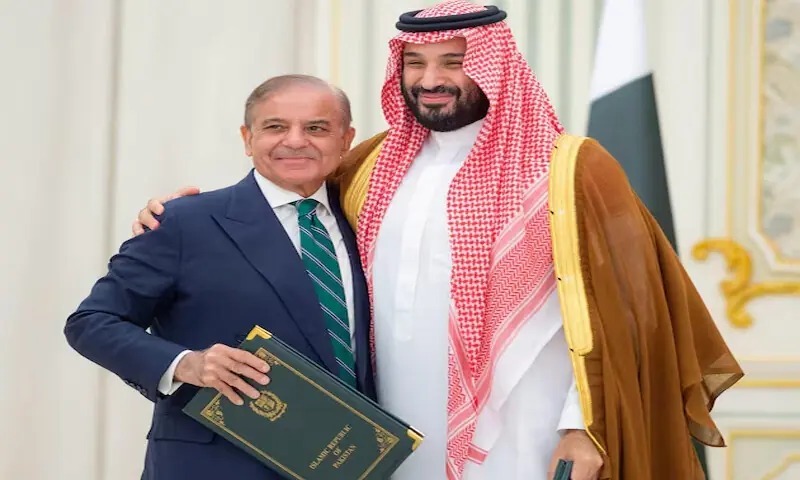
According to a press release issued by the GCC, Secretary General of the organization Jassim Muhammad Al-Badawi said that ‘the initial agreement with Pakistan indicates strong trade and economic cooperation between the countries and at the international level. This historic agreement is a reflection of strong economic relations and economic development between the countries, which will benefit the people of both parties. The Gulf Cooperation Council countries play a significant role in Pakistan’s economy, providing a major source of energy imports and foreign exchange. The largest number of Pakistani workers reside in these countries. Currently, about 4 million Pakistani workers are working in the GCC countries. Pakistan’s goal of becoming a trillion-dollar economy by 2035 depends on concrete measures that will help increase the very low volume of bilateral trade. The annual volume of bilateral trade between Pakistan and the Gulf countries is worth three billion dollars. The GCC countries include Saudi Arabia, Kuwait, Bahrain, Oman, Qatar, and the United Arab Emirates. According to 2021 data, their gross national product is $1.6 trillion, while the total population of the countries included in the council is 57 million. If viewed in the historical context, Pakistan has always given top priority to economic, defense, and cultural relations with Saudi Arabia and other Gulf countries. The main reason for these relations is not only religious and cultural harmony but also economic needs and a shared desire for regional and global peace. Skilled Pakistanis in the IT and services sectors can benefit from the economic changes taking place in the Gulf countries, especially Saudi Arabia. The organization signed its first free trade agreement with Pakistan in October 2023. Later, in May 2024, news emerged that negotiations on a free trade agreement between Pakistan and the Gulf countries were in the final stages. Prime Minister Shehbaz Sharif, in a meeting with Crown Prince Salman bin Hamad Al Khalifa during his two-day official visit to Bahrain, reiterated his commitment to taking bilateral trade to one billion dollars in three years. The Prime Minister said that his government is ready for all possible cooperation in the journey of joint projects, facilitation of investment planning, and mutually beneficial development. The Prime Minister appealed to the Bahraini leadership and businessmen to work together with Pakistan, especially in making the industrial, agricultural, information technology, and fintech sectors of the Pakistani economy more active and dynamic. Pakistan and Bahrain have decades-old relations based on culture, religion, mutual respect, and trust. “We have also had a long-standing strategic partnership, and now there is a need to transform these relations into more dynamic economic cooperation.” The Prime Minister thanked the Bahraini leadership, especially King Hamad bin Isa Al Khalifa, Prime Minister and Crown Prince Salman bin Hamad Al Khalifa, Deputy Prime Minister Khalid bin Abdullah Al Khalifa, and Foreign Minister Dr. Abdul Latif bin Rashid Al Zayani, for their unwavering support to Pakistan and said that the meetings with them should be very useful and fruitful. Shahbaz Sharif also paid tribute to the Pakistani community living in Bahrain and said that the vibrant Pakistani community living there deserves to be saluted for their hard work, determination, and selfless service for the development of Pakistan and Bahrain. Pakistanis living in Bahrain sent $484 million in foreign exchange to Pakistan during the last fiscal year, which is highly commendable. Earlier, Bahraini Minister of Finance and National Economy Sheikh Salman bin Khalifa Al Khalifa thanked Prime Minister Shahbaz Sharif and his delegation for their visit to Bahrain. The minister appreciated the role of the Pakistani community and financial institutions in the development and prosperity of Bahrain and said that the entire region is currently undergoing a major generational change and is becoming a center of innovation, sustainability, and technological excellence. Highlighting Bahrain’s key and transformative role in modern and emerging technologies, the minister presented large-scale investment opportunities for Pakistani business and technology companies in several sectors, including artificial intelligence, cybersecurity, metals, automobile components, electronics, and other advanced technologies. Strengthening trade and economic relations with Central Asian states, especially facilitating deliveries to Russia through the National Logistics Cell, is a significant achievement. During his visit, Prime Minister of Pakistan Shehbaz Sharif met with Crown Prince Salman bin Hamad Al Khalifa of Bahrain and reaffirmed his commitment to take bilateral trade to one billion dollars in three years. Prime Minister Shehbaz Sharif arrived in Bahrain, where the Crown Prince, Deputy Supreme Commander of the Bahraini Armed Forces, and Prime Minister Prince Salman bin Hamad Al Khalifa, along with other dignitaries, welcomed the Pakistani delegation in Manama. After that, Prime Minister Muhammad Shehbaz Sharif was also presented with a guard of honor upon his arrival at the Quds Palace in Manama. According to the statement, Prime Minister Shehbaz Sharif met with Prince Salman bin Hamad Al Khalifa, in which Shehbaz Sharif appreciated Bahrain’s leadership in strengthening bilateral relations. In the meeting, Prime Minister Shehbaz Sharif reiterated his commitment to take bilateral trade, which is currently over $550 million, to one billion dollars in the next three years. According to the statement, the prime minister said that this goal will be achieved through measures such as the Pakistan-GCC Free Trade Agreement, which is in its final stages, and the recent relaxation of visa requirements. The Pakistani prime minister said that Shehbaz Sharif acknowledged Bahrain’s support for over 150,000 Pakistanis and reaffirmed Pakistan’s commitment to providing more skilled manpower. The UAE and Qatar had promised $9 billion, but difficult procedures and structural obstacles have hindered the fulfillment of these promises. Foreign investors need assurances that they will get a return on their investment.The Special Investment Facilitation Council aims to provide a one-stop service through technocratic advice and institutional facilitation. The inclusion of the Army Chief in the apex committee of the council and senior military officials in the executive and implementation committees is important to ensure continuity, transparency, and accountability.
The Pakistan Sovereign Wealth Fund has also been established with the same vision that it will be free from bureaucratic and regulatory hurdles. Currently, assets worth about $8 billion from seven countries are being transferred to this fund, while the fund will be expanded through the sale of shares and the proceeds from them. The government also intends to start joint ventures with GCC companies, while loss-making public sector companies will be privatized or leased. Solid progress in this investment drive will help Pakistan attract investment from the GCC, China, and other countries. Islamabad also needs to increase the number of Pakistanis working in the Gulf countries and diversify its workforce. Currently, about 4 million Pakistani workers are working in the GCC countries. In addition, an agreement with Saudi Arabia and other GCC member states on the lines of the Comprehensive Economic Partnership Agreement between the United Arab Emirates and Pakistan is needed.
Skilled Pakistani manpower in the IT and services sectors can prove to be the best for the economic changes taking place in the Gulf countries, especially Saudi Arabia. Federal Minister for Finance and Revenue Senator Muhammad Aurangzeb presented Pakistan’s progress in economic stability and reform measures to the international community while participating in the 23rd Doha Forum. While Qatar, calling Pakistan a ‘brotherly country’, announced the start of a new era of the GCC-Pakistan Free Trade Agreement. In a high-level panel held at the Doha Forum on the economic impact of global trade tensions on the region, the Finance Minister said that Pakistan has become financially stable after the IMF program. According to him, tax reforms, energy sector revival, and restructuring of government institutions are progressing rapidly. He said that getting a 19 percent concessional tariff on Pakistani textiles after negotiations with the US is a significant development, while IT exports could reach $4 billion this year. The Finance Minister said that Pakistan’s primary balance and current account are in surplus, while $18 to $20 billion in annual remittances are stabilizing the economy. However, he warned that climate change and a growing population are major economic challenges for Pakistan. Qatar’s Finance Minister Ali bin Ahmed Al-Kuwari, while calling Pakistan a “brotherly country”, announced that the GCC-Pakistan FTA has been signed, which is the first free trade agreement between the Gulf countries after many years. He said that this agreement will open new doors of trade between Pakistan and the GCC countries. He also praised Pakistan’s IT capacity, artificial intelligence, and digital technology capabilities. IMF Deputy Managing Director Bo Li, while describing Pakistan’s economic reforms as moving in the right direction, said that after the $7 billion stabilization program, Pakistan is being provided with an additional $1.3 billion for climate resilience. This funding will help in green budgeting, climate risk assessment, and resilient infrastructure planning in Pakistan. After the forum, the Finance Ministers of Pakistan and Qatar also held a bilateral meeting, in which it was agreed to further strengthen the joint partnership in trade, energy cooperation, artificial intelligence, digital skills, and regulatory reforms. Both countries expressed the hope that Pakistan-Qatar relations are entering a new strategic era. Pakistan has received a $1.3 billion Resilience and Sustainability Program from the IMF, and in CPEC Phase 2.0, a transition is being made to business-to-business investment with government support.
According to the Federal Minister, Pakistan and the US are working to increase cooperation in minerals, mining, AI, and blockchain. There are global opportunities for Pakistani youth in AI, blockchain, and advanced digital skills. Qatar and Pakistan agreed to accelerate progress on FTA in a bilateral meeting, and both countries expressed their commitment to promoting energy, LNG, and technology cooperation.