

ISLAMABAD (TNS) Water is life and cannot be weaponized. India’s water aggression has become a major threat to Pakistan. Article 12(4) of the Indus Waters Treaty gives the right to terminate the treaty only if both India and Pakistan agree in writing. The ‘Indus Waters’ Treaty was signed between Pakistan and India in 1960 to fairly distribute the water of the Indus River and other rivers. According to the report, the ‘Indus Waters’ Treaty was signed to fairly distribute the water of the rivers, and the World Bank is also among the guarantors of this treaty. Under the treaty, India will receive more water from the three eastern rivers, the Beas, Ravi, and Sutlej, which flow through Punjab, thereby gaining more control over these rivers. Under the Indus Waters Treaty, the western rivers of the Indus, Jhelum, and Chenab were allocated to Pakistan, which grants it the right to control approximately 80% of the water in these rivers. India has the right to generate electricity from the water of these rivers, but does not have the right to store water or reduce its flow, while the control of Ravi, Beas, and Sutlej was given to India. Denial of access to water is a violation of UN Security Council resolutions and established principles. All parties to the conflict are bound by international human rights law and must refrain from taking any action that could lead to a humanitarian crisis. Furthermore, using water as a weapon of pressure or war is unacceptable and destabilizing. It is deeply regrettable that India, with its malign intentions, has weaponized water as well as used it as a bargaining chip. Pakistan has warned the United Nations that India’s decision to unilaterally suspend the Indus Water Treaty (IWT) is a dangerous move, a violation of international law, and a threat to the livelihood of over 240 million people. 70% of Pakistan’s population is dependent on agriculture, and water shortages will affect the production of commodities, vegetables, and exports. Pakistan should raise the issue at the international level and seek help from the World Bank, the United Nations, and other institutions. At the same time, Pakistan should strengthen its internal ranks and work on new dams and water projects. Deputy Prime Minister and Foreign Minister Ishaq Dar has expressed serious concern over India’s policy of weaponizing water after sudden fluctuations in the flow of the Chenab River, which is causing unrest among farmers in Punjab. Addressing an emergency briefing for the diplomatic community in Islamabad, Ishaq Dar said that he wanted to draw attention to a situation that threatens peace and stability in South Asia. Pakistan witnessed India’s unilateral suspension of the Indus Waters Treaty in April this year, but what we are now seeing are serious violations by India that are an attack on the spirit of the Indus Waters Treaty. Unusual and sudden changes in the flow of the Chenab River were observed twice this year, which were recorded between April 30 and May 21 and between December 7 and December 15.
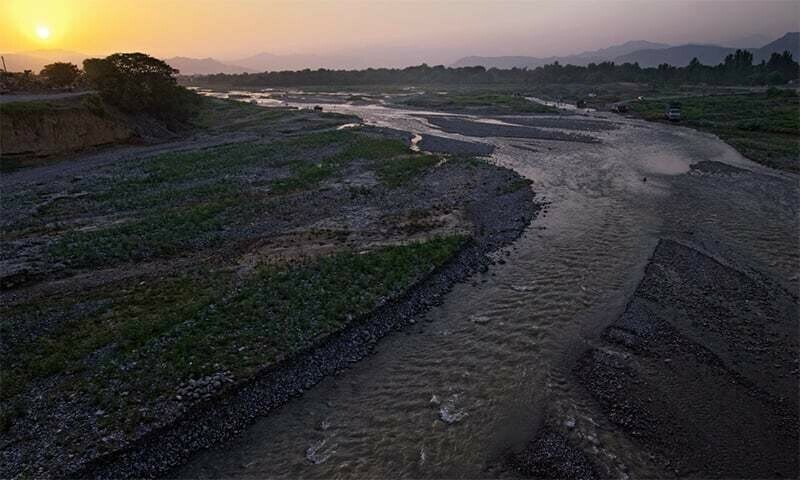 These changes in water flow are of great concern to Pakistan as they indicate a unilateral release of water by India into the Chenab River. India released this water without prior notification, data, or information exchange as required under the Indus Waters Treaty. Due to this negative move by India, our Indus Water Commissioner has written to his Indian counterpart seeking clarification, as stipulated in the Indus Waters Treaty. India’s recent move is a clear example of the weaponization of water, to which Pakistan has been continuously drawing the attention of the international community. He warned that India’s manipulation of water at a critical stage of the agricultural cycle directly threatens the lives, livelihoods, food, and economic security of our citizens. Pakistan expects India to respond to the questions raised by the Indus Water Commissioner, refrain from any unilateral changes in the flow of rivers, and fully implement the Indus Waters Treaty in accordance with its spirit and letter. The recent violations by India are just one example of India’s systematic attempt to undermine the agreement. India has incorporated designs into hydropower projects like Kishanganga and Ratle that violate the technical terms of the agreement. India is constructing illegal dams and creating an irreparable situation by ignoring its obligations under the agreement. These dams are increasing India’s water storage and diversion capacity, which poses a threat to Pakistan’s security, economy, and the livelihood of 240 million people. India has also withheld information, hydrological data, and joint monitoring required under the agreement, which is exposing Pakistan to risks such as floods and droughts. This illegal and irresponsible behavior by India could lead to a humanitarian crisis in Pakistan. If India is allowed to violate the agreement without any hindrance, it will set a very dangerous precedent.India is also sabotaging the dispute settlement mechanism of the Indus Waters Treaty, as it refuses to participate in the proceedings of the Permanent Court of Arbitration and the Neutral Expert. India is deliberately pursuing a strategy of undermining a stable and recognized arbitration system. Pakistan reiterates that the Indus Waters Treaty is a binding legal instrument that has played a significant role in peace and stability in South Asia. Violation of the Treaty jeopardizes the sanctity of international agreements and poses serious concerns for regional peace and security, and recalled that the PCA recently reaffirmed the continued validity of the Treaty and its dispute settlement mechanism. Following these decisions, there is no doubt that the Indus Waters Treaty is in force and its provisions are binding on the parties. Pakistan called on the international community to reject India’s reckless behavior. Pakistan also referred to a document sent to India by the UN Special Procedures and Mandate Holders, which raised serious legal, human rights, and humanitarian concerns over India’s illegal actions under the Indus Waters Treaty, and said that the document had been made public on December 15. Referring to the report, Pakistan said that on June 21, the Indian Home Minister had announced that India would never revive the treaty but would transfer water to Rajasthan through a new canal. According to the same report, on April 21, Pakistan’s National Security Committee had declared that any attempt to stop or divert water supply to Pakistan under the Indus Waters Treaty would be considered an act of war. According to the report, India’s actions after the Pahalgam attack amounted to a violation of the rights to life and personal security. The report warned that disrupting the flow of water risks affecting the rights to work, employment, an adequate standard of living, water, food, and a clean, healthy, and sustainable environment and development. Pakistan said that the move to keep the agreement suspended also raised concerns about the human rights of millions of people and urged the international community to take notice of India’s continued violations of the bilateral agreement and advise India to adopt a responsible attitude. Pakistan also cited the aggressive statements of the Indian leadership that reflect its intentions to weaponize water and harm the people of Pakistan.
 Pakistan has repeatedly brought this situation to the notice of the United Nations Security Council. Pakistan has also written to the UN Secretary-General and the President of the General Assembly, requesting them to play their role in this matter. The Deputy Prime Minister of Pakistan called on the members of the Security Council to take immediate steps to deal with this situation. Pakistan hoped that the international community would urge India to fully restore the Indus Waters Treaty, stop the weaponization of water, respect international law and treaty obligations, and refrain from undermining peace and stability in South Asia. Addressing a meeting on water security in armed conflicts at the United Nations, Pakistan appealed to the international community to mobilize before such steps are taken, which could lead to a humanitarian crisis or destabilize the region. India’s decision to suspend the Indus Waters Treaty is a dangerous step, a violation of international law, and a threat to the survival of over 240 million people. Pakistan’s Deputy Permanent Representative to the United Nations told the meeting. Addressing the gathering, he said that this is a grave violation of international law, including human rights law, treaty law, and customary international law. Pakistan strongly condemns India’s illegal announcement to suspend the Indus Waters Treaty, calls on India to fully comply with its legal obligations, and refrain from stopping, diverting, or restricting the flow of these rivers, which are a symbol of life for Pakistan. We will never accept any such move. The delegate also drew attention to the dangerous statements of the Indian leadership and said that statements like ‘starving the people of Pakistan’ reveal the extremely dangerous and distorted thinking of the Indian leadership.
Pakistan used the UN forum to appeal for a global consensus against the use of water as a weapon. The delegate urged the Security Council to closely monitor these issues and take timely measures where necessary. The Security Council should identify situations where violations of international law, including international humanitarian law (IHL), could endanger peace and security, or trigger a humanitarian crisis. Pakistan’s statement highlighted three key points, including legal sanctions, responsibilities of parties to the conflict, and condemnation of the use of water as a weapon. International law, including human rights law, prohibits attacks on water resources and related infrastructure. The statement comes at a time when Pakistan is deeply concerned about India’s attempts to bypass the treaty system and undermine the role of international mediators, especially the World Bank, which was the guarantor of the Indus Water Treaty in 1960.Pakistani officials see these Indian moves as part of a broader strategy aimed at undermining the cooperative framework and pressuring Islamabad through non-military means. The Deputy Permanent Representative reiterated support for efforts to protect water resources during conflicts globally, and stressed the need to adopt a clear, principled, and united position against any attempt to weaponize water as a political or military weapon. In a separate meeting, representatives from India and Pakistan clashed at the United Nations when Pakistani Ambassador Asim Iftikhar Ahmed accused the Indian military of targeting civilian areas during the May 2025 clashes. The exchange took place during a debate in the UN Security Council on the protection of civilians in armed conflict. The Pakistani envoy accused the Indian ambassador of resorting to ‘misinformation, diversion and denial’ and said that India itself is involved in terrorism. The envoy said that nothing can hide the facts: India openly kills innocent civilians in occupied Jammu and Kashmir, targets civilians by openly attacking Pakistan, and sponsors acts of terrorism and murder not only in Pakistan but also around the world. India has also resorted to extreme measures like stopping the flow of rivers, which are indispensable for the lives of 240 million people in Pakistan. Pakistan and the international community condemned the Pahalgam incident. If India has nothing to hide, it should have shown its willingness to conduct a credible, impartial, and independent investigation into the incident. On the contrary, India continues to use state terrorism to suppress the legitimate freedom struggle of the Kashmiri people. In early May this year, India openly attacked Pakistan, carrying out unprovoked attacks on innocent civilians, resulting in the deaths of 40 people, including 7 women and 15 children, while 121 people were injured, including 10 women and 27 children. Pakistan’s counter-terrorism efforts and sacrifices are recognized globally, and Pakistan remains committed to its commitment against this scourge. On the contrary, India is actively funding and supporting terrorist groups, including ‘Fitna-ul-Kharij’, which includes the banned Tehreek-e-Taliban Pakistan, Balochistan Liberation Army, and its Majeed Brigade, which target innocent civilians in Pakistan. If India truly desires peace, security, and good neighborly relations, it should end state terrorism, stop atrocities on Kashmiris, abide by international law, the UN Charter, and bilateral agreements, and engage in meaningful dialogue for a peaceful resolution of the Kashmir issue in accordance with UN Security Council resolutions and the aspirations of the Kashmiri people. It may be recalled that on May 6, 2025, the UN Security Council held a closed-door meeting on the ongoing tense situation between Pakistan and India. During this, the deteriorating regional security situation, rising tensions, and the situation in India’s illegally occupied Jammu and Kashmir were discussed. This meeting was convened at the request of Pakistan in view of India’s recent unilateral actions and provocative public statements. The Security Council had emphasized that the long-standing dispute over Jammu and Kashmir was the root cause of regional instability, and that it should be resolved in accordance with relevant Security Council resolutions and the aspirations of the Kashmiri people. Several members of the Council had stressed India’s respect for international law and obligations regarding the suspension of the Indus Waters Treaty. It may be recalled that India had in the past taken advantage of these events to undermine and illegitimize the just struggle of the Kashmiri people for their right to self-determination, and to cover up its state terrorism and serious human rights violations in occupied Kashmir. The Security Council meeting also highlighted India’s involvement in state-sponsored terrorism against Pakistan, targeted killings in Pakistan, and elsewhere. The Security Council members were also informed about India’s unilateral decision to suspend the historic Indus Waters Treaty of 1960. Pakistan had warned that any attempt to stop or divert the natural flow of its share would be considered an act of war. It should be noted that after the attack on local tourists in Pahalgam on April 22, India started a series of unfounded accusations and provocations, suspending the Indus Waters Treaty with Pakistan and instructing diplomatic staff to leave India by April 30, 2025. Apart from this, the Modi government has taken several aggressive decisions regarding Pakistan, including the cancellation of visas for Pakistanis. Pakistan’s National Security Committee adopted the best diplomatic strategy while taking countermeasures, and India’s diplomatic staff was also limited to 30 people.The National Security Committee had made it clear that water is Pakistan’s lifeline, and if water is stopped, Pakistan will consider it as war. The Indus Waters Treaty has never been suspended, even during war. The treaty stipulates that India cannot unilaterally suspend this treaty. It should be noted that India announced the immediate suspension of the Indus Waters Treaty after the death of tourists in the Muslim-majority area of Pahalgam in occupied Kashmir. The Indus Waters Treaty is an international treaty. No country can unilaterally suspend or withdraw from this treaty.
It should be recalled that Pakistan, on Thursday, expressed concern over the change in the flow of the Chenab River and said that a letter has been written to India for clarification on this issue. According to the Ministry of Water Resources, the Pakistani Commissioner for Indus Waters has written a letter to India regarding the shortage of water. The letter written to India has taken the position that emptying dead storage is prohibited under the Indus Waters Treaty. The Ministry of Water Resources says that a significant improvement in the flow of the Chenab has started from December 17. The Irrigation Department of the Chenab is being continuously monitored by the Ministry of Foreign Affairs. After an unusual decrease in the flow of water in the Chenab River, it has stabilized. The flow in the Chenab at Marala is returning to normal. From December 10 to 16, the flow in the Chenab was recorded much lower than the historical level of the last 10 years; the lowest flow in the Chenab had fallen to 870 cusecs. In a press briefing, Foreign Office spokesperson Tahir Hussain Andrabi, referring to the ‘sudden change’ in the flow of the Chenab River, said that this matter has been in the news for the past week. Several media outlets have reported that India has released water into the Chenab River. The spokesperson had said that ‘Pakistan views these changes with utmost concern and seriousness, which indicate unilateral release of water into the Chenab River by India without prior notice.’ He had said that ‘our Indus Water Commissioner has written to his Indian counterpart seeking clarification in accordance with the procedure laid down in the Indus Waters Treaty. Any interference in the flow of the river by India, especially at a critical stage of the agricultural cycle, directly threatens the lives, livelihoods, food security, and economic security of our citizens.’ He had demanded that we, India, respond to the questions raised by the Pakistani Indus Water Commissioner, refrain from any unilateral interference in the flow of the river, and fulfill our obligations under the Indus Waters Treaty in word and deed. The Indus Waters Treaty is a ‘binding international agreement’ that has been ‘a source of peace, security and stability in the region’. It should be noted that under the 1960 Indus Waters Treaty, the three west-flowing rivers Indus, Chenab, and Jhelum were given to Pakistan, while India got the three eastern rivers of the Indus Waters. Violation of the treaty threatens the sanctity of international treaties and observance of international law and also seriously harms regional peace, the principles of good neighborliness, and the norms of relations between states. He had said that the international community should take notice of India’s continued violation of a bilateral treaty and advise India to adopt a responsible attitude, act in accordance with international law, recognized principles, and its obligations. Pakistan is committed to the peaceful resolution of disputes and issues with India; however, we will not compromise on the inherent water rights of our people. Pakistan also said it would consider legal action, citing a violation of the 1969 Vienna Convention on the Law of Treaties. Later in June, the Permanent Court of Arbitration (PCA), which provides the framework for international disputes, issued a supplementary decision on jurisdiction, holding that India cannot unilaterally suspend the Indus Waters Treaty. The supplementary decision was issued in a 2023 case that Pakistan had filed with the PCA against the design of Indian hydroelectric projects on rivers granted to Pakistan under the Indus Waters Treaty.