
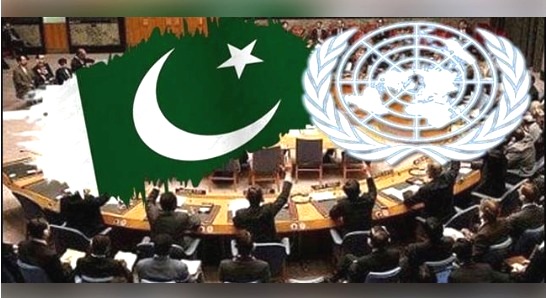
ISLAMABAD (TNS) The United Nations special experts on the recent tension between Pakistan and India, the Pahalgam attack, and the Indian military action on May 7 have issued a comprehensive report, in which they have raised strong objections to India’s actions. The report of the UN experts, while condemning the Pahalgam attack, said that Pakistan denied involvement in the attack and demanded an impartial and transparent investigation. This observation by the 5 UN special representatives was made in a report dated October 16, which came to light on December 15. The report also examined India’s military response after the Pahalgam attack, as well as India’s decision to suspend the Indus Waters Treaty after the incident.
The UN experts say that India has not been able to present any concrete evidence of Pakistan’s involvement in the terrorist attack in Pahalgam on April 22, 2025.
The report states that on May 7, India used military force inside Pakistan, which is a clear violation of the UN Charter.
India launched a cowardly attack on Pakistan in the dark of night, resulting in the deaths of 40 people, including 7 women and 15 children, while 121 people were injured, including 10 women and 27 children.
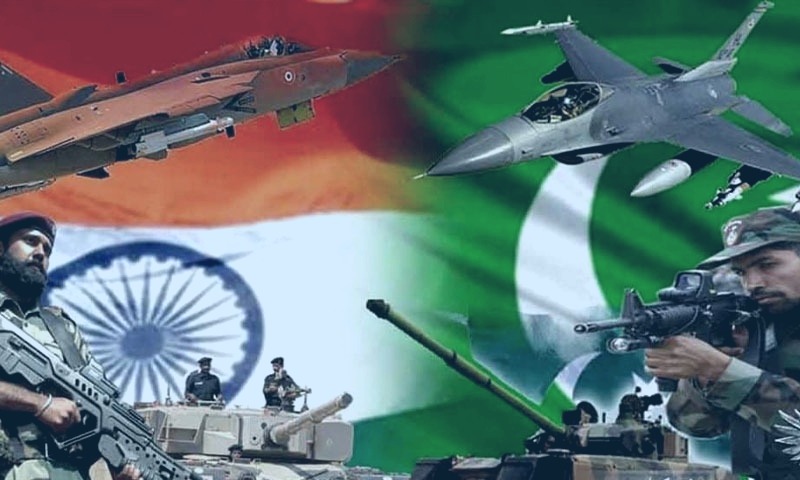 According to the report, India did not formally inform the Security Council before this military action. During the Indian attacks, populated areas were targeted, mosques were affected, and civilians were killed and injured as a result of the attacks inside Pakistani territory. India targeted the Subhan Mosque in Ahmedpur Sharqia, in which 5 people, including a 3-year-old girl, were martyred and 31 were injured.
In Muzaffarabad, the Bilal Mosque was targeted in the Shahi Wali Mohalla, in which the mosque was martyred, and the girl was injured, while the Abbas Mosque was targeted in Kotli. The Umm Al-Qura Mosque in Muridke was targeted, in which one civilian was martyred, and one was injured, while two attacks were also carried out in Sialkot and Shakargarh. These attacks on mosques indicate the Hindutva ideology of the RSS because India targeted mosques.
According to UN experts, on May 7, Pakistan condemned the Indian action and informed the Security Council that it reserves the right to self-defense under the UN Charter. The report has made it clear that there is no separate or recognized right to unilateral use of military force in the name of terrorism in international law.
Experts say that the Indian actions are a serious violation of Pakistan’s sovereignty and that the Indian actions are a serious violation of the principles of non-interference.
The UN experts’ report also raises important points related to the Indus Waters Treaty. According to UN experts, India is avoiding participating in the mediation process and is challenging the jurisdiction of the Indus Waters Treaty.
According to the report, withholding water or suspending the agreement is an inappropriate step; the burden of withholding water falls directly on the rights of ordinary Pakistanis, countermeasures do not exempt from fundamental human rights obligations, the legal requirements of notice, offer of negotiations and procedure for countermeasures must be met. The report also points out the deterioration of the Indus Waters Treaty due to India, that the annual meeting of the Indus Commission has not been held after 2022, ?obstruction in data exchange and dispute over settlement clauses are against the spirit of the treaty, India has avoided participating in arbitration proceedings, India has challenged the jurisdiction of the Indus Waters Treaty, India should be asked for a formal response on clarification, possible compensation and apology.
The report urges India to implement the Indus Waters Treaty in good faith. It has also been said that India should clarify practical measures to prevent human rights violations and losses arising from water disruption.
President Asif Ali Zardari welcomed the report and said it reinforces Pakistan’s long-standing position that the unilateral use of force across international borders is a grave violation of the UN Charter and Pakistan’s sovereignty. The President said the report highlighted the civilian casualties, damage to populated areas and religious sites, and the risk of escalating conflict as a result of Indian aggression. He said the Indus Waters Treaty is an international agreement and a cornerstone of regional stability, and any violation of water flows or agreed dispute resolution mechanisms can have serious human rights consequences. President Zardari said the report clarifies India’s irresponsible behavior and highlights the growing international concern over its hegemonic behavior, pressure, intimidation, and use of force. He stressed that international law does not recognize unilateral aggression or illegal actions. Recall that the Kashmir issue, which has been ongoing since 1947, has given rise to several wars and clashes between India and Pakistan. On April 22, 2025, 28 civilians were killed in an attack near Pahalgam in Indian-administered Kashmir. After this incident, India and Pakistan announced several measures against each other and engaged in regular military clashes. The 2025 Indo-Pak conflict was an armed conflict that began on May 7, 2025, when India launched missile attacks on Pakistan, which was named Operation Sindoor. India claimed that this operation was carried out in response to a militant attack on April 22 in Pahalgam, Indian-administered Kashmir, in which 28 civilians, most of whom were tourists, were killed. The attack increased tensions between India and Pakistan, with India accusing Pakistan of supporting cross-border terrorism, a charge denied by Pakistan. These incidents ultimately led to the 2025 Indo-Pakistan tensions, which are part of the Kashmir dispute. According to India, the missile strikes targeted militant groups such as Jaish-e-Mohammad and Lashkar-e-Taiba and did not target any Pakistani military installations. According to Pakistan, the Indian strikes targeted civilian areas, including mosques, resulting in the deaths of 40 people, including 7 women and 15 children, and the injury of 121 people, including 10 women and 27 children. These attacks led to border clashes and drone strikes between the two countries. Pakistan formally launched a counter-offensive on May 10, codenamed Operation Bunyan Marsaw, targeting several Indian military installations. The Indian military said that Pakistan’s retaliatory attacks targeted civilian areas, including Hindu religious sites. In response, India continued Operation Sindoor and expanded its scope to Pakistani military installations. This conflict proved to be the first drone battle between the two nuclear powers. Three days after the conflict, both India and Pakistan announced that a ceasefire had been agreed upon on May 10 at 4:30 PM Pakistan time, while the talks were concluded on May 12. However, immediately after the ceasefire was implemented, both countries accused each other of violating it. That same night, Pakistani Prime Minister Shahbaz Sharif announced that May 11 would be celebrated as a day of thanksgiving for the victory.
Remember that on May 7, 2025, the Indian armed forces suddenly launched missiles under the name of ‘Operation Sindoor’, targeting nine different locations in Pakistani-administered Kashmir and Punjab province. The Indian Air Force carried out this operation using Rafale aircraft with Scalp missiles and Hammer bombs. According to some reports, the attack involved Brahmos cruise missiles and ‘Sky’ missiles developed with Israeli technology. The Indian government said that the attacks in Bahawalpur and Muridke were premeditated. After these attacks, the situation on the Line of Control deteriorated. Pakistan started shelling and firing in several areas, including Kupwara, Baramulla, Uri, and Akhnoor. Pakistan shot down 4 Indian Rafales, a MiG-29, an SU-30 MKI, and a drone. A French intelligence officer told CNN that Pakistan had indeed shot down a Rafale, but the French military did not comment on it. Reuters had quoted some Indian officials as saying that three aircraft had crashed in India. On May 8, a US official told Reuters that, according to him, Pakistani J-10 aircraft had shot down at least 3 Indian aircraft, including a Dassault Rafale. The Washington Post later identified three crash sites in India on May 7, two of which were identified as Dassault Rafale and Dassault Mirage 2000 aircraft of the Indian Air Force. On May 9, local government sources in Indian-administered Kashmir told Reuters that three fighter jets had crashed in India on May 7 and three pilots had been hospitalized with injuries. On May 11, the Indian Air Force, when asked if it had suffered any casualties, said: “Casualties are part of war.” In response, India claimed that Pakistan had carried out drone and missile attacks on several Indian cities, including Amritsar. The Indian government said it had been “forced to stop mortar and artillery shelling by Pakistan.”However, Pakistan rejected the Indian claim, saying that the Indian army mistakenly attacked itself in Amritsar and wanted to incite anti-Pakistan sentiments among Sikhs by blaming Pakistan for it. In retaliation, Indian drones violated Pakistani airspace, 12 of which were shot down. According to Pakistan, these drones were sent to 9 different locations, including Karachi and Lahore, one of which targeted a Pakistani military installation near Lahore. Later, the Pakistani army claimed to have shot down 25 Israeli-made Harpoon suicide drones from across the border, one of which crashed inside the Rawalpindi Cricket Stadium, after which the Pakistan Cricket Board shifted the Pakistan Super League matches to the United Arab Emirates. On May 9, it was reported that the Pakistan Super League had been suspended indefinitely due to the deteriorating situation between India and Pakistan. That evening, Pakistan carried out air strikes in Jammu district, including around the airport and Jammu University. On May 9, the Indian Foreign Secretary said that 300 to 400 Turkish-made ‘Assis Guard Sonar’ drones were used in these attacks. Pakistani General Ahmed Sharif Chaudhry denied India’s claim that Pakistani forces had attacked 15 locations in India. He said that India had fabricated a false story to create a media frenzy, even though “every missile has a digital trace and signature.” The media had called the clash the “first drone war” between South Asia’s “nuclear-capable neighbours,” with the deployment of Israeli and Indian drones in particular being the focus of attention. On May 9, the media reported that India had targeted the Gurdwara Janmashtami in Nankana Sahib. The Pakistan Army also claimed that it had shot down 77 Indian drones since May 6. The exchange of fire had stopped on Friday morning, but clashes resumed after “about 13 hours of silence.” Artillery shelling began in Kupwara, Poonch, Uri, and Samba areas on the LoC. Pakistan had targeted 26 locations along the LoC and the international border from Baramulla in the north to Bhuj in the south, including armed drones. On May 9, Director General of Public Relations of the Pakistan Army, Ahmed Sharif Chaudhry, gave a press briefing along with senior officials of the Pakistan Air Force and Pakistan Navy. The Pakistan Army had denied Indian allegations that Pakistan had carried out missile and drone attacks on Indian military installations. It had demanded that India provide evidence of these allegations and had termed Indian media reports after the Pahalgam incident as false. Pakistani officials had said that their response was limited to those Indian posts that had targeted Pakistani civilian areas and denied involvement in the Pahalgam attack. Pakistan also proposed an investigation by an impartial third party, to which it said there was no reaction from India. In the same briefing, Pakistan claimed that India had fired six ballistic missiles from Adampur, five of which landed near Amritsar and one in Adampur itself. Pakistani officials said that the targets of these missiles were Sikh areas to gain support for the entry. Air Vice Marshal Aurangzeb Ahmed also claimed to have shot down six Indian warplanes, including Rafale jets, and presented audio recordings and flight data as evidence for this. On May 10, India attacked Pakistan with five missiles from Srinagar. It was said that the targets were Islamabad, Lahore, Rawalpindi, and three air installations (Noor Khan, Rafiqi, and Mureed), which Pakistan said were intercepted. Several explosions were heard across Pakistan.
Pakistan formally launched a counter-offensive on May 10 under the name ‘Operation Bunyan Marsus’, a Quranic term meaning ‘lead-lined wall’, intended to give the impression that the nation was fighting for a higher cause. The media claimed that as part of the operation, Pakistan had launched a cyber attack on sensitive Indian online systems, including the websites of the ruling Bharatiya Janata Party, the Border Security Force, and the Crime Research and Investigation Agency. Pakistani forces also claimed to have launched a cyber attack on an Indian military satellite and a government email server. Al Jazeera reported that heavy fighting was ongoing along the Line of Control (LoC) near the Pakistani city of Sialkot. There were also reports of heavy shelling and firing near the city of Rajouri in Indian-administered Kashmir. Later, Indian-administered Kashmir Chief Minister Omar Abdullah reported on the social media platform X that the city’s commissioner, Raj Kumar Thapa, had been killed by Pakistani shelling at his residence. In a joint press briefing by the Indian Ministry of External Affairs and the Ministry of Defence, officials confirmed that Pakistan had mobilized its forces at forward posts, which added to the seriousness of the situation. Pakistani media reported that the Sheikh Zayed International Airport had been damaged in the Indian airstrike.
The ceasefire came into effect at 4:30 PM Pakistan time, the result of diplomatic efforts by 36 countries. It was announced by US President Donald Trump on social media before official statements by the Indian and Pakistani foreign ministers. On May 10, Pakistani Prime Minister Shahbaz Sharif declared May 11 as a “day of thanksgiving” for the victory. After the scheduled time on May 11, both countries accused each other of violating the ceasefire agreement. On May 12, Indian media claimed that “suspicious drones” were spotted in the Samba district of Jammu and Kashmir, and a blackout was imposed in several border towns, including Amritsar, as a precautionary measure. After midnight, the Indian army said: “No drone activity has been observed recently, and the ceasefire situation is intact.” On May 12, Pakistani Prime Minister Shahbaz Sharif announced that May 10 would be observed every year as the Day of the Battle of Truth. The announcement was made after the completion of Operation Bani Marsus, which lasted for more than an hour on May 7. According to Pakistan, three Dassault Rafales, a MiG-29, and a Su-30 MKI fighter jet of the Indian Air Force were shot down. This was the first time that a French-made Dassault Rafale had been destroyed in combat, which was shot down by a J-10. The incident and the performance of the Chinese-made PL-15 missiles received international attention. According to Pakistan, the PAF had destroyed 84 Israeli-made Harpoon drones, which India claimed were sent to target terrorist hideouts. Pakistan gained a diplomatic advantage in the dispute between Pakistan and India, which was declared a failure by India. According to the British newspaper Financial Times, the Indo-Pakistan conflict has given Pakistan a diplomatic edge, which former Indian Foreign Secretary Shyam Saran called a diplomatic failure for India, a failure for India because it wanted to make terrorism the center of the global agenda. The Financial Times reported that the recent military confrontation between India and Pakistan had brought the two nuclear powers to the brink of war. Former Indian Foreign Secretary Shyam Saran called it a diplomatic failure for India and said that India had been trying for years to separate itself from Pakistan and be recognized as a global power, but American intervention had brought the two countries together. Analysts said that this conflict has given Pakistan a diplomatic edge, and due to this recent conflict, the world’s attention has been diverted from India’s terrorism agenda to the nuclear threat. Similarly, the international broadcasting organization Al Jazeera wrote in an article that India tried to show strength against Pakistan, but its weakness became apparent. The US president’s ceasefire announcement was seen by some in India as a sign of the Modi government’s retreat under US pressure, while his offer to mediate on Kashmir is being seen as an indication that India’s long-standing narrative of rejection of third-party intervention has weakened. In South Asian geopolitics, perception often outpaces reality until reality bites. The article wrote that India has long assumed regional dominance, bolstered by economic growth and nuclear power, yet its actions after the April 22 massacre by the resistance front in Kashmir exposed its weaknesses. India’s response, intended to assert power, failed, increasing Pakistan’s regional status and weakening Modi’s government diplomatically.
According to the New York Times, Western observers described India’s role as “dominant” and “aggressive” and possibly saw it as an attempt to establish a new balance of power against Pakistan. However, these observers did not see any significant improvement in India’s military performance. According to the Atlantic Council, the war united divided political forces within Pakistan and gave Pakistan a diplomatic advantage in the wake of US President Trump’s involvement in the ceasefire negotiations. The British newspaper Financial Times wrote that analysts agree that the outcome of the ceasefire was detrimental to India, while Pakistan gained an advantage on the diplomatic front. According to the French newspaper, this military operation against Pakistan revealed the weaknesses of the Indian Air Force, and one of the main reasons for the success of the Pakistan Air Force was that most of its pilots were well-trained and had combat experience because they had been participating in anti-terrorism air campaigns. American geopolitical analyst Brandon J. Weikert had described the air clash between India and Pakistan as a clear victory for Pakistan, as Western observers did not expect that Chinese-made weapons could shoot down the Rafale jets, and he had said with complete certainty that the Pakistanis successfully shot down a total of 6 Indian Air Force fighter jets. On Saturday afternoon, May 10, 2025, a delicate ceasefire was reached as a result of mediation by the United States. The US government was concerned that the Pakistan-India conflict might escalate into a nuclear conflict. In this context, US Secretary of State Marco Rubio began contacts at 4 am Pakistani time and spoke by telephone with Pakistan’s Army Chief General Asim Munir, National Security Advisor Asim Malik, and Prime Minister Shahbaz Sharif. US Vice President JD Vance tried to resolve the issue peacefully by staying in touch with Indian officials, including Prime Minister Narendra Modi. During this time, Saudi Arabia, Iran, the United Arab Emirates, and the United Kingdom also played a role in ceasefire appeals and behind-the-scenes diplomatic interventions.