
ISLAMABAD (TNS) A major reason for the lack of increase in exports is also the expensive energy. The problems of the power sector are increasing with each passing day. In the financial year 2025, the equity of the power sector became negative by Rs 800 billion. The main reasons for this are power theft, low recovery, and a decline in sales. The total liabilities of the power sector have reached about Rs 920 billion, while the assets are Rs 840 billion. The government gave more than Rs 1 trillion in subsidies in a year to run the system alone, of which Rs 552 billion was given to the DISCOs. Six out of ten power distribution companies remained in the loss. These companies suffered a loss of Rs 258 billion last year alone, while the total loss has reached Rs 3 trillion. The biggest loss was suffered by Quetta Electric, which has an annual loss of about Rs 113 billion. Now, a plan to shift it to solar is under consideration. The burden of these losses has finally been put on the people. The increase in electricity prices and a surcharge of Rs 3.23 per unit have made Pakistan the most expensive electricity country in the region. As a result, domestic and industrial consumers are rapidly shifting to solar. The government is now talking about privatizing the discos, but until the problems of power theft, poor system, and recovery are resolved, the chances of ending the power crisis are low. Deputy Prime Minister Ishaq Dar says that the government is providing ample opportunities to the business community, which is putting Pakistan on the path to becoming a prosperous and strong country. On the other hand, the president of the Federation of Chambers of Commerce and Industry says that due to expensive electricity, 100 spinning and 400 ginning factories became inactive in December, and 150 large textile factories have closed in the last two years. The electricity rate in India is seven cents, while in Pakistan it is 12.5 cents. Despite heavy US sanctions on India, Pakistan is not able to get good export orders because there is a difference of about 63 percent in electricity prices. In such circumstances, despite the 25 percent additional tariff, Pakistan is not competitive. Until the problems of electricity theft, poor system, and recovery are solved, the chances of ending the electricity crisis are low. Prime Minister Shehbaz Sharif, while expressing his determination to eradicate terrorism and get rid of debt, has said that the need for national unity and solidarity has never been greater than it is today. This statement of the Prime Minister needs to be understood in the context of the political, economic, and social conditions of the country.

The challenges that the dear country is going through can only be solved through government decisions. There is no doubt that the current government has saved the economy from default and bankruptcy. Economic indicators are also promising. But national unity is indispensable for whatever needs to be done to put the economy on its feet.
In these circumstances, it is the duty of political forces to think and act in the broader interest of the country, above personal and party interests. Economic problems are closely related to political weaknesses and the crisis of decision-making. Our industries are suffering due to the energy crisis and lack of continuity in policies.
To solve these problems, coordination between the government, the people, industrialists, investors, and political parties is indispensable. National unity means that all classes understand their respective responsibilities and struggle together.
The effects of the political and economic crisis are also visible at the social level in the form of division, while social media is turning differences of opinion into hatred and ridicule, which is further affecting social harmony.
National unity requires that, instead of turning differences into hostility, dialogue be promoted. Tolerance, tolerance, and the rule of law are the pillars on which strong nations are built.
The Prime Minister’s statement is a reminder that Pakistan needs not just economic packages or political statements at this time, but a clear national direction. This is possible only when the rulers, the opposition, and the people are all on the same page.
History is witness that nations emerge from crises only when they unite and make decisions. National unity is not a temporary slogan but a continuous process. This process progresses through the combination of honest leadership, strong institutions, and an informed public. If the dear country is to be put on the path of political stability, economic self-sufficiency, and economic development, it must reduce differences and promote consensus.
This is the path that can bring Pakistan out of crises. A prestigious conference was organized for the establishment of national unity, religious harmony, and a society free from violence, titled “Minbar and Mihrab, Society Free from Violence, Religious Harmony, Victory of the Battle of Truth, National Unity and Message of Pakistan”.
The conference was presided over by the Chairman of the Central Ruet-e-Hilal Committee, Maulana Syed Abdul Khabir Azad. The conference was attended by Commissioner Rawalpindi Division Amir Khattak, Deputy Commissioners from different districts, eminent scholars of all schools of thought, religious and social figures, and dignitaries.
The participants emphasized the need for joint and systematic efforts for the establishment of national unity, interfaith harmony, and a society free from violence.
Addressing the conference, Chairman of the Central Ruet-e-Hilal Committee of Pakistan, Maulana Syed Abdul Khabir Azad, said that Pakistan is a strong fortress of the Islamic world established on the basis of the Holy Word, and in the current circumstances, the country is in dire need of unity, stability, and national solidarity.
He said that under the leadership of Field Marshal Syed Asim Munir, the Pakistani army defeated the enemy in the battle of truth, after which Pakistan’s prestige at the global level has increased significantly.
Maulana Azad said that the entire nation stands by its brave forces for the protection and defense of Pakistan, and the Pakistani army is the pride of the entire nation. He clarified that the victory achieved in the battle of truth is the victory of the entire Muslim Ummah, and the nation is united for the security and defense of Pakistan. He said that the Pakistani army achieved a great success in the battle of truth by exposing the ugly face of India to the world. He said that among 57 Islamic countries, Allah Almighty has bestowed the honor of the Guardians of the Two Holy Mosques on Pakistan. The trust of the Islamic world in Prime Minister Shahbaz Sharif and Field Marshal Syed Asim Munir is clear proof of love and trust in Pakistan.
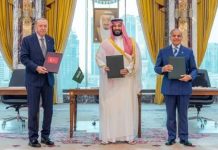
The defense agreement between Pakistan and Saudi Arabia is a guarantee of the security and safety of the Muslim Ummah, and the declaration of Saudi Crown Prince Muhammad bin Salman as Pakistan’s ambassador is a source of pride and honor for the entire nation.
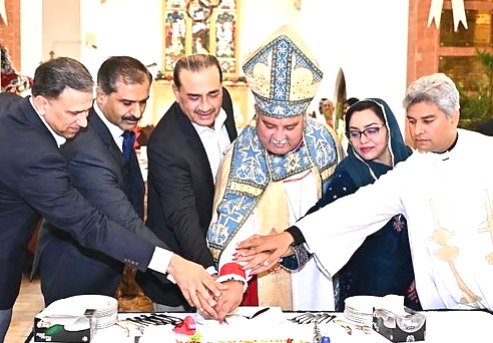
The Chairman of the Ruet-e-Hilal Committee said that the entire nation salutes and pays tribute to the eternal sacrifices of Field Marshal Syed Asim Munir and the Pakistani armed forces. The enemy forces want to harm national unity by spreading terrorism and unrest through Fitna al-Kharij and Fitna al-Hindustan.It may be recalled that the National Peace Message Committee (NPAC) has assured full cooperation for the promotion of the national narrative. The National Peace Message Committee met with the Director General (DG) of the Inter-Services Public Relations (ISPR) of Pakistan Army, Lieutenant General Ahmed Sharif Chaudhry, at the General Headquarters on January 13, 2026. According to the ISPR, in the meeting, a comprehensive discussion was held on internal security in the context of the banned TTP and TTA. The common position was further strengthened. He said that unity in matters of national security, consensus on the narrative is the need of the hour, and supporting the oppressed is the moral responsibility of Pakistan. The meeting assured full cooperation for the promotion of the national narrative and expressed unwavering solidarity with the Pakistani forces and a common resolve against anti-state narratives. The National Peace Message Committee condemned the Fitna al-Khawarij and the Afghan Taliban and said that there is no justification for terrorism. The Peace Committee announced to spread the message of unity of the Ummah, social harmony, and constitutional equality from the pulpit and mihrab nationwide, while also agreeing to adopt a zero-tolerance policy against hate speech, sectarianism, and Takfiri narratives. Maulana Mufti Abdul Rahim, the chief of Jamiat-ul-Rashid, said that a strong national narrative from the state of Pakistan and the government should reach the people. The facilitation that is being done, whether it is at the political or religious level or by educational institutions, must end. Doubts and suspicions must be eliminated. The Peace Committee will reach everywhere with the message of peace. In addition, Allama Arif Hussain Wahidi said that the formation of the committee is of utmost importance to spread the message of peace and love. Pakistan is a gift from Allah Almighty. Those with evil and negative mindsets will never be able to harm it. The Khawarij have no connection with Islam, nor are they the well-wishers of Pakistan. They are destroying the peace of the country and playing into the hands of the enemy. We must all come together for the unity of the Ummah. We are trying hard, we will stand together in front of all internal and external conspiracies and will support the government in making the country a cradle of peace. In addition, Allama Muhammad Hussain Akbar said that this committee will work actively to thwart the conspiracies of the Khawarij and the Hindustani sedition. This committee includes representatives of all religions, and this is a manifestation of national unity. The message of Pakistan should be made part of the curriculum. On this occasion, Allama Syed Ziaullah Shah Bukhari said that Pakistan is currently standing at the highest point in its history. The political and military leadership have the same stance on the development of the country. We have given the message that the scholars stand with the government to free Pakistan from terrorism. Furthermore, Allama Raghib Naeemi said that the scholars value the sacrifices of the Pakistan Army and will support the government to promote peace and unity in the country. Speaking on this occasion, Maulana Zubair Fahim said that when the political, religious, and military leadership work together, if we fight for the truth, this country will become a cradle of peace. Speaking on the occasion, Mufti Muhammad Yousaf Khan said that Allah Almighty has granted Pakistan great successes in the struggle for truth, and the National Peace Message Committee will fulfill its responsibility. In his speech, Allama Muhammad Asif Akbar said that the biggest problem in the country at present is combating intellectual terrorism. Scholars are standing alongside the political and military leadership for the peace of Pakistan. We are teaching the message of Pakistan as a curriculum in our madrasas. Maulana Muhammad Adil Attari said in his speech that we all stand together with the Prime Minister and will support the government to eradicate terrorism. After the struggle for truth, Pakistan’s respect in the world has increased. The establishment of the Peace Committee has discouraged extremist elements. Representing the Hindu community, Rajesh Kumar said in his speech that the Hindu community in Pakistan is living happily and prosperously. We pledge that we will not hesitate to make any sacrifice for the protection of this Mother Earth, tolerance, and promotion of peace and harmony. We will not. The Hindu community stands with the Pakistani army to defend the country, and with the government to make Pakistan a cradle of peace. Representing the Christian community, Bishop Azad Marshall said that we will be successful in creating a narrative that will spread the message of peace. In his address, Maulana Tayyab Panj Piri said that the Prime Minister has played an important role in the economic development of the country, and we will stand with the Prime Minister in the efforts for peace. Maulana Muhammad Tauqir Abbas said in his address that the eminent scholars are with the government to protect the security of the country, the security agencies are protecting the borders of the dear country, protecting the ideological borders is the responsibility of the ulema, this committee will defeat the elements spreading terrorism while protecting the ideological borders. Director General Religious Education Dr. Ghulam Qamar said in his address that there are 36,000 madrassas in the country. Along with religious education, contemporary sciences are also being taught in registered madrassas, and technical and vocational training is being provided to the children so that they can get good employment opportunities when they graduate from the madrassas. He said that teachers are also being trained on modern lines. Some quarters are spreading false propaganda that the teaching of Dars Nizami in madrassas is being affected. We are neither doing this nor will we do so. Remember that the role of scholars and thinkers is of utmost importance; scholars are strengthening the ideological front.