
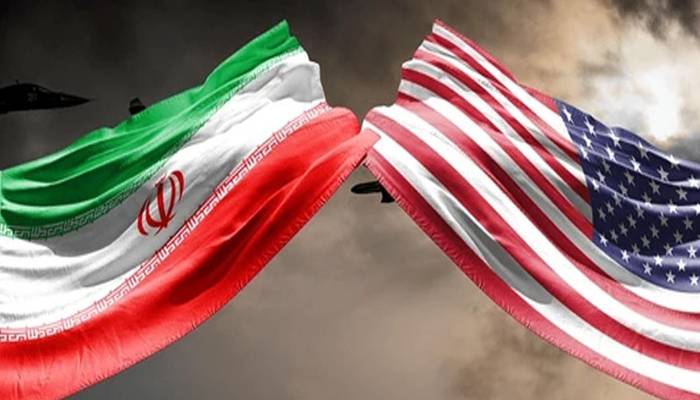
ISLAMABAD (TNS) War between America and Iran is neither a solution to any problem nor a war environment. This region will have to emerge from this environment and be taken out. Pakistan has an opportunity to play an important role in bringing about a ceasefire between America and Iran. Our military supremacy has been proven, and the flags of diplomatic successes have also been seen on the global horizon. Pakistan’s Foreign Office states that it is closely monitoring the situation in Iran. Pakistan hopes that “peace and stability will prevail, and we support all efforts to resolve this situation peacefully.” The Pakistani Foreign Office spokesperson said, “As a neighbor, friend and brotherly country, Pakistan wants to see a peaceful, stable and prosperous Iran.” The spokesperson expressed hope that the financial measures announced by the Iranian government would alleviate public suffering. He described Iran as a “strong nation” and said that Pakistan is confident that Iran will overcome the current challenges. The Turkish Foreign Minister said, “We are against military action against Iran. We believe that Iran’s real problems should be solved by itself.” The economic unrest in Iran has been “wrongly portrayed as a coup.” He said, “We absolutely want the problems to be resolved through dialogue.” We hope that the US and Iran will resolve this issue between themselves. The Turkish Foreign Minister’s recent statements come at a time when US President Trump had said in recent days that if the Iranian government kills protesters, he will take military action in support of the protesters. The Iranian government has stopped killing protesters and has no plans to execute protesters. There are reports that Turkey has not allowed protesters to hold anti-Iran demonstrations in Istanbul. After the US’s war games and the arrival of a naval fleet in the Middle East, Iran has announced military exercises in the Strait of Hormuz. The US has hinted at talks with Iran. A US official said that Washington is ready to talk if Iran contacts it, but talks will only be possible if Tehran is informed of the conditions. The US official said that if Iran contacts it, the US is “open for business.” On the other hand, US President Donald Trump has urged Iran to make a deal or else the next attack will be “severe”. The US President once again threatened Iran, saying, “Make a deal or face the worst attack.” In a post on Truth Social, US President Donald Trump said, “A very large aircraft carrier fleet is moving towards Iran. It is moving rapidly with great power, enthusiasm, and purpose. Hopefully, Iran will come to the negotiating table soon and negotiate a fair and equitable deal.” Donald Trump said that time is running out. This matter is very important. I have told Iran before to make a deal. Iran did not do so, and then Operation Midnight Hammer happened. US President Trump wrote that Iran faced a great disaster for not making a deal. The next attack will be much more severe. So let it not happen again. The conditions that the US has put forward for negotiations with Iran are mainly aimed at ensuring the security of Israel. According to world media, the main points included in the US conditions are:
Iran must completely eliminate all enriched uranium.
Iran’s long-range ballistic missiles will be banned.
Iran will not be allowed to enrich uranium domestically.
Iran will not provide aid to any regional power.

The US media has also claimed that the Trump administration is trying to impose a naval blockade on Iran to stop Iranian oil exports. Following the US war games and the arrival of the naval fleet in the Middle East, Iran has announced military exercises in the Strait of Hormuz. According to media reports, Iran has issued a NOTAM regarding airspace in view of the proposed military exercises. The NOTAM instructs that flights should not be made below 25,000 feet around the Strait of Hormuz from January 27 to 29. According to Iranian officials, these military exercises will be within a radius of about 9 kilometers. It should be noted that Iran has once again warned that if it is attacked from outside, Iran may use the option of closing the Strait of Hormuz. This was stated by Behnam Saeedi, a member of the National Security Committee of the Iranian Parliament, in an interview. The Strait of Hormuz is a vital sea route through which 20 percent of the world’s daily oil supply passes. If this route is closed, oil prices in the global market could rise sharply, and trade problems could arise. Iran has previously threatened to close the Strait of Hormuz in response to Western pressure. Due to the current tense situation, many commercial ships are avoiding Iranian waters. On the other hand, the Revolutionary Guards have taken a tough stance and made it clear that if American ships enter Iranian waters, they will be attacked. It has been said that the US president makes a lot of statements, but the decision of the war will not be made by statements but in action. After the authorities of the Islamic Republic warned about the consequences of a US attack on Iran’s nuclear facilities, US Secretary of State Marco Rubio said in a statement that I would encourage the Chinese government, which is heavily dependent on oil passing through the Strait of Hormuz, to engage with the Iranian authorities on this issue. The US Secretary of State called closing the Strait of Hormuz “another terrible mistake” that would mean “economic suicide” for Iran. He said the US had options to counter such a move, but other countries should also pay attention to this issue because their economies would be hurt more than the US.
Marco Rubio warned that closing the Strait of Hormuz would be considered a “major escalation” in current tensions that would require a response from Washington and others. The Strait of Hormuz is the largest passage for oil shipments to global markets, and according to the US Energy Information Administration, in the first half of 2023, about 20 million barrels of oil (about 20% of global oil consumption) were exported to global markets through the strait. The US Secretary of State says that Iran tried to “play games” with the US during negotiations over its nuclear program, which forced President Donald Trump to take action. The US Secretary of State claimed that the US had offered to allow Iran to have a civil nuclear program, but “they rejected it.” According to foreign media, the US nuclear-powered aircraft carrier USS Abraham Lincoln arrived near Oman. The aircraft carrier has a capacity of 6,000 personnel and 70 fighter jets. The last time this ship came to the Persian Gulf was in 2002 for the Iraq War. US President Donald Trump said in a rally in Iowa that a magnificent fleet is moving towards Iran. Hopefully, Iran will make a deal with the US. He said that Iran was one month away from making nuclear weapons, and its nuclear program was destroyed in June last year. Iran has also started preparations for a possible war. Iran has warned that if American ships come within its borders, it will attack. President Trump also threatened Iraq on social media, saying that if Nour al-Maliki is elected prime minister in Iraq, the US will stop aid to Iraq. Then that country will not be able to develop. Saudi Arabia has assured Iran that it will not allow its airspace to be used against Iran in any way. Iranian President Masoud Peshmerga spoke to Saudi Crown Prince Mohammed bin Salman over the phone. Saudi Crown Prince Mohammed bin Salman assured the Iranian president that Saudi Arabia will not allow its airspace or territory to be used against Iran. In the telephone conversation, President Masoud Peshmerga told Mohammed bin Salman that US threats against Iran will lead to instability in the region. Tehran welcomes any action that prevents war within the framework of international law. The Saudi crown prince reiterated his respect for Iran’s sovereignty and called for resolving all disputes through dialogue. Mohammed bin Salman said that Riyadh rejects any kind of aggression or tension against Iran and is ready to cooperate with Iran for regional security. US President Donald Trump says he thinks Reza Pahlavi, the exiled son of Iran’s last monarch, seems like a good man, but he is unsure whether Pahlavi will have enough support inside Iran to take power. In an interview with Reuters in the Oval Office, Trump said it was possible that Iran’s current government could fall. Trump said last week that he had no plans to meet with Pahlavi. Pahlavi, 65, lives in the US and has been prominent during the protests despite being outside Iran. His father was ousted from power during the 1979 revolution. Iran’s opposition is divided into various groups and ideological factions, including Pahlavi’s supporters. But his supporters in Iran are not organized. The recent protests in Iran began in late December when the local currency depreciated and inflation soared. The protests quickly turned into demands for political change and became the biggest challenge to the current government since the 1979 Islamic Revolution. Iran’s judiciary chief has warned that those behind the recent wave of anti-government protests can expect to be punished “without any leniency.” The anti-inflation protests began as part of a broader protest movement that has proven to be the biggest challenge to the Islamic Republic’s government in years. The demonstrations have subsided after a government crackdown, made possible by an internet blackout that has largely cut off the country from the outside world. “The public rightly demands that the suspects and the real instigators of riots, acts of terrorism, and violence be tried as soon as possible and punished if found guilty,” the state-run online news portal Mizan reported, quoting judicial chief Gholamhossein Mohseni-Eji. “The utmost rigor must be applied in the investigations.” “Justice requires that these perpetrators be tried and punished without any mercy.” The Iranian government has put the death toll in the protests at 3,117, including 2,427 people it called “martyrs” who, according to officials, died as a result of “riots” instigated by the US and Israel. US President Donald Trump has threatened military intervention if Iran begins executing protest suspects, but has recently softened his stance after Tehran claimed to have suspended executions. President Trump said on his return from Davos that the US was sending a “large-scale naval force” to Iran anyway. The US carried out strikes on Iranian nuclear facilities in June when it briefly joined Israel in its 12-day war against the Islamic Republic.The United States has imposed sanctions on five Iranian officials accused of a crackdown on protesters. The United States has also said that Iranian leaders are being monitored for transferring their funds to banks around the world. The US Treasury Department announced the new sanctions in a statement. The Iranian officials who have been sanctioned include the secretary of the Supreme National Security Council and commanders of the Revolutionary Guard and law enforcement agencies. US Treasury Secretary Scott Besant said that the United States knows that “you are transferring stolen funds to banks and financial institutions around the world. We are watching you.” He said, “There is still time for you to join us. President Trump has said to stand with the Iranian people.” Besant said in a statement that the US Treasury Department will take every step to target Iran’s “dictatorial regime.” The US has also imposed sanctions on 18 other people accused of money laundering. According to the United States, these individuals sell Iranian oil and petrochemicals in foreign markets and transfer funds through secret banking networks. The Trump administration has maintained pressure on Tehran. Sanctions were previously imposed to prevent Iranian oil exports and the production of nuclear weapons. According to the news agency, under these sanctions, individuals and companies will not be given access to any property or financial assets in the United States, and American companies and citizens will be prevented from doing business with them. However, these sanctions are largely symbolic because most of them do not have funds in American institutions. The US Treasury Department’s Office of Foreign Assets Control (OFAC) has designated 18 individuals and companies in connection with these sanctions. The United States claims that these individuals participated in money laundering from the sale of Iranian oil through a “shadow banking network.”
 Shadow banking refers to financial activities and institutions that operate like banks but are outside the regulations of the traditional banking system. On the other hand, Iranian Foreign Minister Abbas Araqchi has written a letter to UN Secretary-General Antonio Guterres, High Commissioner for Human Rights Volker Turk, and foreign ministers of various countries, calling on them to condemn “foreign interference” in Iran. He said that peaceful protests that began on December 28 over economic issues were turned into “armed riots” by “terrorist elements.” According to Araqchi, the protesters “carried out actions such as beheadings, burning alive, attacks on law enforcement officers and citizens, shooting, burning ambulances, fire trucks, medical centers and religious sites.” Iran has accused the US and Israel of supporting the rioters, while the country’s judiciary has announced strict action against those involved in the violence. Araqchi described the US statements as “irresponsible and provocative,” and said that this is a violation of the UN Charter. It is a violation of the UN Charter and international law. He claimed that former US Secretary of State Mike Pompeo admitted that Israeli Mossad agents were among the protesters, which is proof of Israeli interference. Araqchi said that the US is achieving political goals in the name of human rights, while Iran is taking all necessary measures to protect its citizens and national security. Iranian Defense Minister Aziz Nasirzadeh said that most of the deaths in Iran’s violent protests were “knife attacks, strangulation, and about 60% were caused by blows to the head.” He added that more than 150 food stores were destroyed in the protests, but “they were not looted.” He claimed that “this time, the US and Israeli authorities did not hide their malice in any way and broke the taboo of foreign elements interfering in Iranian affairs.” The Iranian Defense Minister said that the US, Israel, and some of their allied countries established a “dialogue center” to “establish a sense of separation.” “It could help extremists and terrorists map out the future.” Iranian government officials claim that the protesters were involved in these activities at the behest of the United States and Israel.