
ISLAMABAD (TNS) Prime Minister of Pakistan committed to the promotion and development of tourism … (Asghar Ali Mubarak)…. .Prime Minister of Pakistan Shehbaz Sharif is committed to the promotion and development of tourism in the country. The Prime Minister says that Pakistan’s tourism sector has unlimited potential to earn foreign exchange. The public and private sectors should work together to facilitate the travel of international tourists to Pakistan’s tourist destinations. The Prime Minister has expressed his determination to include Pakistan in the list of the world’s leading tourist centers. For this purpose, proposals were presented in a meeting on promoting tourism in Pakistan, chaired by the Prime Minister, to utilize the potential of the tourism sector.
Remember that in an important meeting last year, Prime Minister Mian Shehbaz Sharif had made it clear that Pakistan’s tourism sector has unlimited potential to earn foreign exchange. Allah Almighty has blessed Pakistan with natural resources and timeless beauty. Pakistan has snow-capped mountains, forests, rivers, even plains and desert areas.
The Prime Minister said that thanks to natural resources, our country is no less than any other country in terms of tourism. Pakistan should be introduced abroad as a tourism brand, and steps should be taken to promote tourism throughout the country with the cooperation of the provinces. The Prime Minister, while directing the Pakistan Tourism Development Authority to take practical steps to promote tourism, said that special tourism zones should be created to promote tourism.
Public and private sectors should work together to facilitate the movement of international tourists. Special steps should be taken for domestic tourism and the arrival of domestic tourists to recreational places, and plans should be made for permanent investment in the tourism sector.
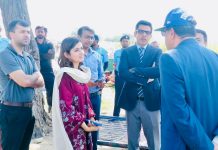
Under the direction of the Prime Minister, the Pakistan Tourism, Sports and Family Festival will begin in Islamabad from today. The two-day festival competitions will be held at F-9 Park and Islamabad Sports Complex. Car shows, motorbike shows, paragliding, spear throwing, and many other events for families will be organized during the festival. Pakistan’s famous traditional game of spear-throwing competitions. The event will be held on Saturday, January 31, at F-9 Park in Islamabad, in which more than fifty teams from all over the country will participate.
For the first time, the team of Al-Baraq Tent Pegging Club is also participating in the javelin competition. Al-Baraq Club will be represented by Lady Riders Zamal Qaisrani and Manahil Qaisrani, as well as Noman Khalid, Chaudhry Aftab Plak, Rana Ahmed Nawaz Kilo, Ibrahim, and others, while Malik Ibtisam, Hassan Raza Cheema, Humayun Gondal, and Noman Ali will participate in the competition from Al-Khayyam Club. These javelin competitions are being organized under the patronage of former Deputy Mayor of Islamabad, Syed Zeeshan Naqvi.
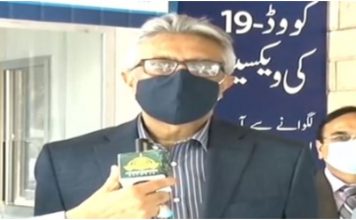
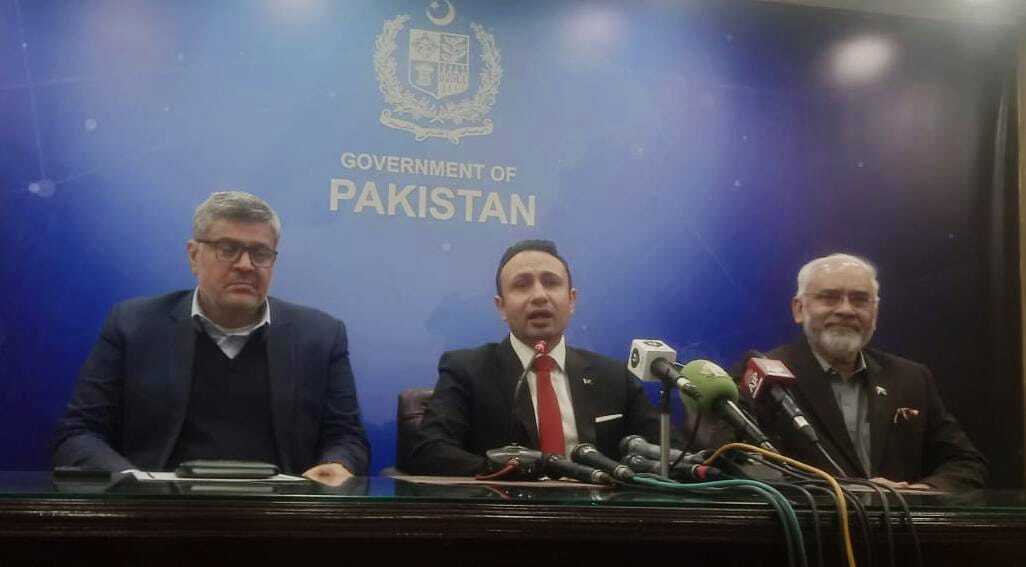
According to the organizers, these competitions will be a special attraction for the spectators and will play an important role in the promotion of the traditional sports of Pakistan. The organizers have invited citizens and tourists to participate in large numbers so that they can be a part of this national festival full of sports, culture, and entertainment. Prime Minister’s Coordinator for Tourism Sardar Yasir Ilyas Talking about the festival, said that the government will utilize all available resources to promote and develop tourism in the country. The Pakistan Tourism, Sports and Family Festival will play an important role in promoting tourism in the country. Up to $40 billion can be earned annually through tourism. Pakistan is a hospitable country with attractive places. The event will feature traditional and cultural sports, especially tent pegging, various sports activities, car and bike shows, cultural demonstrations, regional food stalls, music, and other entertainment programs. Car shows, motorbike shows, paragliding, spear throwing, and many other events for families will be organized during the festival. More than 50 teams from all over the country will participate in the famous traditional sport of Pakistan, spear throwing. The Prime Minister’s Coordinator for Tourism has said that the two-day festival competitions will be held at F-9 Park and Islamabad Sports Complex. The festival aims to highlight the positive image of Pakistan. To promote tourism and provide awareness to the public about tourist destinations. Entry for families in the festival is completely free. This is a national-level mega event aimed at highlighting Pakistan’s tourism potential, promoting sports and adventure tourism, and presenting Islamabad as a vibrant tourist hub. This event is being organized exclusively for families and women so that they can enjoy entertainment and culture in a safe, pleasant, and dignified environment. Enjoy this wonderful festival with families without any tickets. These competitions will be a special attraction for the fans and will play an important role in the promotion of Pakistan’s traditional sports.
Sardar Yasir Ilyas said that through this mega event, Pakistan’s soft image will emerge all over the world, and the message will be sent to the whole world that we are a peaceful country. The federal government, inter-provincial ministry, Tourism Corporation, CDA, and other institutions are working together for this event. Such mega events should be organized all over Pakistan. So that people can get quality entertainment. A traffic plan has also been prepared for this mega event so that the public does not have to suffer.
Speaking about the festival, Secretary, Ministry of Inter-Provincial Coordination, Mohiuddin Wani said that the Pakistan Tourism, Sports and Family Festival 2026 reflects the government’s commitment to promote domestic tourism, cultural harmony, and healthy recreational activities. The festival brings together tourism, sports, and culture on one platform and highlights Islamabad as a welcoming and vibrant destination for tourists. This mega national event is being organized in collaboration with the Ministry of Inter-Provincial Coordination, Pakistan Tourism Development Corporation, Provincial Tourism Department, and key public and private sector stakeholders. The festival includes tourism promotion stalls, provincial cultural performances, cultural exhibitions, art and craft stalls, live painting, photography exhibition, exhibition of gems and jewelry, food festival featuring regional cuisines, family and children’s activities, double cycling, bus cycling events through medical tourism promotion. A hot air balloon display, paragliding demonstrations, gliders flying from Monal, which will land at the F-6 Cricket Ground, and a musical concert will be held. A special side event, a tent pegging competition, will be held at F-9 Park on January 31, 2026, from 10 am to 5 pm.
It is said that Pakistan is a country among developing countries that has a lot to offer tourists, but the tourism industry in Pakistan has been experiencing fluctuations due to political and security reasons. The International Gandhara Symposium was held in Pakistan under the Cultural and Tourism Diplomacy, during which Buddhist leaders from Thailand, Sri Lanka, Nepal, Japan, China, Vietnam, Korea, and other Asian countries visited Buddhist religious sites in Taxila, Hind in Swabi, and then at Takht Bai in Mardan district.
On one hand, he praised the various Buddhist sites in Pakistan and said that there are images of Buddha based on his imagination in different parts of the world, but only Pakistan is the country where he thinks ‘the closest image to the face of Buddha is found’.
But the important point he made was that if Pakistan wants to increase the number of tourists, it should stop unnecessarily displaying weapons in the name of security.
In the last 12 years, tourism has grown faster than the global economy. One billion people travel abroad every year, and half of these tourists visit developing countries. Among developing countries, Pakistan is a country that has a lot to offer tourists.
Pakistan has not yet started focusing on the third category, i.e., cultural tourism, which also includes religious culture. The country has traces of ancient civilizations. There are Sufi shrines, Hindu temples, Sikh gurdwaras, and Buddhist monasteries, but despite having so much for foreign tourists, Pakistan lags behind India, Sri Lanka, and other regional countries.
Punjab alone has 480 heritage and religious sites, of which 106 are historically important, while 120 are religious and 26 are both religious and historical.
The Mardan, Taxila, and Swat regions of Pakistan are the cradle of the Gandhara civilization of Buddhism, where the sites are very special to more than 500 million Buddhists worldwide. Pakistan alone has the oldest sleeping Buddha statue in the world in Haripur. Takht Bai in Khyber Pakhtunkhwa and other sites in northern Punjab are of religious importance to the 50 million Mahayana Buddhists of Korea, China, and Japan, but no one from these countries comes here.
According to official figures, the travel and tourism industry contributed 6.9% to GDP, or $19.4 billion, and is expected to grow to 7.2% by 2027.
Religious tourism is a huge tourism industry. According to religious tourism websites, at least 300 million people still visit important religious sites around the world for religious tourism. 600 million domestic and international trips are made every year, generating $18 billion in revenue worldwide. But tourism also needs to be done in a better way so that tourists are not intimidated. When we go to the Ben Faqira Stupa, we see Taxila on one side and Islamabad on the other. This view looks very romantic at night, but this place is hidden from the eyes of people. Pakistan came into existence due to these civilizations, whose history is thousands of years old.
There are many ancient sites in Pakistan, but six sites have been included in the World Heritage List, including Mohenjo-Daro, Takht Bai’s ruins, Taxila, Shahi Fort, Shalamar Garden, Rohtas Fort, and Makli.
However, Pakistan’s cultural heritage, remains, antiquities, and archaeological sites are suffering from government neglect, including degradation. Now, heavy rains and floods have partially damaged many ancient sites.
Pakistan has been the home of many civilizations, the traces of which are still found here; especially, the traces of the Gandhara civilization are abundant. It was an ancient kingdom mentioned in the Vedas and Buddhist texts. It was established in the 6th to 11th centuries BC and extended to present-day KP, Punjab, and Pothohar.
When Ashoka came here in 230 BC, the people here converted to Buddhism in large numbers. It was a modern civilization with monasteries, places of worship, educational institutions, and commercial centers.
Its architecture came into being from the confluence of Greek, Iranian, and local cultures. The sculptures and pottery found under Gandhara art are exemplified in the stone carvings. There are forty sites of Gandhara civilization in Pakistan, including the Ben Fakiran Stupa in Islamabad, which is located two kilometers away from the Buddhist caves and features a construction style similar to that used in the 2nd to 3rd centuries. However, tourists hardly know about this place. Along with this, Sphula Stupa Jamrud, Gour Guthri Complex Peshawar, Peshawar Museum, Badalpur Stupa Haripur, Jehanabad Buddha Swat, Swat Museum, Mansehra Rocks, Bhamla Stupa Haripur, Julian Stupa Haripur, Shangardar Stupa Swat, Gehligay Rocks Karong Swat, Batkara One and Two Mingora, Batkara Three Mingora, Amlok Pass Swat, Shahbaz Garhi Rocks Mardan, Takht Bai’s relics Mardan, Rani Ghat Buner, Jamal Garhi Mardan, City of Caves Bela Lasbela, Sri Bahlul Mardan, Sudhiran Jo Daro Tando Muhammad Khan, National Museum Karachi, Juhi Town Stupa Dadu, Buddhist Stupa Monijo Daro, Menkala Stupa, Jindal Temple Taxila, Jinan Wali Dheri Taxila, Pipalan Stupa, Sirsakh City Taxila, Sirkup City Taxila, Dharmarajka Stupa, Manthal Rocks Skardu, Pher Mound Taxila, Kargha Buddha Gilgit, Thal Pan Rocks Karong Chilas, Sheetal Rocks Karong. There are 19 monuments of Gandhara culture in KP, five in Sindh, one in Balochistan, ten in Punjab, four in Gilgit, and one in Islamabad. Many tourists avoid visiting these monuments in KP and Balochistan. There are no good accommodation facilities near many monuments, and there are no special arrangements at many places for tourists to learn about these places. Nor has any survey been conducted so far to see which places have been damaged by the recent rains and floods. There is Buddhist architecture, statues of Gautam Buddha, stupas, and organized urban civilization in these areas, but religious tourism is negligible. There are also monuments of the Indus Valley Civilization in Islamabad.
‘There is a whole mound in the Sector I-11 center of Islamabad, which contains relics of the Indus Valley, Harappa, and Buddhism. There are relics of five thousand years old history there.’ However, the administration is busy bulldozing everything there and building. Islamabad is also as old as other parts of the country, which are connected to ancient civilizations. There is a watchtower in the Margalla Hills, which is associated with Buddhism, which archaeologists have mistakenly called a stupa. Similarly, the Shah Allah Dutta Cave and the surrounding area are so old that there used to be a sea here, and marine fossils were found here during excavations. This entire place is very old, and this place can be used for Buddhist religious tourism. There is an ancient inn in Sarai Kharboza, which is also neglected. Similarly, there are Hindu temples that date back to the 18th century. Saidpur village was an ancient place of Hindus, but the CDA destroyed it and commercialized it.
‘Now there are food and drink spots there. There used to be a confluence of water springs there, which was a sacred place. Only renovations are done in such places; no new construction is allowed.’ ‘Lower Dundee was a Buddhist site which was destroyed. Before 1971, there was a large Buddhist population in Pakistan.
Islamabad is a part of ancient Taxila; we need to pay attention to this. We should celebrate Buddha Day so that more and more religious tourists come here. Fairs should be organized in these places. Souvenirs should be made.’ E-visa has changed the tourism situation in Pakistan. Now tourists come in large numbers, and the older generation is deeply interested in Buddhism. The new generation is not so inclined. Now the law and order are good, so introduce the Gandhara trip as well.
If we talk about the Ben Faqira Stupa in Islamabad, hardly anyone is aware of it. It is a historical place that is a mirror of the Gandhara civilization. The Ben Faqira Stupa is a symbol of the Gandhara civilization and is located near the caves of Shah Allah Dutta. The historical place that was built by King Ashoka is visible at this place. When this site was discovered, some coins were also found here, which were also related to the Gandhara civilization. They were made into an ornament of the museum. The stupa is a sacred place of the Gandhara civilization, around which worshippers used to circumambulate and worship. When we go to the Ben Fakir Stupa, we see Taxila on one side and Islamabad on the other. This scene looks very romantic at night, but this place is hidden from the eyes of people. Pakistan is full of Buddhist monuments, but religious tourism is nonexistent. If the government pays attention to this side, along with the historical sites of Sikhs, a large number of Buddhists will come to Pakistan. At present, Buddhism and its population have almost disappeared in Pakistan. Tourism promotion is key to strengthening the economy, culture, and peace of any country. Employment opportunities can be created by attracting tourists through infrastructure improvement, world-class facilities at tourist destinations, and “green tourism” (eco-friendly tourism).
Tourism not only ignites knowledge and virtue but also helps in strengthening the local economy.
Important steps for the promotion of tourism include improving infrastructure, improving roads, hotels, and communication facilities to tourist destinations, highlighting the country’s cultural heritage and natural landscapes to the world, ensuring a safe environment for tourists, and maintaining local culture and natural beauty while protecting the environment.
The total annual volume of the tourism industry at the international level is about $ 9 trillion, which is ten to 11 percent of the total GDP of the world. However, Pakistan’s share in this global tourism industry is less than 0.05 percent. It is worth mentioning here that Pakistan is one of the few countries in the world that nature has blessed with many recreational places and seasons. In such a situation, it is the duty of the government to include the development and promotion of this important sector in its priorities. In recent years, the government has taken various steps, including the establishment of a company called Green Tourism Pakistan in collaboration with the government and the Pakistan Army. All the credit for implementing this idea in practice and implementing it quickly goes to the Pakistan Army. According to the details, this company will initially establish 150 hotels to provide world-class facilities to tourists at tourist destinations. In this regard, the work of establishing about ~15 to 20 hotels has been completed, and their launch is expected soon. The company is also going to take over the existing hotels under the Pakistan Tourism Development Corporation and renovate and relaunch them. Most of these hotels are located in very important tourist destinations, but their design, interior decoration, and above all, the quality of service provision were not what they should have been. Green Tourism Company has now redesigned these hotels not only with the consultation and help of world-class institutions, but also their management and service provision standards have been aligned with world standards. In this regard, the services of professional staff and management have been obtained. While this initiative will help promote global tourism in Pakistan, local tourists will also get better services and facilities. Earlier, the PTDC organization was not able to maintain the standards in promoting tourism and providing world-class facilities to tourists that are now needed. In such a situation, the establishment of a new company by the name of Green Tourism Pakistan has proven to be a breath of fresh air in this sector, which will help in improving the quality of the local hotel industry already existing in tourist destinations. In this regard, various joint ventures are also being worked on to provide local partnership and investment opportunities, which are expected to improve the quality of business and service delivery in Pakistan’s tourism industry.
In this way, not only will local tourists from all over the country visiting the northern regions get the same environment that they have experienced while touring other countries, but the number of tourists coming from abroad in the religious tourism sector will also increase significantly, which will provide the country with a new and permanent source of earning valuable foreign exchange. The Sikh community is not only interested in coming to Pakistan for pilgrimages to their religious places, but they also want to invest in providing and making available facilities for tourism to these religious places. In this regard, whenever I meet influential people and important business figures of the Sikh community, they inevitably express their interest in this regard. This shows that we have a lot of opportunities for development and investment in this sector.
However, it is necessary to first ensure the issuance of visas on a priority basis to the Sikh community coming from abroad for the purpose of religious tourism. In addition, there are some religious places of the Sikh community in Peshawar and other cities where they are not accessible. My hometown, Rasool Nagar (Ramnagar), is a historical place near Wazirabad where Raja Ranjit Singh was born. In early 1849, bloody battles took place between the Sikhs and the British at Rasool Nagar (Ramnagar), Wazirabad, and Gujarat on the banks of the Chenab River (Ramnagar, Sadullahpur, Chelianwala and later Gujarat), in which the British initially suffered heavy losses, but the Sikh army surrendered on March 12 and Sikh rule in Punjab came to an end. In Punjab, Maharaja Ranjit Singh was the first Indian in the last thousand years to repel the invasion of the traditional conquerors of India, the Pashtuns (Afghans). Defeating foreign invaders and subduing local areas, his rule stretched from the Khyber Pass in the northwest to the Sutlej River in the east, and from the northern border of the Indian subcontinent to the south, it extended to the Thar Desert (Great Indian Desert). Lahore was the capital. When Ranjit Singh died on 27 June 1839, the area of the Lahore State was a little over two hundred thousand square miles.