
ISLAMABAD (TNS) Important economic and diplomatic progress has been made between Pakistan and the UAE, including the extension of loan repayments and the final stages of a trade agreement. In the latest economic development, the UAE has agreed in principle to extend (rollover) the repayment period of Pakistan’s $2 billion deposit by two months until April 17, 2026. This decision was made at an interest rate of 6.5 percent, which is particularly important for Pakistan in the context of ongoing negotiations with the IMF. The two countries are in the final stages of signing an agreement called CEPA, which aims for free trade. The agreement aims to double the current $8-10 billion bilateral trade and remove trade barriers. Pakistani exports to the UAE have recorded a 22 percent increase in the past six months, reaching $1 billion. Prime Minister Shehbaz Sharif and UAE President Sheikh Mohammed bin Zayed Al Nahyan held a telephonic conversation. The leaders agreed to further strengthen mutual cooperation and increase investment in infrastructure, energy, agriculture, and IT sectors. The UAE is expanding investment in Pakistan in ports, aviation, minerals, and railways, including new agreements for the supply chain from the northern regions to Karachi. The two countries have also agreed to develop a joint strategy to prevent online terrorism and terrorist financing.
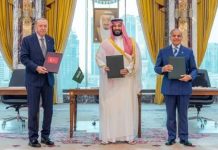
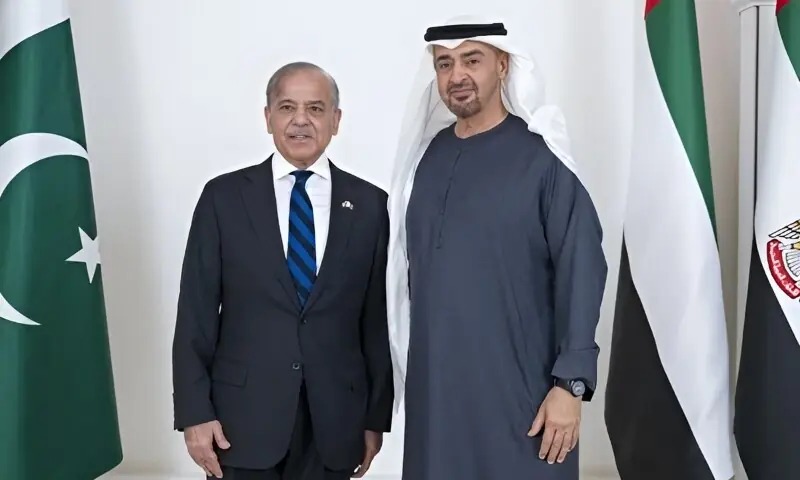
 Prime Minister Shehbaz Sharif has made a telephonic contact with the President of the United Arab Emirates (UAE), Sheikh Mohammed bin Zayed Al Nahyan, in which the commitment to further promote mutually beneficial cooperation between the two countries was reiterated. The two leaders reiterated their commitment to further promote mutually beneficial cooperation between Pakistan and the United Arab Emirates. According to a statement from the Prime Minister’s Office, Prime Minister Shehbaz Sharif and the President of the United Arab Emirates and Ruler of Abu Dhabi, Sheikh Mohammed bin Zayed Al Nahyan, had a telephonic contact. During this conversation, which took place in a pleasant and very warm atmosphere, the two leaders recalled their recent meetings in Islamabad and Rahim Yar Khan last month, which took place on the occasion of the UAE President’s first official visit to Pakistan. It is worth noting that Prime Minister Shehbaz Sharif, while sharing pictures of the reception of the Emirati President, said that Pakistan is a second home for Sheikh Mohammed bin Zayed and he is very happy to welcome him. The Prime Minister thanked the UAE for its consistent and unwavering support to Pakistan in difficult circumstances, while saying that this cooperation is a manifestation of the historic and brotherly relations between the leadership and people of the two countries. The two leaders also discussed other matters of mutual interest and agreed to remain in touch. It may be recalled that the UAE has, in principle, extended the period of Pakistan’s $2 billion deposit by 2 months. The UAE has agreed in principle to a short-term extension (rollover) of Pakistan’s $2 billion deposit for two months. This move by the Emirates is being described as significant from the third review talks between Pakistan and the IMF. This decision has come at a time when only four days are left for the previous one-month extension to expire. The UAE has been informed that Islamabad will again approach the IMF for a long-term rollover after negotiations. The top official confirmed that the UAE has agreed to roll over the amount for two months till April 17, 2026. According to sources, this assurance was given when Deputy Prime Minister and Foreign Minister Ishaq Dar contacted top Emirati officials this week. The UAE has given this short-term extension at an interest rate of 6.5 percent, and formal approval from the relevant authorities is expected to be received anytime. It should be remembered that in January, too, the UAE had given a one-month extension on the expiry of the amount, while the third installment of one billion is due in July 2026. Foreign Office spokesperson Tahir Hussain Andrabi has said that Ishaq Dar is looking into the matter himself and is playing a positive role in consultation and coordination with the Emirati authorities. The spokesperson further said that it is the lender’s prerogative to determine the rollover period, and the rollover has been ensured with the efforts of the Deputy Prime Minister. He also referred to the Finance Minister’s statement that there is no gap in Pakistan’s external fiscal profile and that the relationship with the IMF is also moving in the right direction. According to sources, the original maturity of the loan was in January but has been temporarily extended till February, while Pakistan had requested a loan rollover for one year. According to this decision of the UAE, the maturity of Pakistan’s $2 billion loan has been postponed till February to ensure the stability of the country’s financial situation and temporary ease in repayment of external debt. Officials of the Ministry of Finance said that $3 billion of the UAE is available as a safe deposit in the State Bank, which can be used for further financial measures in the future. It was further informed that Pakistan has assured the IMF of a rollover for the loan program, while the interest rate on the loan from the UAE is likely to be more than 6.5 percent.
 Earlier, Saudi Arabia had extended the period of $3 billion for one year last month, and a target of rolling over a total of $12 billion in loans has been set during the current fiscal year. The officials of the Prime Minister’s Office and the Ministry of Finance are in continuous discussions with the UAE representatives so that the financial obligations can be met effectively. Pakistan has also planned to roll over safe deposits from China, Saudi Arabia, and the UAE. In addition, the third tranche of $1 billion is going to mature in July, for which a rollover is expected so that the external debt is paid and the country’s financial stability is maintained. It was informed that the Emirati authorities have decided to maintain this deposit for a short period. This extension has been given at an interest rate of 6.5 percent, while formal approval from the relevant authorities is expected soon.Recall that the Prime Minister paid a two-day official visit to the United Arab Emirates on January 12 and 13 at the invitation of the Emirati President. This was the Prime Minister’s third visit after assuming office. The Prime Minister was presented with a guard of honor upon arrival at the Presidential Palace. Prime Minister Shehbaz Sharif held a bilateral meeting with Emirati President Sheikh Mohammed bin Zayed Al Nahyan during the visit, in which the two leaders discussed ways to strengthen bilateral relations. During the meeting, they discussed specific measures to enhance cooperation in political, defense, economic, trade, and cultural sectors, promote joint projects, and strengthen cooperation in the field of human resources. The Prime Minister thanked the Emirati President for the UAE’s assistance to the flood victims. The two leaders agreed to intensify consultations and cooperation to strengthen strategic partnership and cooperation. In the meeting, it was agreed to work together in the field of information and communication technology and to bridge the digital divide. Pakistan and the UAE reiterated their historic and brotherly relations. The two sides signed a memorandum of understanding on combating human trafficking, information exchange, and diplomatic academies, while the Prime Minister invited the Emirati President to visit Pakistan.The government is taking unconventional measures to support exports. In the past, large exporters, especially in the textile sector, were given massive subsidies, including low-cost energy (captive and grid) and concessional finance for both working capital and long-term investment, while taxes were also negligible. Over the past few years, these subsidies have been withdrawn one by one, and now ordinary income tax is applicable on exports of goods.
 This change came at a time when energy prices in Pakistan have increased to unprecedented levels due to rising global rates and the continued inefficiencies of the local system, along with a significant increase in the rates of various taxes, including the super tax. Interest rates have also skyrocketed, and there is no subsidy support available for them. The government now has a clear and declared policy of export-led growth. However, recently, no meaningful steps have been taken to support this, and the results have reflected the ground realities. Meanwhile, major textile exporters are continuing to lobby to regain the concessions they have lost, but the government faces financial constraints and also has to comply with IMF conditions. In the past, the State Bank used to provide subsidized financing (concessional loans), which effectively meant the creation of new currency and increased the risks on the State Bank’s balance sheet. This facility was abolished after amendments to the State Bank Act. The government offered a 3% concession in working capital financing for exporters, for which funds were provided through financial subsidies, but exporters demanded much more. Now the State Bank has come up with a unique and unconventional idea of reducing the financing rate by another 3% without any subsidy. It seems that there has been a secret or tacit understanding between the State Bank, banks, exporters, and government officials on how to increase concessional financing without giving subsidies or angering the IMF. The details of this procedure are as follows: First, in its monetary policy decision, the State Bank reduced the Cash Reserve Requirement (CRR) by 100 basis points (1 percent). This requirement was increased in 2021 to withdraw excess money (liquidity) from the market. Now, since the State Bank itself is continuously providing money into the system, there is no particular justification for keeping the CRR at a high level. This reduction is expected to free up liquidity of about Rs 300 billion, which will give banks an opportunity to earn an additional profit of Rs 30 to 35 billion. After this, the government announced a 3 percent reduction in the Export Finance Scheme (EFS) rate, and the banks themselves will bear the burden of this additional cost. This impact on the existing financing stock of about Rs 1 trillion (1 trillion) is about Rs 30 billion, which is almost the same benefit that the banks were supposed to get from the cut in CRR. Moreover, the government announced the elimination of cross-subsidies in industrial tariffs and wheeling charges, the benefit of which was estimated at around Rs 4 per unit, but has not yet clearly stated how it will meet this shortfall. Officials claim that the move will be ‘fiscally neutral’, meaning it will not put any additional burden on the national exchequer. Without getting into the broader discussion of electricity tariffs, the reduction in the Export Finance Scheme (EFS) appears to be fiscally neutral, but it raises serious concerns about the autonomy of the State Bank as it affects the distribution of loans and the lending behaviour of banks. The question that needs a sensible answer is how the State Bank will ensure that this scheme is not abused or misused. Not long ago, another facilitation scheme provided by the FBR for exporters was misused, after which the government was forced to close it. Moreover, the government is effectively providing cheap working capital to exporters, the main benefit of which is to increase their profits. Instead, a more effective approach could have been to provide long-term concessional financing so that the production capacity of industries could be expanded. However, this is certainly a step in supporting the commodity exporting sector, which is currently facing severe difficulties. It remains to be seen how successful this experiment will be.