
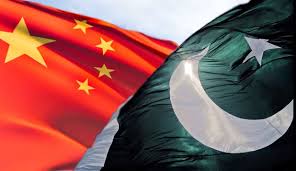
ISLAMABAD (TNS) The unprecedented increase in business ties between Pakistan’s and China’s private sectors marks the beginning of a new era of economic and strategic partnership between the two countries. The Pakistan-China Business-to-Business (B2B) Conference held in Hangzhou, China, in May 2026 is a clear example of this new era, in which agreements worth billions of dollars were signed.
After the recent visit of Prime Minister Shehbaz Sharif to China, the China-Pakistan Economic Corridor (CPEC) is now entering its next and most advanced phase. The key details of this new economic partnership are as follows:
1. Historic Business Cooperation (B2B Conference)Major Investment:
207 Memoranda of Understanding (MoUs) worth about $7.54 billion were signed at the conference.
Large-scale participation:
127 Pakistani and 436 Chinese companies actively participated in this trade fair. Transfer of agreements: The government has issued instructions to immediately convert the signed memoranda into formal agreements and joint ventures. 2. New and innovative areas of cooperation;
Beyond traditional projects, both countries are now focusing on innovative technologies:
Energy and technology:
Extensive cooperation in battery energy storage systems (BESS) and artificial intelligence (AI).Health and industry: Biotechnology, vaccine production, and establishment of industrial parks.Space research: Mutual cooperation in space missions and satellite technology.
3. Revolutionary changes in agriculture;
Innovative research: Launch of formal cooperation between the Chinese Academy of Agricultural Sciences and the Pakistan Agricultural Research Council (PARC). Production Cooperation: Joint initiatives for new varieties of seeds, fertilizer production, fisheries, and food processing. Modern equipment: Transfer of modern Chinese agricultural machinery to Pakistan to make agriculture sustainable.
4. Next phase of CPEC and security market access:
China has expressed its commitment to open its markets to increase Pakistani exports. Employment opportunities: CPEC has so far generated more than $25 billion in investment and 250,000 jobs, and more employment opportunities will be created.
Foolproof security: Pakistan has assured the most stringent measures for the security of Chinese personnel and projects working in the country. This new economic development provides Pakistan with a golden opportunity to move towards technological and industrial modernization as well as increase the country’s exports.
Prime Minister Muhammad Shehbaz Sharif said that the unprecedented increase in business ties between the private sectors of Pakistan and China is the beginning of a new era of economic partnership between the two countries.
The Prime Minister has directed that the MoUs signed in Hangzhou be formalized into agreements and joint ventures at the earliest.
He was chairing a meeting to review the progress of the decisions taken during the Pak-China Business-to-Business Conference held in Hangzhou during his recent visit to China.
The Prime Minister said that promoting industrial, agricultural, and technical cooperation with China will increase Pakistan’s exports and create new employment opportunities. He said that through agricultural research, modern technology, and Pak-China joint ventures, a revolutionary change can be brought in Pakistan’s agricultural sector.
The Prime Minister also directed the implementation of the cooperation between the Chinese Academy of Agricultural Sciences and the Pakistan Agricultural Research Council. He said that the unprecedented increase in business ties between the private sectors of Pakistan and China is the beginning of a new era of economic partnership between the two countries. The Pakistan-China B2B Conference held in Hangzhou on the 24th of last month was attended by 221 Pakistani and 436 Chinese companies, where 200 MoUs worth about $7.4 billion were signed. MoUs were signed for extensive cooperation in the fields of battery energy storage systems, artificial intelligence, fertilizers, seeds, modern agricultural equipment, fisheries, and food processing. MoUs were also signed for joint investment in advanced industrial sectors, including biotechnology and vaccine production.
The China-Pakistan Economic Partnership (CPEC and Trade Linkages) has now entered its second and more advanced phase, the main focus of which is now investment and technical cooperation between the private sectors (B2B) rather than government projects. The Pak-China Business-to-Business Conference to be held in Hangzhou, China, in May 2026, is the latest and biggest example of this partnership. The main pillars and recent developments of this partnership are as follows:
1. B2B Conference and Trade Agreements Billions of Dollars of Investment:
During the Hangzhou Conference, 207 Memoranda of Understanding (MoUs) worth $7.54 billion were signed between companies from both countries.
Major Partnership: 127 Pakistani and 436 Chinese businesses participated in this trade event. Government Sponsorship: The Government of Pakistan has set up a task force to immediately implement all these MoUs and convert them into Joint Ventures.
Phase 2 of CPEC; The first phase of CPEC was about infrastructure (roads and power plants), while the current phase focuses on these areas:
Industrial Transfer: Relocation of Chinese industries and manufacturing units to Pakistan’s Special Economic Zones (SEZs).
Advanced Technology: Cooperation in Artificial Intelligence (AI), Cloud Computing, and Battery Energy Storage System (BESS).
Aerospace and Space Cooperation: Joint ventures in satellite technology and space exploration.
3. Innovation and Research and Development in the Agricultural Sector:
Collaboration between the Chinese Academy of Agricultural Sciences and the Pakistan Agricultural Research Council (PARC).
Productivity Enhancement: Transfer of modern seed varieties, fisheries, and food processing technology to Pakistan.
Corporate Farming: Use of modern agricultural machinery in Pakistan and Chinese investment for corporate farming.
4. Security and Protection of Chinese Nationals:
Pakistan has reiterated its commitment to provide foolproof security for Chinese experts and staff working on CPEC and other private projects.
Pakistani Exports:
China has assured to facilitate access to its market for Pakistani products (especially agricultural and textile products) to reduce the trade deficit.
Chinese investment in the Special Economic Zones (SEZs) established under the China-Pakistan Economic Corridor (CPEC) has now moved beyond basic infrastructure to industrial relocation and joint ventures. The government of Pakistan has further intensified one-window operations and special incentives after the Hangzhou B2B Conference in May 2026 to attract Chinese investors to these zones. The status of active and preferred economic zones under Chinese investment is as follows:
Allama Iqbal Industrial City (Faisalabad, Punjab) Major Chinese investment: This zone is the first priority of Chinese companies for textiles, pharmaceuticals, corporate farming equipment, and chemicals.
Industrial Transfer: China Railway First Group (CRFG) and other large consortia are setting up manufacturing units here. Employment: Chinese investment in this zone is creating thousands of local jobs in the Taftan and Punjab regions.
Rushke Special Economic Zone (Nowshera, Khyber Pakhtunkhwa) Chinese Developer: This zone is being developed and marketed by China Road and Bridge Corporation (CRBC).
Core Sectors: Chinese companies are setting up plants for mechanical equipment, high-tech home appliances, and construction materials here. Strategic Importance: This zone is becoming a major hub for delivering Chinese products to the Afghan and Central Asian markets.
Dhabeji Special Economic Zone (Thatta, Sindh) Industrial Sectors: Due to its proximity to the port of Karachi, Chinese investors are investing in steel mills, automobile parts, and the petrochemical industry. Green Energy: Battery Energy Storage System (BESS) manufacturing plants are also under consideration here under new agreements for May 2026.
Gwadar Free Zone (Balochistan) Free Zone Model: This zone is managed by China Overseas Ports Holding Company (COPHC). Investment sectors: Chemicals, logistics, food processing, and fisheries factories are becoming fully operational. Special incentives for Chinese investors. The Government of Pakistan has given the following incentives to bring Chinese companies to these zones: Tax Exemption: Complete exemption from customs duty on import of plant and machinery. Income Tax Holiday: Exemption from income tax for the first 10 years after the start of operations.
One Window Facility: One Window Facility is a federal digital and administrative portal that aims to provide all business approvals in one place, saving local and especially Chinese investors from the complexities of bureaucracy.
The Federal Board of Investment (BOI) is the supervisor of this portal, and under recent decisions, this system has been fully functional to speed up the process of setting up industries in Special Economic Zones (SEZs).
The key features and benefits of this one-window operation are as follows: 1. Time and cost savings. Centralized portal: Earlier, investors had to visit more than 20 federal and provincial departments for NOC and licenses,
but now all applications are consolidated at one place. Fast approvals: The time for allotment of land, approval of construction drawings, and security clearance has been reduced from months to a few days.
2. Immediate provision of basic amenities: The Government of Pakistan ensures uninterrupted supply of electricity, gas, and internet to the zero point (industry gate) of all approved Special Economic Zones under this facility.
Sharing of departments: NEPRA, Sui Gas, and PTCL have been directly linked to this one-window portal so that separate applications for connections do not have to be submitted.
3. Visa and Legal Registration Facilitation:
Work visa and security clearance for Chinese managers, engineers, and technicians have been centralized through this portal.
SECP and FBR Registration: Company registration, obtaining a tax number (NTN), and customs matters have been automated through a single window.
4. Immediate Implementation of Special Incentives Exemption from Customs Duty:
Customs duty exemption on plant and machinery imported into the zones is immediately implemented through a One Window Verification Certificate.
10-year Income Tax Exemption Certificates are also issued transparently under the same system without any bureaucratic hurdles. The government has recently increased the supervision of model SEZs under the Ministry of Planning to prevent any negligence or delay in this one-window operation and to ensure prompt redressal of grievances of Chinese investors.
The SECP is the central financial and corporate regulator of Pakistan, which oversees the registration of all companies in the country, the capital market, the insurance sector, and non-banking finance companies. All domestic and foreign companies operating in the country get legal status and protection under the laws of the Securities and Exchange Commission of Pakistan. In the context of the One-Window Portal and Special Economic Zones (SEZs), the role of the SECP and its modern online registration system consists of the following key points:
Central mandate and responsibilities;
Corporate Sector Regulation: Regular registration of any private limited, public, or single-member company in Pakistan and their legal supervision. Financial Market Protection: Ensuring protection of the rights of the Pakistan Stock Exchange, share brokers, and investors. Insurance and Pension: Supervision of all insurance companies and private pension schemes operating in the country.
Electronic Registration: To speed up the registration of companies, the entire system has now been digitized. Mandatory Online Portal: Registration of all new companies is now completely online only through the SECP eZfile portal. A company name can be searched and reserved online in seconds by visiting the name booking website. Less time and fewer fees: The official fee for online registration starts from around Rs. 1,800, and the entire process is completed in just 2 to 5 working days.
Digital Signature: For security and transparency, a digital signature token has been made mandatory to sign each form electronically.
3. One-Window Facility for Instant NTN Issuance: When a company registers in SECP’s eZfile system, this data is automatically transferred to the Federal Board of Revenue (FBR), which generates the company’s Tax Number (NTN) instantly. Convenience for Foreign Investors: Chinese and other international investors have everything integrated in one place for registration with EOBI, provincial social security institutions, and the Chamber of Commerce. The China-Pakistan Economic Corridor has now entered its second and long-term phase, with the main objective of promoting industrial transfer, modern agriculture, and digital infrastructure in Pakistan. The Pak-China Business to Business Conference in Hangzhou, China, has proposed that the project be financed by private sector investment and joint ventures rather than government loans. The government has recently increased the supervision of model SEZs under the Ministry of Planning to prevent any negligence or delay in this one-window operation and to ensure prompt redressal of grievances of Chinese investors.
The SECP is the central financial and corporate regulator of Pakistan, which oversees the registration of all companies in the country, the capital market, the insurance sector, and non-banking finance companies. All domestic and foreign companies operating in the country get legal status and protection under the laws of the Securities and Exchange Commission of Pakistan. In the context of the One Window Portal and Special Economic Zones (SEZs), the role of the SECP and its modern online registration system consists of the following key points:
Central mandate and responsibilities;
Corporate Sector Regulation: Regular registration of any private limited, public, or single-member company in Pakistan and their legal supervision. Financial Market Protection: Ensuring protection of the rights of the Pakistan Stock Exchange, share brokers, and investors. Insurance and Pension: Supervision of all insurance companies and private pension schemes operating in the country.
Electronic Registration: To speed up the registration of companies, the entire system has now been digitized. Mandatory Online Portal: Registration of all new companies is now completely online only through the SECP eZfile portal. A company name can be searched and reserved online in seconds by visiting the name booking website. Less time and fewer fees: The official fee for online registration starts from around Rs. 1,800, and the entire process is completed in just 2 to 5 working days.
Digital Signature: For security and transparency, a digital signature token has been made mandatory to sign each form electronically.
3. One-Window Facility for Immediate NTN Issue: When a company registers in the SECP’s eZfile system, this data is automatically transferred to the Federal Board of Revenue, which generates a tax number for the company immediately. The China-Pakistan Economic Corridor has now entered its second and long-term phase, with the main objective of promoting industrial transfer, modern agriculture, and digital infrastructure in Pakistan. The Pakistan-China Business-to-Business Conference held in Hangzhou, China, has shifted the focus of the project from government loans to private sector investment and joint ventures. The Pakistan-China Business-to-Business (B2B) Investment Conference is a historic milestone in the second phase of the China-Pakistan Economic Corridor (CPEC), which aims to directly connect the private sectors of the two countries. It was the third major conference in the series, attended by top Pakistani leaders, including Prime Minister Shehbaz Sharif and Deputy Prime Minister Ishaq Dar, and Chinese business leaders.
Send feedback
Use the arrows to see the full translation. The main features and most important outcomes of the historic conference are as follows:
Record business partnerships and economic volume of billions of dollars in agreements:
207 Memoranda of Understanding (MoUs) worth a record $7.54 billion were signed during the conference. Large-scale participation: More than 500 leading companies from both countries participated in the fair, including 123 Pakistani and 436 Chinese corporate entities.Largest networking session: This proved to be the largest event in the history of industrial cooperation and business matchmaking between the two countries.
Focused and Innovative Technology Sectors; Unlike the traditional infrastructure projects of the past, the main focus of this conference was on the following cutting-edge sectors: Information Technology and Cloud Computing: Joint ventures in IT, telecom, optical fiber, and artificial intelligence (AI). Green Energy: Development of Battery Energy Storage Systems (BESS) to stabilize the power grid. Modern Agriculture: New varieties of seeds, fertilizer production, fisheries, modern irrigation equipment, and food processing technology. Health and Biotechnology: Establishment of biotechnology and vaccine production plants to protect human health.
Role of Special Investment Facilitation Council (SIFC) Investor Confidence: At the conference, the Special Investment Facilitation Council (SIFC) showcased Pakistan’s investment capabilities. The Special Investment Facilitation Council (SIFC) is a high-powered forum of Pakistan that aims to provide investors with the fastest approvals by eliminating red tape (bureaucracy) that hinders foreign and local investment in the country. The basic structure of this council, established in June 2023, is based on the joint cooperation of civil and military leadership, which acts as the ultimate “one window” facility for investors. The role and priority areas of SIFC in the ongoing Pak-China Conference and the current economic situation of the country are as follows: The council is headed by the Prime Minister of Pakistan, while provincial chief ministers, federal ministers, and the Chief of Army Staff are key members of its Apex Committee. Prompt implementation of decisions: The aim of this unique structure is to create coordination between the federal and provincial governments so that delays of months in investment decisions can be reduced to days.
SIFC’s 5 Key Focus Areas. The Council has focused on the following areas for the country’s development:
Defense Production:
Defense equipment exports and joint manufacturing.
Agriculture & Livestock:
Corporate farming, modern seeds, fisheries, and export of agricultural products to Gulf countries.
Minerals & Mining:
Billions of dollars in copper and gold mining in projects like Reko Diq and Chagai.
Information Technology (IT & Telecom):
Foreign investment in digital infrastructure, cloud computing, and artificial intelligence (AI).
Energy:
Promotion of green energy (solar, wind) and battery energy storage systems (BESS).
3. Pak-China Economic Links and Special Economic Zones (SEZs) B2B Agreements Sponsorship: SIFC is overseeing the securing and implementation of the $7.54 billion Pak-China agreements signed in Hangzhou.
Investor Protection: The Council ensures special financial protection and foolproof security protocols for investors from China and Gulf countries (such as Saudi Arabia and the UAE).
4. Special Incentives Provided by SIFCVisa and Registration: Fast-track issuance of business visas for foreign businesspeople.Transfer of Profits: Legal guarantee for foreign investors to repatriate their profits and capital back to their country without any hindrance.Quick Dispute Resolution: Establishment of special fast-track courts and an arbitration system to resolve investor issues.
Security and Incentives: Chinese investors are guaranteed one-window operations, 10-year tax exemption, and foolproof security in Pakistan’s Special Economic Zones (SEZs). Government Implementation and Follow-up (Current Status)Conversion of Agreements: Prime Minister Shehbaz Sharif has issued instructions in the review meeting that all MoUs signed in Hangzhou should be converted into regular economic agreements and joint projects on an emergency basis.
To monitor the pace of the projects, the Prime Minister has decided to personally chair monthly progress review meetings. This conference has been completely successful in shifting CPEC from a “government debt-based model” to a “private sector investment and commercial profit model”.