
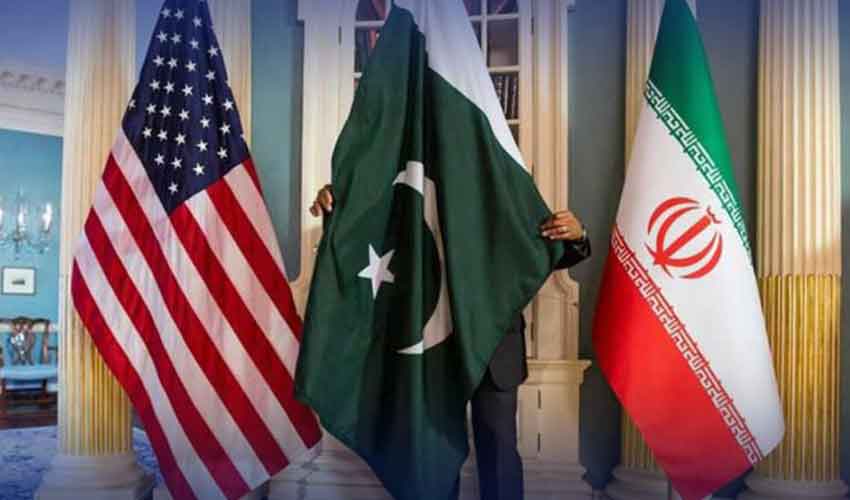
ISLAMABAD The US and Iran have agreed on the framework of a historic peace agreement that is a major breakthrough in ending months of intense conflict and war in the Middle East. US President Donald Trump and Iranian officials have confirmed that the agreement will be concluded on Sunday, June 14, 2026, and will be signed digitally (electronically).
Pakistan and Qatar have played an important role in mediating this development, and Pakistani Prime Minister Shahbaz Sharif has said via Twitter that the two countries have agreed on the text of the agreement and that Pakistan is preparing for the electronic signature on this historic occasion.
Key points and possible conditions of the agreement: Ending the US blockade: According to Iranian Foreign Minister Abbas Araqchi, the first and main point of the memorandum of understanding is to end the US economic and trade blockade imposed on Iran.
Strait of Hormuz Management: According to US President Donald Trump, this strategic waterway will be immediately opened to the free movement of all international ships.
Nuclear Program Talks:
After the digital signing, technical-level talks between the two countries will begin next week, in which the issue of Iran’s nuclear program and enriched uranium stocks will be discussed in detail.
Performance-Based Deal: US officials have made it clear that the agreement is based on practical performance, not just verbal promises; that is, Iran will receive economic benefits and sanctions relief only if it provides verification of its actions.
Regional and International Reaction: The US President praised the development on the social networking platform ‘Truth Social’ and said that he had canceled the planned military strikes on Iran because a “great deal” was going to be made.
Iranian concerns and domestic politics: Iran’s Supreme National Security Council has both supporters and opponents of the deal’s terms, but chief negotiator Mohammad Baqer Qalibaf has stressed that all parties must now live up to their promises without excuses.
Israel’s reaction and concerns: Israel is not part of the talks, and according to US media reports, Prime Minister Netanyahu was keen to attack Iranian infrastructure, which President Trump stopped at the last minute; Israel still has serious concerns about Iran’s nuclear program.
European countries’ position: France and other Western countries have welcomed the genuine desire of both sides for a ceasefire and have called for an immediate final agreement.
The agreement could provide a very important and solid foundation for establishing long-term peace in the Middle East.
Following US President Donald Trump’s announcement of the “perfect deal”, the proposed mechanism for lifting sanctions and its impact on the Pakistani economy are as follows:
Proposed schedule for lifting sanctions.
Phase 1 (Immediate Implementation): The US naval and commercial blockade against Iran will be lifted as soon as the digital signature is made on Sunday, allowing commercial shipping to resume.
Phase 2 (Technical Negotiations): Technical committees will meet next week to set limits on Iran’s nuclear program and uranium enrichment.
Phase 3 (Phase Relief):
Iran’s compliance with nuclear terms will be confirmed, along with the restoration of frozen assets and the gradual lifting of restrictions on oil sales.
Performance Condition: US officials have made it clear that the full lifting of sanctions will only be based on “performance”; if Iran defaults, the sanctions will be reimposed immediately.
Potential Impact on the Pakistani Economy
Restoration of Pak-Iran Gas Pipeline: The deal will avert the threat of US sanctions on Pakistan, allowing the stalled Pak-Iran gas pipeline project to resume.
Access to cheap energy: Import of cheap gas and electricity from Iran will ease the ongoing energy crisis in Pakistan and will significantly reduce the cost of production for industries.
Ending legal trade and smuggling: With the activation of border markets and opening of banking channels, legal trade worth billions of dollars will start between the two countries, which will end the smuggling of petroleum products.
Regional Trade Hub: Increased connectivity between Pakistan, Iran, and the Gulf countries will increase the importance of CPEC and Gwadar Port, which will open avenues for foreign investment. The expected peace deal between the US and Iran is a historic and unprecedented step towards ending the devastating war in the Middle East that has been going on since February 2026. After US President Donald Trump and Pakistani Prime Minister Shahbaz Sharif confirmed the agreed text, the diplomatic breakthrough is being seen as a “historic peace.”
The most important aspects of which are as follows: The peace deal is being called “historic.”
Ending the bloody war: The deal will prevent the direct war between the US, Israel, and Iran that has been going on since February 2026, in which thousands of Lebanese and Iranian civilians have lost their lives so far.
President Donald Trump has claimed that the deal will be much tougher and more comprehensive than the landmark 2015 nuclear deal (JCPOA), under which Iran will never be allowed to develop nuclear weapons.
A major relief to the global economy: The lifting of the US naval blockade that has been in place since April and the reopening of the Strait of Hormuz will avert a serious global oil crisis and stabilize petroleum prices.
This is one of Pakistan’s greatest achievements in the history of global diplomacy, where Islamabad and Federal Interior Minister Mohsin Naqvi played a central role in transferring messages and drafts between Tehran and Washington.
Major challenges on the path to historic peace Contradictions in American and Iranian statements: While President Trump is claiming to sign the framework on Sunday (June 14), the Iranian Foreign Ministry says that despite agreement on a large part of the text, Tehran will not compromise on its red lines, and a final decision is still pending.
Israeli Prime Minister Benjamin Netanyahu was in favor of continuing attacks on Iran; However, after President Trump’s assurances that the final deal would remove all of Iran’s enriched material from the country and ban its missile program,
Israel is still skeptical of the peace process. The issue of the return of funds: US Vice President JD Vance has made it clear that no frozen funds or cash will be released to Iran simply by signing, but rather that this will be a completely “performance-based” agreement. Switzerland has also offered to host the final signing ceremony between the two countries on this historic peace agreement.
The expected historic peace agreement between the US and Iran could prove to be a major turning point in reducing the recent high tensions in the Middle East, especially in Israel and Lebanon. Since Iran’s direct role and its regional proxies (e.g., Hezbollah) are central to the war that has been going on since February 2026, the deal will have the following direct implications for the current security situation: Impact on Lebanon and Hezbollah Framework for a comprehensive ceasefire:
According to the Iranian Foreign Ministry, Tehran’s main insistence on an agreement with Washington was that it include an immediate cessation of hostilities on all fronts, including Lebanon.
In early June, under US-brokered talks, Israel and Lebanon agreed on a framework under which Hezbollah would have to withdraw all its fighters from the southern Litani sector.
Lebanese Army Control: Under the new security plan, the Lebanese Armed Forces (LAF) will be given exclusive and sole control of security in specific zones in southern Lebanon in order to eliminate the influence of non-state actors.
Potential Ground Challenges Israeli Attacks Escalate: Despite news of the agreement, Israeli Defense Minister Israel Katz has made it clear that his army will not withdraw from the occupied territories, and on Saturday, the Israeli Air Force bombed 20 locations, including the southern Lebanese city of Nabatieh, issuing evacuation warnings. Ending Iranian Support for Proxies: According to US officials, the main goal of this framework is to permanently end Iran’s financial and military support for Hezbollah, Hamas, and Yemen’s Houthis.
Israel’s Freedom of Action: There has been intense diplomatic tension between Israeli Prime Minister Benjamin Netanyahu and President Trump; Israel maintains that it reserves the right to take unilateral military action in the event of any new Iranian or Hezbollah threat.
Overall, if Iran succeeds in curbing its proxies under the agreement, the bloody conflict between Lebanon and Israel that has been going on for the past several months could turn into a permanent ceasefire.
Basic Terms of UN Resolution 1701 Hezbollah Withdrawal: Under this resolution, all Hezbollah fighters and military infrastructure must withdraw from southern Lebanon to the northern bank of the Litani River.
Lebanese Army Deployment: Only the Lebanese Armed Forces (LAF) and the United Nations Peacekeeping Force (UNIFIL) will be allowed to possess weapons in the area between Israel and the Litani River (the Blue Line Zone).
Israeli Army Withdrawal: With the implementation of the ceasefire, Israeli forces will evacuate all areas of southern Lebanon that they have taken control of during recent attacks.
Ban on Illegal Weapons: No foreign or non-state group will be allowed to bring or possess weapons within Lebanon’s borders without the permission of the Lebanese government. Following the agreement between the US and Iran to open sea routes, Iran is likely to suspend logistical and intelligence support provided by the Houthis, which will stop attacks on commercial vessels in the Red Sea.
Increasing diplomatic pressure: Under the framework between Washington and Tehran, Iran will be required to prevent Yemen’s Ansar Allah (Houthis) faction from unilateral aggression in order to bring stability to the region. Resumption of Saudi-Yemeni peace process: The end of Iran-US tensions in the region will pave the way for an end to Yemen’s internal war and the resumption of stalled peace talks with Saudi Arabia. The Lebanese Armed Forces (LAF) are being provided with massive international military and financial assistance to restore their autonomy and take control of southern Lebanon. The United States, the European Union, and France believe that the only way to achieve lasting peace in the region and disarm Hezbollah is to strengthen the Lebanese army.
The European Union approved the fourth major aid package of 100 million euros (about $116 million) for the Lebanese army under the European Peace Facility (EPF) in early June 2026.
Border Regiment Preparation: This funding will provide the Lebanese Army’s Land Border Regiment with modern equipment to strengthen its surveillance of the country’s borders.
Surveillance Capabilities: State-of-the-art surveillance and monitoring systems are being provided to protect maritime security and military installations.
Medical and logistical support: The package also includes the upgrading of military hospitals and medical equipment for personnel. Increased US military assistance;
The US Pentagon and Central Command are significantly expanding the scope of financial and military assistance to the Lebanese army in order to make the Israel-Lebanon ceasefire permanent.
As in the past, the United States is directly funding the basic salaries of Lebanese soldiers to prevent the army from being weakened by the economic crisis.
The United States is providing armored vehicles, light weapons, and communication systems for military mobility. Hezbollah’s alternative: The Pentagon’s clear goal is to enable the Lebanese army in southern Lebanon (the Litani River area) to completely dismantle Hezbollah’s military structure.
France is at the forefront of supporting the Lebanese authorities’ autonomy and is preparing to hold an international support conference in Paris. The French Ministry of Defense is providing the Lebanese army with fuel, rations, medicine, and spare parts for military vehicles on an emergency basis so that their operations in the war-torn areas are not suspended. In addition, the United Nations has also increased its funding target to $640 million under a flash appeal to deal with the Lebanese crisis so that security and humanitarian assistance can continue at the same time. For some time, Washington has also been contributing to the salaries of Lebanese soldiers. The Chief of the Lebanese Armed Forces, General Rudolf Heikal, paid a very important and strategic visit to Pakistan in the second week of June 2026, where he held a detailed meeting with the Chief of the Pakistani Forces, Field Marshal Syed Asim Munir, at GHQ Rawalpindi. This visit was not limited to traditional military relations but was directly related to Pakistan’s mediating role in the ongoing peace talks between the United States and Iran. The following important decisions and points have emerged regarding the meetings and military cooperation during this visit:
1. Lebanon’s involvement in the US-Iran peace process;
The most important link in mediation: According to the French News Agency (AFP), Lebanon is the most important party in the ongoing peace deal between Tehran and Washington. Iran has been insisting that a ceasefire in Lebanon be ensured in the event of any agreement, and the visit of the Lebanese army chief was a link in this chain. Regional Security Framework: The two military chiefs had a detailed discussion on the changing security situation in the Middle East to make the ceasefire process in the region sustainable. 2. Basic decisions on military and defense cooperation. Professional relations and institutional ties: According to the Inter-Services Public Relations, there has been full agreement to further strengthen professional relations and institutional ties between the armed forces of the two countries. Training cooperation: The Pakistan Army has decided to expand the scope of specialized military training and courses for officers and men of the Lebanese Armed Forces (LAF) to enhance the professional capabilities of the Lebanese army.
3. Capacity Building: Possible deployment of Pakistani trainers: According to defense sources, the Lebanese Army has expressed keen interest in enhancing cooperation with Pakistan, including the possible deployment of Pakistani military trainers and support staff to Lebanon for capacity building purposes. Recognition of global peace efforts: General Rudolf Heikal highly appreciated the professional role and sacrifices of the Pakistan Army in maintaining peace and stability globally, especially in the Middle East. This visit is clear evidence that Pakistan has emerged as a key player on both the diplomatic and military fronts in implementing the historic US-Iran peace agreement and strengthening the control of the Lebanese Army in southern Lebanon.