
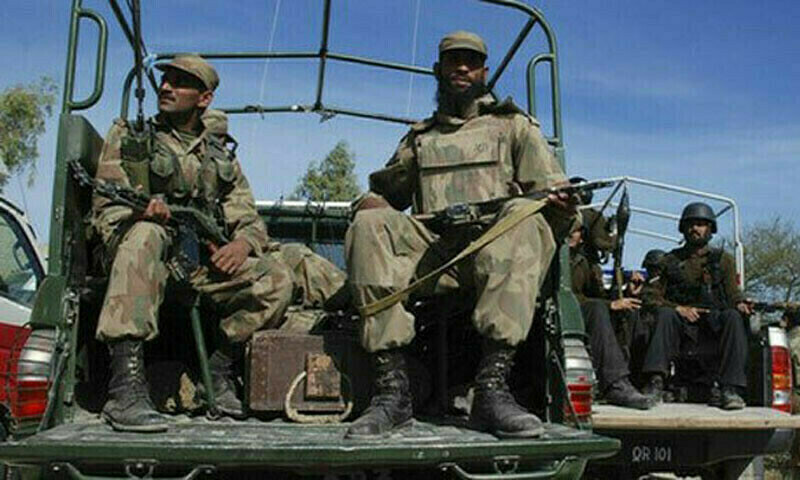
Behind the new wave of terrorism in Pakistan are actually the forces that make Pakistan unstable. In order to do this, the fabric of the recent wave of terrorism in Pakistan, which has long been engaged in killings and riots at the behest of external forces, finds its way across the border. In Khyber Pakhtunkhwa’s Dera Ismail Khan district, 27 terrorists were killed in various operations by security forces, while a suicide attack on a check post in Daraban resulted in the destruction of a building and 25 brave jawans lost their lives. The heaviest loss of life by the security forces in a single day in a long time shows that these militants are now better armed and better trained. Terrorism incidents have increased in Pakistan, especially in Khyber Pakhtunkhwa and Balochistan after the announcement of ceasefire with the government in November. On the intervening night of December 11 and 12, action was taken on an intelligence tip about the presence of terrorists in the Darzandha area, and 17 terrorists were killed. During the Janus operation, the security forces killed 4 terrorists by taking effective action, but 2 jawans lost their lives fighting bravely in the fierce exchange of fire. The Public Relations Department of the Pakistan Army said that the dead terrorists were involved in terrorist activities against the security forces and innocent civilians. Weapons and explosives were also recovered from the killed terrorists.
The ISPR has said that the security forces are determined to eliminate the scourge of terrorism from the country. In the early morning of December 12, a group of 6 terrorists attacked a post of the security forces in Daraban area. The attempt to enter the post was foiled, the terrorists rammed a vehicle full of explosives into the post. As a result of this suicide attack, the building was destroyed and 23 brave jawans were martyred, while all 6 terrorists were killed. ISPR said that clearance operations are underway in the area, security forces are committed to eradicating the scourge of terrorism from the country, and the sacrifices of our brave men further strengthen our resolve. Anwar-ul-Haq Kakar has strongly condemned the terrorist attack. According to the statement of the Prime Minister’s Office, the Prime Minister expressed his condolences to the families of the policemen who were martyred as a result of the terrorist attack. The caretaker prime minister has directed to provide all possible medical assistance to those injured as a result of the attack. Anwar-ul-Haq Kakar said that the security forces cannot be demoralized by such cowardly acts, the entire nation salutes the martyrs who sacrificed their lives in the war against terrorism. Interior Minister Sarfaraz Ahmad Bugti said that he strongly condemned the terrorist attack on the police station in Dera Ismail Khan. He further said that he was deeply saddened and saddened by the martyrdom of the policemen in the terrorist attack, and prayed for the martyrdom of the martyred policemen. The figures show that militants carried out a total of 63 attacks during November, resulting in 83 deaths, including 37 security forces personnel and 33 civilians, in addition to 89 injuries, including 53 civilians. Civilians and 36 security forces personnel are involved. Due to the Taliban government in Afghanistan, those terrorist elements have been mobilized whose hideouts are across the border. There is no doubt that it is the consequences of our destructive policies adopted in the past that we are suffering today. As a result of the peace agreement signed by the state last year under the pressure of the Taliban government, thousands have died. Armed militants were allowed to return to their tribal areas. As a result of this agreement, the banned Tehreek-e-Taliban once again got an opportunity to mobilize in the region and thus they started their operations from where they were expelled in the 2016 military operation. A faction of the banned Tehreek-e-Taliban Pakistan claimed responsibility for the attack, which has spread its attacks from Khyber Pakhtunkhwa to Balochistan. After the announcement, there has been an increase in terrorist incidents in Pakistan, especially in Khyber Pakhtunkhwa and Balochistan. Two days ago, the vehicle of a Counter-Terrorism Department (CTD) officer was bombed on Sultan Ibrahim Road in Khuzdar district of Balochistan. The SHO was martyred in the blast. Three days before this attack, there was an explosion due to the explosion of explosives in Hussainabad area of Sahabpur in Balochistan, in which 4 people, including 2 policemen, were injured. had targeted security personnel, the fourth attack by terrorists in the district in 48 hours, but no casualties were reported in the attack. Two days after this attack, unknown terrorists attacked the Khurram police station in Kirk district with rockets in the dark of night, but in response, the Kirk police thwarted the attack. On November 7, 2 police personnel were martyred and 3 injured in an attack by terrorists on the oil gas company camp in Dera Zinda area of Dera Ismail Khan.
Similarly, on November 6, there was an exchange of fire with terrorists during the action of the security forces in Khyber district of Khyber Pakhtunkhwa, as a result of which 4 personnel of the Pakistan Army, including a lieutenant colonel, were martyred.
Earlier on the night of November 5, terrorists attacked 2 police posts in Dera Ismail Khan, but the police retaliated in time and foiled the attack. A day before this, a check post was also attacked in Roori area within the limits of Kalachi police station, in which another constable was injured. On November 4, terrorists attempted an attack on the Pakistan Air Force Training Airbase Mianwali, which was foiled by the Pakistan Army and killed all 9 terrorists in a clearance operation. Pakistan Institute for Conflict and Security Studies (PICSS) ) released last week showed that militants carried out a total of 63 attacks during November, resulting in 83 deaths, including 37 security forces personnel and 33 civilians, in addition to 89 others. Injured include 53 civilians and 36 security forces personnel. The fabric of the recent wave of terrorism in Pakistan is found across the border. Thousands of armed militants were allowed to return to their tribal areas. As a result of this agreement, the banned Tehreek-e-Taliban once again got an opportunity to mobilize in this region and thus they started their operations from where they were driven out in the military operation of 2016. Many miscreants are in these areas. have returned but their leadership is still in their safe havens in Afghanistan where they are under the protection of the Taliban government. Now our country is paying the price in front of the terrorists in the form of the lives of its people. Since the peace agreement with the factions of the outlawed Tehreek-e-Taliban Pakistan, many Pakistani soldiers have been martyred in terrorist attacks. Khyber Pakhtunkhwa is a target of terrorists after the wave of terrorism. This is a serious matter for the security agencies as they are already dealing with terrorist groups in the province. Although TTP’s activities are limited to Balochistan, especially the Pakhtun majority areas, it seems that TTP has spread its footing in other areas as well. Worryingly, there are reports that Baloch separatist groups and TTP have allegedly joined hands. It is disturbing that groups with close ties to the TTP claimed responsibility for the recent terrorist attacks in some areas of Balochistan. This alliance has added to the difficulties of the security forces in the region. Recent terrorist attacks have shown that both groups are armed with advanced weapons left by the US in Afghanistan. The unsecured borders with Afghanistan and Iran have allowed terrorists to move freely. The border areas are also now considered safe areas for cross-border militant groups. Despite the Afghan Taliban’s denials, it is clear that the TTP has the support of the Taliban government. The availability of modern weapons to these militants has made the situation very alarming. Clearly, the recent wave of terrorism claimed by the outlawed TTP has hardened Pakistan’s stance towards the Afghan Taliban government. The kidneys are strongly warned against sheltering. ISPR said in its statement that “the Transitional Government of Afghanistan was expected to not allow terrorists to use its territory against any country in the true sense and in the light of the commitments made in the Doha Agreement”. The statement added that “such incidents are intolerable and will be given an effective response by the Pakistan Armed Forces”. He insisted on taking countermeasures but no progress was seen. Instead, the Afghan Taliban reacted strongly to Pakistan’s warning. The Taliban spokesman said that it is Pakistan’s responsibility to deal with the problems in its own country. It is clear that Pakistan’s patience is running out when the Afghan government does not take steps. If the Taliban administration does not take steps against the TTP and banned groups involved in terrorism in Pakistan, then Pakistan can take its war against terrorism across the border, which is also being warned. It is said that the previous Pakistan also conducted a few cross-border operations during the year targeting the terrorist leadership in Afghanistan’s Kunar and Nangarhar provinces. This will be a test for Pakistan on how it copes with these obstacles in the war against terrorism. Pakistan, of course, needs to contain the growing militancy from Afghanistan, but it must be careful not to take action that would lead to wider chaos. Cross-border retaliatory actions could further tighten the Afghan government’s stance.The presence of TTP and other militant groups in Afghanistan is a cause for concern. It seems that the Taliban government has gone back on its promise that it will not allow Afghan land to be used in operations against any other country. The Taliban government’s links with these evil groups have worried the world and especially the countries of the region. In such a situation, there is a need to build consensus in the region to prevent the Taliban government from patronizing these groups.