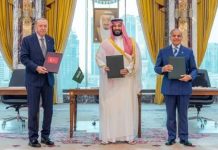

Azerbaijan is evaluating the investment of 2 to 3 billion dollars in Pakistan. President of Azerbaijan Ilham Aliyev is willing to invest billions in Pakistan, Prime Minister Shehbaz Sharif wants to increase economic cooperation with friendly countries, Shehbaz Sharif wants investment instead of aid. are Azerbaijan President Ilham Aliyev’s visit to Pakistan will improve trade relations. There will be talks on increasing textile exports with Azerbaijan. Azerbaijan wants to invest in the mineral sector including oil and gas. Looking to invest in Azerbaijan’s oil and gas exploration sector, official sources said Azerbaijan wants to invest more in the LNG sector. Federal Minister for Petroleum Mossadegh Malik said that Prime Minister Shehbaz Sharif wants to increase economic cooperation with friendly countries, friendly countries want investment instead of aid. Information technology sector will be promoted with Azerbaijan.
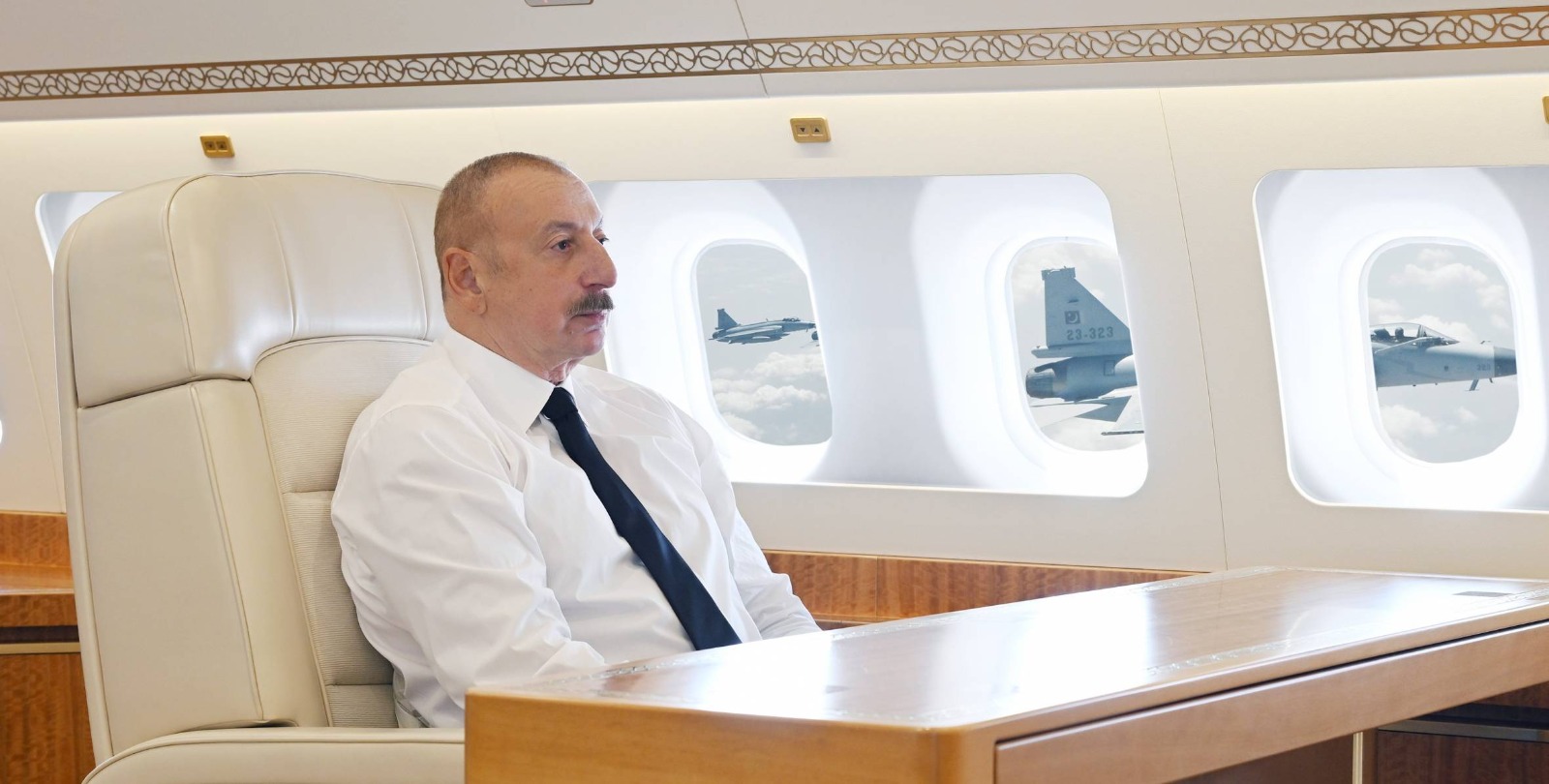
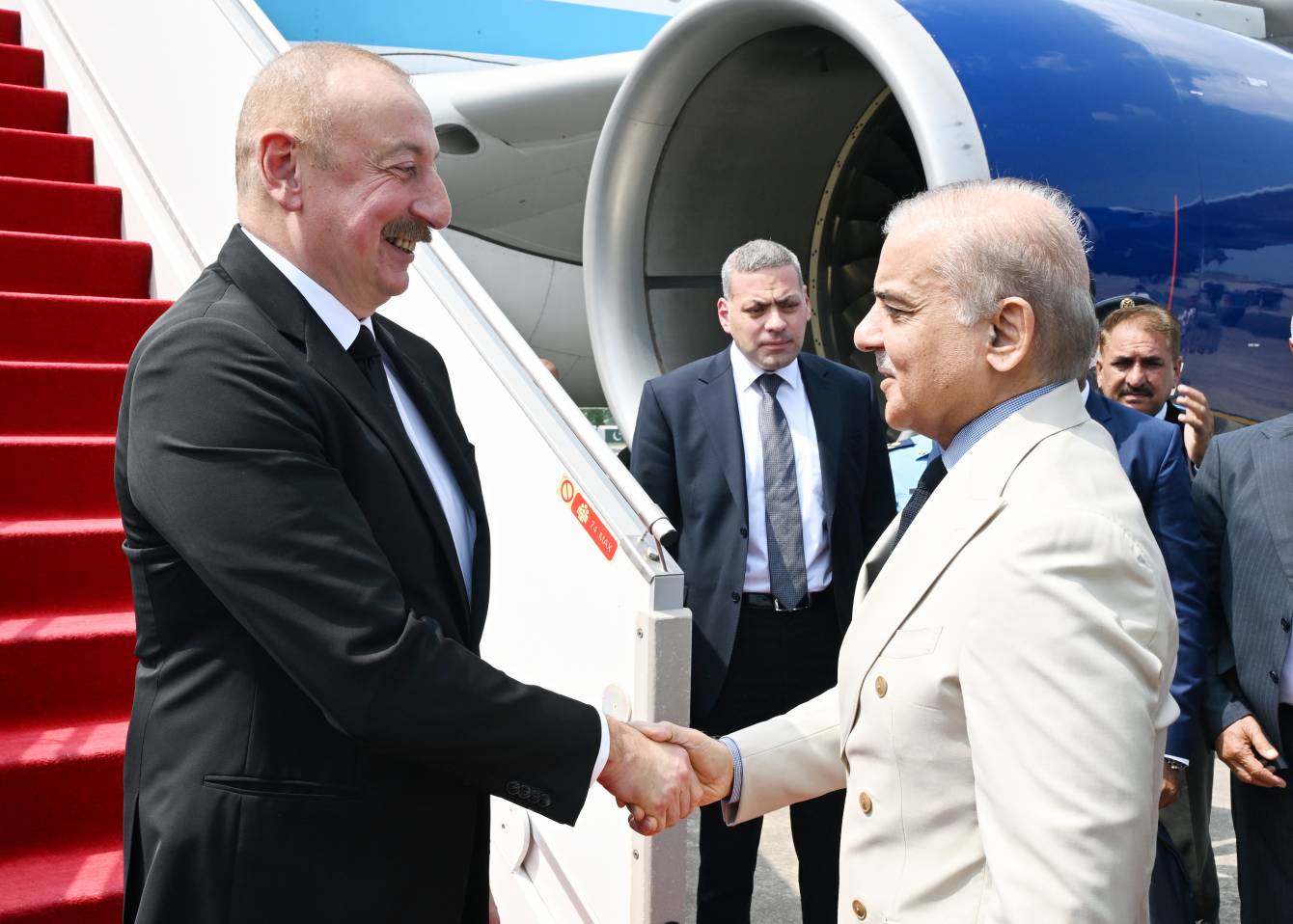
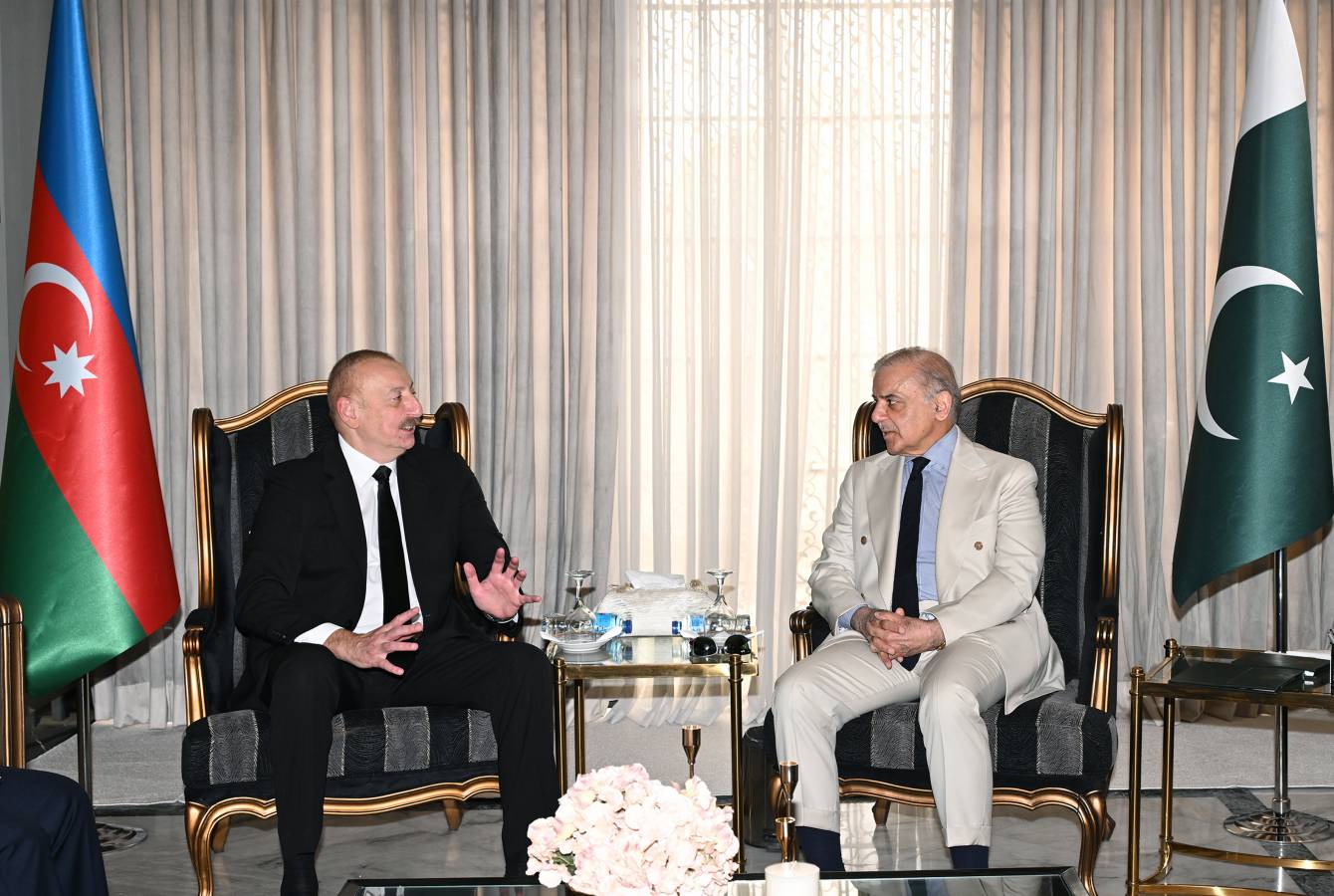
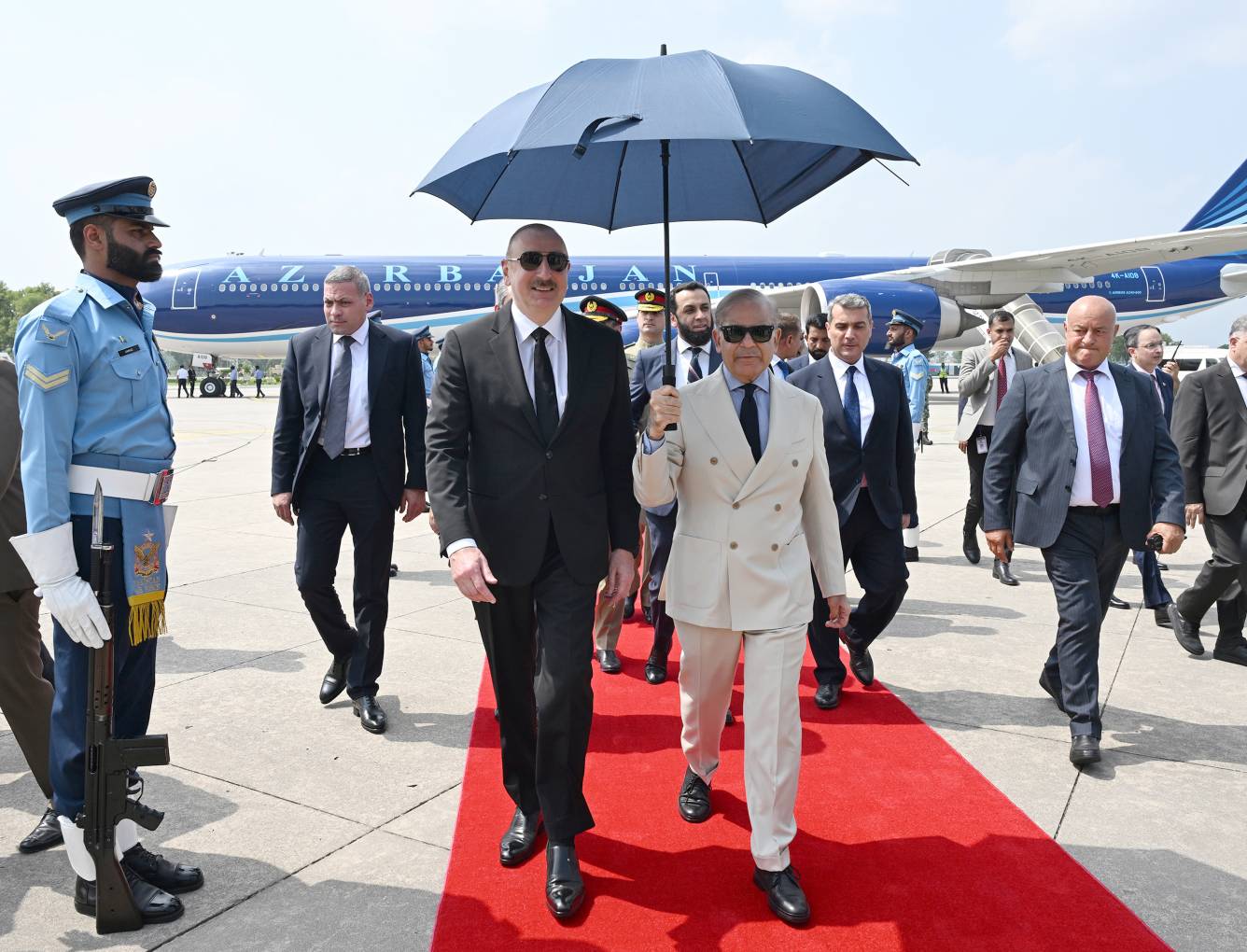
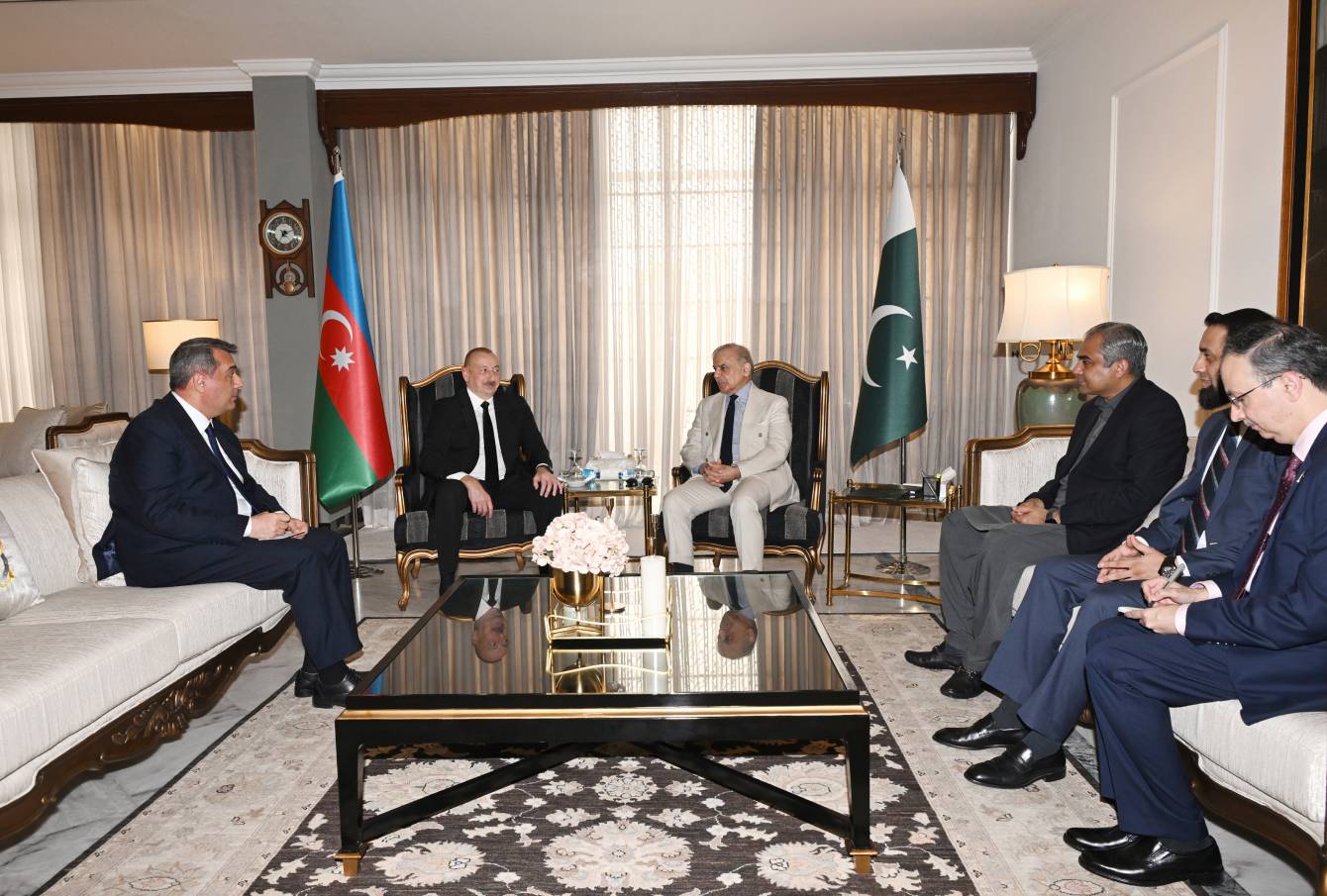
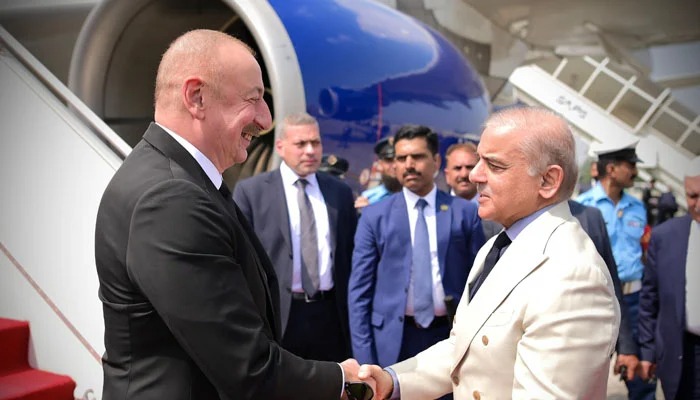
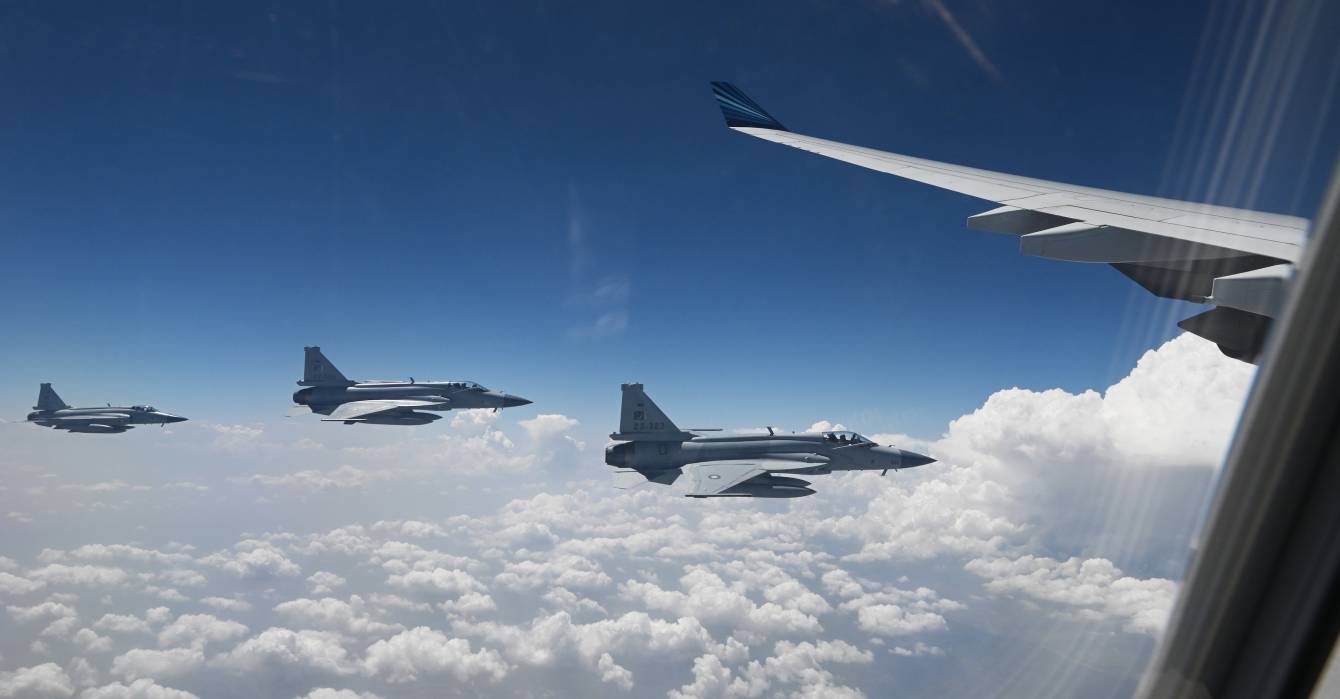
Earlier, the President of the Republic of Azerbaijan Ilham Aliyev arrived on an official visit to the Islamic Republic of Pakistan on July 11. The aircraft of the President Ilham Aliyev was welcomed by the fighter jets of the Pakistan Air Force upon arrival in the airspace of Pakistan and escorted all the way to reach the destination. done A guard of honor decorated with the national flags of both countries was presented to the head of state of the Republic of Azerbaijan President Ilham Aliyev at Nur Khan Air Force Base in Pakistan. A 21-gun salute was given to the President of Azerbaijan.
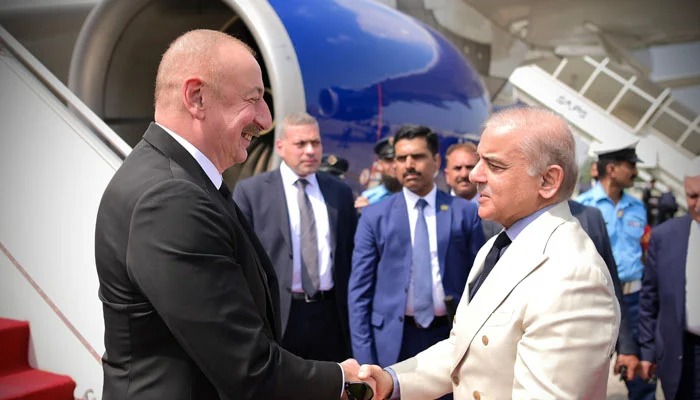
President Ilham Aliyev was received by Prime Minister Muhammad Shahbaz Sharif on his arrival in Pakistan. The reception ceremony took place after the meeting between the President of Azerbaijan and the Prime Minister of Pakistan. During the two-day visit, the President of Azerbaijan will meet with President Asif Ali Zardari and Prime Minister Shahbaz Sharif, while the two sides will also discuss strengthening bilateral cooperation. Azerbaijan is known as the ‘Land of Fire’ for its vast oil and natural gas resources. EU countries currently import 8 billion cubic meters of gas from Azerbaijan every year.
The European Union, which has been suffering from a shortage of Russian gas supplies, recently reached an agreement with Azerbaijan to increase gas supplies to a possible 12 billion cubic meters in 2023 and 20 billion cubic meters by 2027.
However, the deal depends on foreign companies investing in Azerbaijan to ensure it has the capacity to export enough gas. When the famous traveler Marco Polo visited the Eastern Caucasus in the 13th century, In his memoirs, he has sung about the natural ‘oil springs’ of the region.
The abundant reserves of natural gas in the country have played an important role in its economic development over the past 150 years. Nevertheless, Zoroastrianism is deeply rooted in Azerbaijani culture and mythology. It is one of the oldest monotheistic religions in the world, having established its roots here more than three thousand years ago. The population of Azerbaijan is a little over one million, with a majority of Muslims. Armenia has a population of 3 million Christians.
Fire plays a central role in Zoroastrianism. For Zoroastrians, fire acts as a bridge between spiritual and physical contact with their God, through which mortal devotees can connect with God and receive protection from the evil forces that dwell in darkness. Any ritual fire is not paid without and such fire pits near Khanalaq are built for religious communities. In fact, some scholars believe that the name Azerbaijan is a combination of Azar (Persian for ‘fire’) and Baygan (protector).
Kazim Azimov, a historian of the history of Azerbaijan, says that there are several reasons why Zoroastrianism took root here. Azerbaijan’s presence at a key point on the Silk Road provided Zoroastrian traders with easy contact with the local population. Azerbaijan is rich in natural gas reserves and therefore it is easy to maintain the holy fire of this religion. Today, the majority of Azerbaijanis are Muslim, but Zoroastrian beliefs, customs and traditions are visible in contemporary culture. Nowruz is celebrated in Azerbaijan every year to celebrate the arrival of spring. This tradition derives from Zoroastrian folklore and Nowruz is one of the biggest holidays in Azerbaijan. According to official sources, 93.4% to 96% of the population is Muslim, with 85% Shia and 15% Sunni. The majority of Christians are Russian Orthodox and Armenian Orthodox. Population, linguistic groups, etc. are represented in Folk of Azerbaijan. Radio stations in Kurdish, Liszhan, Talish, Georgian, Russian and Armenian languages also operate here. They are run with financial assistance from the government. Stations in the Balkans also operate in the Avar language and in Khamchaz in the Tat language. Similarly, several newspapers in Baku are published in Russian, Kurdish, Liszhan and Talysh languages. Jews also publish their own newspaper “Aziz”. National musical instruments include fourteen stringed instruments, eight percussion instruments and six different types of flute-like instruments. UNESCO World Heritage Sites include the Gobustan State Reserve, the Fire Temple in Baku, the Mausoleum of Momin Khatun and the Khan Palace in Sheki, the largest and most populous country in Eurasia’s South Caucasus.Azerbaijan is part of the international coalition against terrorism. Apart from this, it is also participating in peacekeeping efforts in Kosovo, Afghanistan and Iraq. Azerbaijan is also an active member of the NATO program “Peace Pact”. The Ministry of Foreign Affairs of the Republic of Azerbaijan pursues an independent foreign policy that protects the national interests of Azerbaijan. The foreign policy of Azerbaijan, which regained its independence, can be divided into several phases: the first phase, which covers the first years of independence, including the establishment of relations with world powers and major international organizations; The second phase, which covers the years 1993-2003 and is characterized by further expansion of international relations. and the third (current) stage, characterized by the transformation of Azerbaijan into an influential state and a reliable partner in international relations. The Republic of Azerbaijan is associated with the name of Heydar Aliyev, the national leader of the people of Azerbaijan. The foreign policy initiated by the great leader Heydar Aliyev is now being successfully continued by his worthy successor, Ilham Aliyev, the President of the Republic of Azerbaijan. which was established in 1918. During the reign of the Democratic Republic of Azerbaijan, the first secular democratic state in the Muslim East, the Ministry of Foreign Affairs of Azerbaijan pursued the foreign policy of independent Azerbaijan and established diplomatic relations between Azerbaijan and various foreign countries; Under the Democratic Republic of Azerbaijan, Azerbaijan had diplomatic missions in several foreign countries, including Turkey, Armenia, and Georgia, an embassy in Iran, an authorized representative of the Kuban and Don governments, and an authorized delegation to the Paris Peace Conference, p. Besides PC, 16 foreign countries such as Great Britain, Armenia, Belgium, Greece, Georgia, Denmark, Italy, Lithuania, Iran, Poland, USA, Ukraine, Finland, France, Switzerland and Sweden have opened representations in Baku. Following the recognition of Azerbaijan’s independence by the Supreme War Council, an allied administrative organization formed by the Entente governments, the Supreme War Council of the Entente, diplomatic missions of the Republic of Azerbaijan to the Entente governments in Western Europe and America They were also open. . However, the occupation of the de facto recognized Republic of Azerbaijan by the Soviet Bolshevik government ended these plans as well as Azerbaijan’s independent representation in international relations. The Ministry of Foreign Affairs was abolished after the occupation of the Republic of Azerbaijan by the Bolshevik government of the Soviet Union, on 8 March 1944, the Supreme Soviet of the Azerbaijan SSR, 22 years after the abolition of the People’s Commissariat for Foreign Affairs of the Azerbaijan SSR. A law on the establishment of the People’s Commissariat of Foreign Affairs of the Soviet Socialist Republic was approved at the meeting. According to the laws adopted at the March 1944 session of the Supreme Soviet of the Azerbaijan SSR, “the Azerbaijan Soviet Socialist Republic shall be empowered to establish direct relations with foreign countries, to conclude treaties with them, and to exchange diplomatic and consular missions.” It was right.” As a result of amendments and additions to the constitution, Azerbaijan had the right to establish relations with foreign countries and to send and recall diplomatic missions. However, according to the amendment of Article 46 of the Constitution of Azerbaijan, Azerbaijan’s relations with foreign countries must be within the limits of the general rules established for dealings with foreign countries. After the spread of Islam in the seventh century, Iran and Zoroastrianism in Azerbaijan became increasingly restricted, and many were forced to leave their homelands and settle in Central and South Asia. Since the late 1980s, the two former Soviet states on the territory of Nagorno-Karabakh They have been fighting to claim their right, which has left thousands dead and tens of thousands displaced. Nagorno-Karabakh is part of Azerbaijan, but has mostly been a separatist, self-proclaimed republic since the war. Another war broke out between Armenia and Azerbaijan between September and November 2020.
This time Azerbaijan, backed by Turkey, had the upper hand and gained complete control over large parts of Nagorno-Karabakh. Under a Russian-brokered ceasefire, Armenia withdrew its troops and about 2,000 Russian peacekeepers were deployed to the region to monitor the ceasefire. More than 6,600 people died in this war. Leaders of the two countries have met several times to sign a peace deal for Nagorno-Karabakh, but so far no significant results have been achieved.After independence, Azerbaijan became a member of the IMF, the World Bank, the European Bank for Reconstruction and Development, the Islamic Development Bank and the Asian Development Bank. The banking system is at two levels including national and commercial banks which work together with the non-banking capitalist system. In 1992, National Bank was established instead of State Bank. The National Bank acts as the national bank of Azerbaijan and issues currency and other matters under its supervision. Two of the largest commercial banks, Bubank International Bank and United Universal Joint Stock Bank, are owned by the government. Two-thirds of Azerbaijan is important for oil and natural gas. Two-thirds of Azerbaijan is important for oil and natural gas. Gold, silver, iron, copper, titanium, chromium, manganese, cobalt, molybdenum, various ores and antimony are found in most parts of the Caucasus. As of early 2007, Azerbaijan has a total of 4755.1 hectares of arable land and 13 hectares of timber. There are 6 million cubic meters of reserves. Azerbaijan Maritime Trade Organization has a total of 54 vessels. Parts of most imported goods are now manufactured in Azerbaijan. Two-thirds of Azerbaijan is important for oil and natural gas. Gold, silver, iron, copper, titanium, chromium, manganese, cobalt, molybdenum, various ores and antimony are found in most parts of the Caucasus. As of early 2007, Azerbaijan has a total of 4755.1 hectares of arable land and 13 hectares of timber. There are 6 million cubic meters of reserves. Azerbaijan Maritime Trade Organization has a total of 54 vessels. Parts of most imported goods are now manufactured in Azerbaijan.