
Asghar Ali Mubarak
ISLAMABAD (TNS) A new round of Pakistan-Bangladesh bilateral consultations has begun. After a gap of 15 years, the sixth round of foreign secretary-level bilateral consultations was held in Dhaka on April 17, 2025. This type of meeting between Bangladesh and Pakistan after 15 years has created a new dimension in diplomatic relations between the two countries. It may be recalled that the last meeting at the level of foreign secretaries between Bangladesh and Pakistan was held in 2010 during the first term of Sheikh Hasina’s government. After this, there was a gradual decline in diplomatic relations between the two countries. Bangladesh High Commissioner to Pakistan Muhammad Iqbal Hussain Khan said that Islamabad is particularly interested in increasing trade relations with Dhaka.

After the fall of Sheikh Hasina’s government in Bangladesh in August last year, relations between the two countries seem to be improving to some extent and it is to take this forward that the foreign secretaries of both countries met in Dhaka. The talks, led by Pakistan Foreign Secretary Amina Baloch and Bangladesh Foreign Secretary Mohammad Jashmuddin, took place in a cordial atmosphere, reflecting the shared commitment to restore bilateral relations.
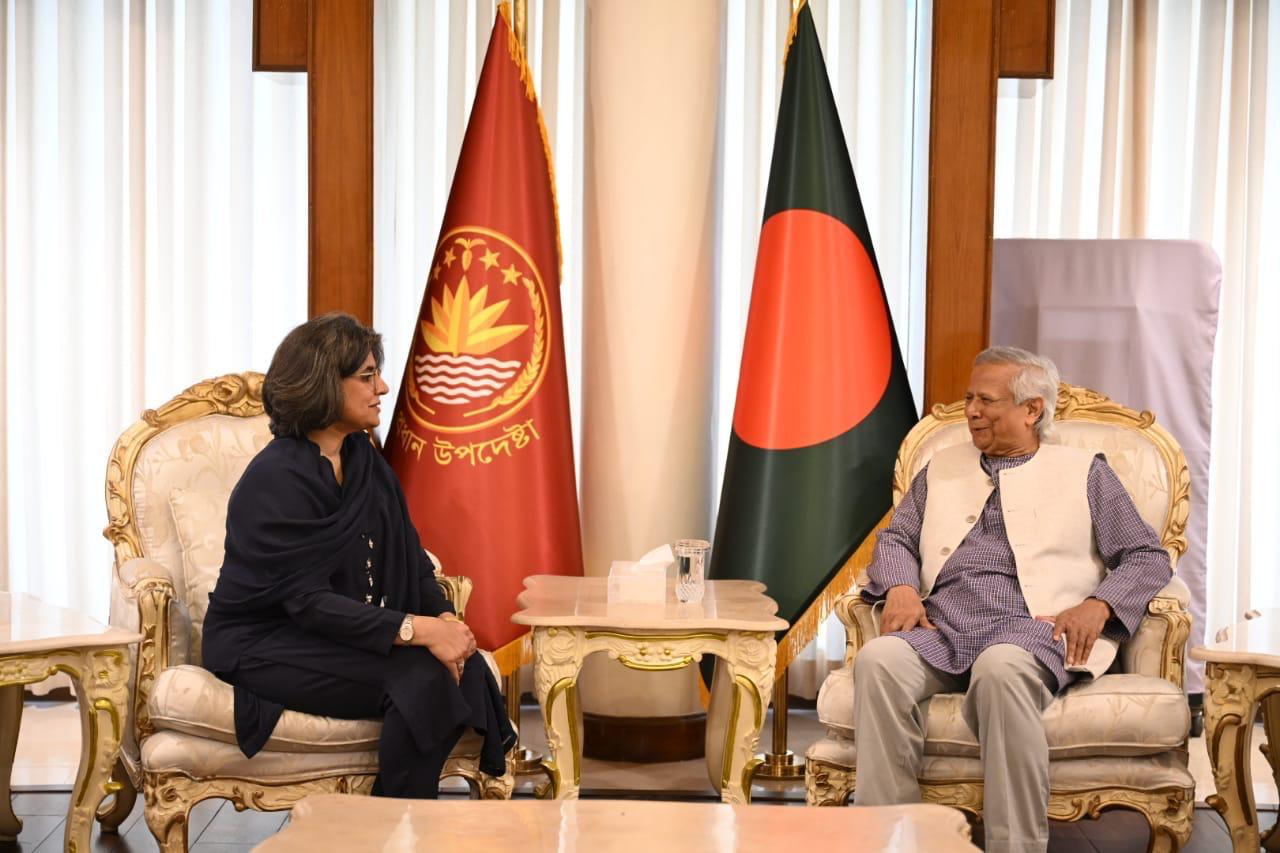
A delegation led by Pakistan Foreign Secretary Amina Baloch arrived in Dhaka for the meeting titled ‘Foreign Office Consultation’ or ‘FOC’. The Foreign Secretary held separate meetings with Chief Advisor Professor Muhammad Yunus and Foreign Affairs Advisor Mohammad Towhid Hussain. The meeting discussed regional integration, economic ties and the importance of protecting bilateral relations from external pressure.

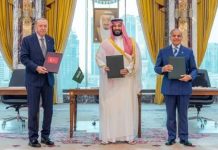
Ahead of the meeting, Foreign Ministry officials in Bangladesh had said that after almost 15 years, a meeting of foreign secretaries between the two countries was being held and ‘all issues’ arising between the two countries would be raised instead of any specific agenda. The meeting of the foreign secretaries will help in ‘normalizing’ diplomatic relations between the two countries. According to details released by the office of the spokesperson of the Ministry of Foreign Affairs of Pakistan, Pakistan and Bangladesh held comprehensive discussions on political, economic, cultural, educational and strategic cooperation based on shared history, cultural affiliations and common aspirations of their peoples and expressed satisfaction over the recent high-level contacts in New York, Cairo, Samoa and Jeddah, which have helped in strengthening bilateral relations anew. Both sides stressed the importance of maintaining the momentum through regular institutional dialogue, early finalization of pending agreements and enhancing cooperation in trade, agriculture, education and connectivity. Pakistan offered educational opportunities in its agricultural universities, while Bangladesh offered technical training in fisheries and marine sciences. Bangladesh also acknowledged the offer of scholarships by private universities in Pakistan and stressed the need for deeper cooperation in the field of education. Recognizing connectivity as a priority, both sides welcomed the commencement of direct shipping between Karachi and Chittagong and stressed the importance of resuming direct air links. They also expressed satisfaction with the progress made in easing travel and visa restrictions. The Bangladeshi side appreciated the recent performances of renowned Pakistani artists in Dhaka, while the Pakistani side encouraged bilateral cultural exchanges. The prospects for broader cooperation in sports, media and cultural institutions, including the finalization of various MoUs in these areas, were discussed.
Both sides reiterated the need to restore SAARC in accordance with its founding principles, on multilateral issues. The Pakistani Foreign Secretary appreciated the vision of the Bangladeshi leadership and expressed the hope that the SAARC process would remain free from bilateral political considerations.

The Foreign Secretary of Pakistan also apprised the Bangladeshi side of the situation in Indian Illegally Occupied Jammu and Kashmir (IIOJK) and stressed the need for an early resolution of the Kashmir dispute in accordance with the UN Security Council resolutions and the aspirations of the Kashmiri people. The two sides reviewed the situation in the Middle East and strongly condemned the ongoing Israeli aggression and gross human rights violations in the occupied Palestinian territories, especially Gaza. The Foreign Secretary of Pakistan held separate meetings with the Honorable Chief Advisor of Bangladesh, Professor Muhammad Yunus, and the Honorary Advisor on Foreign Affairs, Bangladesh, Mr. Muhammad Towhid Hossain. The discussions in the meetings focused on the importance of regional integration, economic ties and safeguarding bilateral relations from external pressures and a shared commitment to partnership for the future. The Advisor on Foreign Affairs of Bangladesh, Mr. Muhammad Towhid Hossain spoke about the upcoming visit of the Deputy Prime Minister and Foreign Minister of Pakistan, Senator Muhammad Ishaq Dar. Foreign Secretary Amina Baloch thanked the Honorary Chief Advisor Bangladesh for the warm hospitality extended to Pakistan and conveyed best wishes to him on behalf of the leadership of Pakistan. It may be noted that the next round of consultations will be held in Islamabad in 2026. Furthermore, in this regard, the Press Information Department, Government of Pakistan, Islamabad has invited applications from journalists, anchors and analysts from Pakistan for the proposed visit to Bangladesh in April 2025 and has directed interested media to send details for the expected high-level official visit to Bangladesh by April 20, 2025.The 1971 war is a major cause of tension in relations between Pakistan and Bangladesh. In 2013, Pakistan passed a resolution in parliament expressing concern over the death sentence of Jamaat-e-Islami leader Abdul Quader Mullah in Bangladesh. Bangladesh summoned the Pakistani High Commissioner in Dhaka to express its anger over the incident. In 2014, the Bangladesh government also summoned the then acting Pakistani High Commissioner in Dhaka, Ahmed Hussain Dayo, to protest the Pakistani Interior Minister’s statement regarding the case. Finally, in 2020, the then Pakistani Prime Minister Imran Khan telephoned his Bangladeshi counterpart Sheikh Hasina, which certainly melted some of the ice, but there was no further progress towards normalizing relations between the two countries. Since Bangladesh’s separation from Pakistan in 1971, there has been considerable tension between the two countries over issues such as Bangladesh’s demand for a formal apology from Pakistan, return of assets, and repatriation of Pakistanis stranded in Bangladesh. However, it now seems that both countries are interested in trade and bilateral relations instead of these issues. Bangladesh High Commissioner to Pakistan Mohammad Iqbal Hussain Khan said, “Such issues are found in bilateral relations all over the world, but they should not become an obstacle to the current relations or economic cooperation.” After meeting Pakistan’s Foreign Secretary Amina Baloch, Jasimuddin told a press conference that Bangladesh has also asked Pakistan for $4.32 billion in dues after its separation in 1971. In addition, Bangladesh has also raised the issue of a formal apology from Pakistan for the alleged atrocities of the 1971 war. Foreign Secretary Jasimuddin said that he also demanded the return of Pakistanis stranded in Bangladesh from Pakistan and the transfer of foreign aid sent for the victims of the 1970 cyclone. When asked by journalists whether Bangladesh was now leaning towards Pakistan instead of India, Foreign Secretary Jasimuddin said, “If Bangladesh wants to maintain its relations with Pakistan on a strong basis, it is necessary to resolve the issues.” According to Foreign Secretary Jasimuddin, the issue of the return of Pakistanis in Bangladesh, fair distribution of the wealth of undivided Pakistan before the fall of Dhaka, and the transfer of foreign aid for the victims of the 1970 cyclone were raised. He said that “some of the Pakistanis stranded in Bangladesh want to stay in Bangladesh but some want to return to Pakistan.” According to him, the total number of Pakistanis in Bangladesh is 324,447. Jasimuddin claimed that Pakistan has asked for discussions on these issues. Jasimuddin also said that keeping in mind the continuity of relations between the two countries, the Pakistani Foreign Minister will now visit Bangladesh on April 27 and 28. This will be the first visit of a Pakistani Foreign Minister to Bangladesh since 2012. There is no mention of these issues in the statement issued by the Pakistan Foreign Ministry. According to the statement issued by the Pakistan Foreign Office, ‘the two sides discussed political, economic, cultural, educational and strategic cooperation.’ According to the statement, ‘the two sides stressed the importance of regular institutional dialogue, early finalization of pending agreements and enhancing cooperation in trade, agriculture, education and connectivity. Pakistan offered to provide educational opportunities in its agricultural universities, while Bangladesh also offered to provide technical training in fisheries and maritime studies.

In addition, according to the Foreign Office of Pakistan, “the parties, while calling connectivity between the two countries important, welcomed the start of direct shipping between Karachi and Chittagong and stressed the importance of restoring direct air links. On behalf of Bangladesh, Foreign Secretary Mohammad Jashimuddin also expressed satisfaction over the progress made in facilitating travel and visa facilities.” “On multilateral issues, the parties reiterated the need to restore SAARC in accordance with its fundamental principles. The Foreign Secretary appreciated the vision of the Bangladeshi leadership and expressed the hope that the SAARC process would remain free from bilateral political expediencies. Foreign Secretary-level meetings always hold special significance in bilateral diplomatic relations as they are the highest administrative authorities in foreign affairs of both countries. It may be recalled that in September last year, on the sidelines of the United Nations General Assembly session, Bangladesh’s Chief Advisor Professor Muhammad Yunus and Pakistani Prime Minister Shehbaz Sharif met in which both of them talked about enhancing regional cooperation through the revival of the South Asian Association for Regional Cooperation (SAARC). It should be noted that after the change in Bangladesh’s political landscape last year, Pakistan is trying to bring Bangladesh to its side in regional politics.