
(.Asghar Ali Mubarak)
ISLAMABAD (TNS) The great victory of Pakistani forces in the battle of truth is the special prize. Especially in the battle of narrative, Pakistan has crushed the Indian propaganda campaign on all sides. Field Marshal Asim Munir has described the Pakistani media as an “iron wall” against the Indian propaganda campaign.
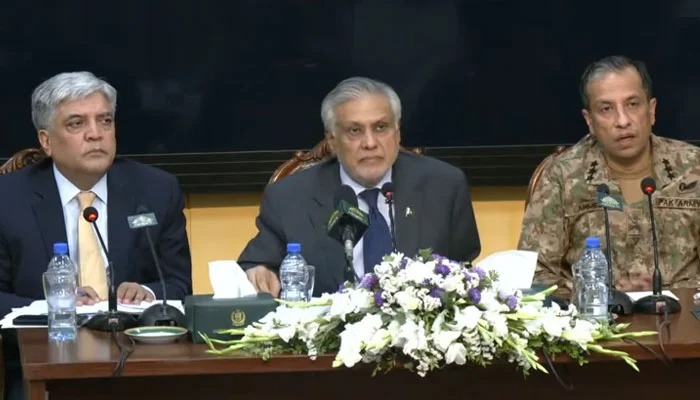
Pakistan not only gave a befitting reply to India’s military aggression but also won the war of “narrative”, and this was the field where DG ISPR Lieutenant General Ahmed Sharif Chaudhry played a decisive role. In today’s world, winning the battlefield alone is not enough. The first regular press conference in this series was held at the Foreign Office of Pakistan. DG ISPR Lieutenant General Ahmed Sharif Chaudhry, Deputy Prime Minister of Pakistan Ishaq Dar and Foreign Office Spokesperson of Pakistan Shafqat Ali Khan gave a briefing and presented digital evidence of the Pahalgam incident, exposing the heinous characters of the Indian government. The determination with which Pakistan responded is a high example of diplomacy, communication and military responsibility. DG ISPR General Ahmed Sharif Chaudhry exposed India’s lies with solid evidence, clear videos, and satellite images in a press conference. There was confidence on his face, truth in his eyes, and dignity in his tone. He was not only representing the army but the entire Pakistani nation. During this time, the political leadership highlighted Pakistan’s position in the National Assembly and Senate of Pakistan as well as talk shows to give a befitting reply to India. In-camera briefings were held for the leaders of political parties at PTV Bed Quarters. The International Media Briefing was organized at ISPR. After that, the spokesperson of the Pakistan Army regularly provided the media with the required journalistic facilities based on truth and reality so that fake news could be avoided. It was the key role of the Public Relations Department of the Pakistan Army that was carried out on the front lines. It kept the nation informed with every effort, which brought Pakistan’s real narrative to the world and exposed the Indian false narrative and informed them of the facts. We lost the 1971 war because an institution like ISPR was not effective and there was no one like ISPR’s Director General, Lieutenant General Ahmed Sharif Officer and his team. The victory of 2025 is also a remedy for the defeat of 1971. Such a historic achievement should not be limited to headlines. Fortunately, the master of letters, Asghar Ali Mubarak, was present in all the press conferences with a refined personality and had the opportunity to directly talk to the real characters of the hypocrisy and the vestments of the elite, DG ISPR Lieutenant General Ahmed Sharif Chaudhry, Deputy Prime Minister of Pakistan Ishaq Dar and Spokesperson of the Foreign Office of Pakistan Shafqat Ali Khan, Federal Minister for Information Atta Tarar, Minister for Defense Khawaja Asif and others. I worked continuously without sleeping while fulfilling my 37-year journalistic responsibilities in my life. With this belief, I will play my role as a lowly soldier of the ideological front. Our narrative was with evidence in 2025 where everything is digital. Like the armed forces of Pakistan, the ISPR team did this work from the front line. We got the most digital material from security sources and it was verified by the ISPR. The ISPR team headed by Lieutenant General Ahmed Sharif worked 24 hours and did not even sleep. All Pakistani and foreign media attended the ISPR briefing. The date was changed but the briefing continued. The state should award the Director General of the ISPR, Lieutenant General Ahmed Sharif Officer and his team with the highest national awards, so that the heroes of the silent but decisive war of narrative can be given the place they deserve. India claimed on May 6 that Pakistan is nurturing terrorists, and these same terrorists carried out attacks like Pathankot, Udhampur and Pulwama. The Indian media was in a storm of mischief at that time. Poison was being spread against Pakistan everywhere, even attempts were made to spread misinformation to the international media.
On the other hand, the skill with which Deputy Prime Minister and Foreign Minister Ishaq Dar presented Pakistan’s case at international forums will be written in golden letters in history. In his contacts with the foreign ministers of the UN, OIC, EU, and Gulf countries, he showed India’s true face everywhere. The Pakistani Foreign Office issued a report that clearly listed the false claims of the Indian media. Out of these, 29 claims were those that were refuted by international organizations themselves. The media team of DG ISPR played a key role in preparing this report, which was presented to UN representatives and international journalists. The biggest victory in the narrative war was achieved when the international media expressed doubts about the Indian claims and called the Pakistani position a compromise. The British Parliament praised Pakistan’s restraint. The UN spokesperson said that Pakistan had shown responsibility and prioritized world peace. This time, the Pakistani media fully supported the national narrative. Anchors, journalists and social media activists stopped rumors and spread verified information. The performance of the government’s media teams, especially the National Media Cell and PID, was outstanding in this campaign. The fake campaigns run by India on social media were also exposed by international organizations themselves. According to reports from Meta, Facebook, and Twitter, several fake accounts run by India were closed, which were created to defame Pakistan. In contrast, the content released by Pakistan consisted of real, evidence-based, and transparent information. Pakistan practically refuted India’s allegations by inviting international journalists to Azad Kashmir. They were shown all the areas where India had claimed the presence of terrorists, but there was none. On the contrary, India had imposed a complete media blackout in occupied Kashmir. Behind the briefings given by Pakistani ambassadors around the world, there was also a systematic strategy, which was arranged by the Ministry of Foreign Affairs. Important countries like China, Turkey, Iran, Saudi Arabia, Qatar and the United Arab Emirates were informed about the situation, and all supported Pakistan’s position. All these successes were possible because their leadership was in the hands of people who were true servants of this country. General Ahmed Sharif Chaudhry made Pakistan a leader by becoming the voice of truth on the battlefield.