
ISLAMABAD (TNS) Peace is indispensable for the development and well-being of humanity. Global unity, tolerance and dialogue are indispensable for the establishment of lasting peace. Peace is fundamental for the development and well-being of humanity and the resolution of all conflicts is possible only through negotiations. The world is aware of Pakistan’s efforts to establish peace at the global level. Pakistani peacekeepers are playing an important role in fulfilling the mission of the United Nations. The President and the Prime Minister said in their messages that we need to end differences between nations and adopt a common strategy for the common goal of peace. Prime Minister Shehbaz Sharif said in his message that this day reflects the global commitment to maintaining peace, ending human suffering, and maintaining lasting peace and order in countries embroiled in wars and internal conflicts. Pakistani peacekeepers are playing an important role in fulfilling the mission of the United Nations. More than 235,000 Pakistani soldiers have served in 48 UN missions in 29 countries around the world. In his message, President Asif Zardari expressed his determination that Pakistan firmly believes in promoting peace and stability in the region through dialogue. However, to achieve this goal, it is necessary to resolve long-standing disputes. Prime Minister Shehbaz Sharif, while emphasizing the need to adopt a common strategy for the common goal of peace, said that the basis for a lasting solution to the Jammu and Kashmir dispute is an impartial plebiscite and implementation of relevant Security Council resolutions. Today, we should not ignore the plight of the innocent people of Palestine. A peaceful solution to the Palestine conflict is the need of the hour.
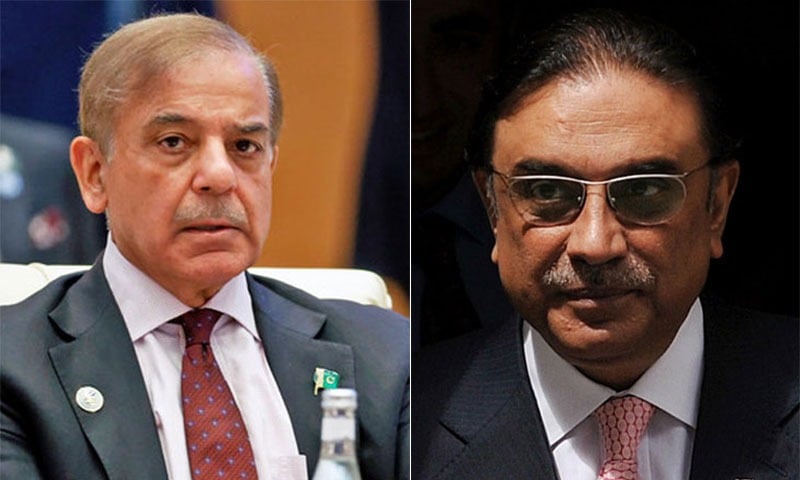
The Speaker National Assembly, Chairman Senate, Interior Minister and others said in their messages that only by working together can we build a peaceful tomorrow for our future generations and make the world a cradle of peace and harmony.
The federal government has established a sub-committee of the National Peace Message Committee to formulate a national narrative to prevent the spread of extremism and terrorism. Pakistan is facing a serious threat from extremism. The problem is that the political leadership, state institutions and public opinion in Pakistan were not fully united in confronting this threat. The National Peace Message Committee will be responsible for formulating a nationally agreed narrative to eliminate extremism, terrorism, sectarianism and prevent hate speech, which will be headed by the Federal Minister for Information and Broadcasting. According to the notification issued by the Ministry of Information and Broadcasting to form the sub-committee, the committee includes prominent scholars of different schools of thought, Mashaikhs, representatives of minorities and senior officials of the relevant ministries. Minority communities have also been given adequate representation in the committee. Coordinators of provincial and regional Peace Message Committees, representatives of approved madrasah boards, additional secretaries of the Ministry of Interior and the Ministry of Religious Affairs, and Director General Religious Education are also included in the committee. The Director General of Internal Publicity Wing of the Ministry of Information and Broadcasting will serve as the secretary of the committee. The committee will prepare detailed TORs in its first meeting. The TORs will be submitted to the ‘National Committee on Narrative Building’ for approval.
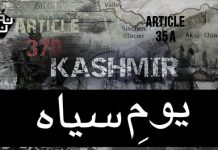
,Terrorism and extremism are a threat not only to Pakistan but also to the peace of the entire region. Some countries use terrorism for political purposes, the world no longer believes their narrative, we have irrefutable evidence of the Jaffar Express attack and foreign involvement in Khyber Pakhtunkhwa and Balochistan. We categorically condemn all forms of terrorism, including state terrorism. Pakistan has made immense sacrifices for the security and peace of the region in the war against terrorism. In this struggle, we have lost more than 90,000 precious lives and suffered economic losses of more than $152 billion. On the occasion of the International Day of Peace, Speaker National Assembly Sardar Ayaz Sadiq said that it is celebrated every year on September 21 under the auspices of the United Nations. This year’s theme is “Take urgent action to establish peace” and is the need of the hour. The Speaker, while describing diplomacy as a fundamental component of establishing lasting peace, said that the leadership of countries around the world should prioritize dialogue, understanding and mutual respect instead of confrontation. Peace cannot be achieved through force or coercion, but it can only be achieved through attitudes based on justice, cooperation and respect. Peace is not just the absence of war, but is based on justice, harmony and mutual respect. He stressed the need for the international community to adopt the basic principles of peace, protection of human rights and promotion of equality at all levels. Pakistan has taken several practical steps while implementing this year’s theme. The National Assembly and the Senate, through unanimous resolutions, have not only strongly condemned the Israeli aggression and war crimes against Palestine but also strongly supported the principled position of the Palestinian people for their right to self-determination. Similarly, both houses have reiterated their unwavering support for the freedom struggle of the Kashmiri people and strongly condemned India’s aggressive policies and unilateral abrogation of Articles 370 and 35-A.As a result, a conspiracy was launched to strip the Kashmiris of their unique identity. Through these actions, Pakistan has responded to the UN message and sent a message to the world that it stands with the oppressed nations. It called the attacks baseless, unjustified, a blatant violation of the sovereignty of these countries and international law. He said that Israel’s war frenzy, massacre of Palestinian children, women, elderly and sick, and blockade of aid supplies fall under the category of crimes against humanity. He stressed that the right to self-determination is a fundamental human rights issue and the international community must support the struggle of these nations and take serious note of the serious human rights violations taking place in these regions. Pakistan is playing an active role in promoting peace at the global level and is highlighting the importance of peaceful resolution of conflicts and dialogue at all regional and international forums. He called on the United Nations and the international community to play their role in accordance with UN Security Council resolutions for the realization of the right of Kashmiris and Palestinians to self-determination and peaceful settlement of conflicts. And work together to resolve conflicts that threaten global stability. Peacebuilding is a collective responsibility that must be embraced at all levels. He expressed his desire for a peaceful and prosperous future where the values of tolerance, unity and justice would guide humanity. Deputy Speaker National Assembly Ghulam Mustafa Shah also said on the occasion of World Peace Day that sustainable development, economic prosperity and human well-being in the world depend on world peace. It is impossible to imagine lasting peace in the world without establishing an atmosphere of tolerance, empathy and mutual respect. He said that nations should adopt the path of solidarity and understanding instead of mutual differences so that hatred and violence can be eliminated. The Deputy Speaker, National Assembly, stressed that the Parliament of Pakistan has always fulfilled its constitutional and moral responsibilities for the protection of peace, justice and human rights at the international level. He said that the National Assembly and Senate have passed unanimous resolutions against human rights violations in Palestine and Kashmir and reiterated Pakistan’s diplomatic and moral support with the oppressed people of both regions.
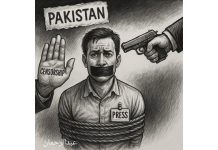
 The wars and changes in Pakistan’s neighborhood have pushed the moderate society of Pakistan towards extremism and extremism. There is a need to spread the message of Islam and make Pakistan a moderate state of Islamic welfare. Terrorists are coming from the country and doing terrorism. They are backed by the enemy forces of India and Pakistan. The prime minister has given a clear message to the Afghan government in this regard. The leaders and people of Pakistan also demand that Afghanistan stop the use of Afghanistan’s territory against Pakistan. Pakistan has made many sacrifices for Afghanistan, for its Afghan brothers. The issue of Palestine and Kashmir is the issue of the Muslim Ummah. The Government of Pakistan’s position on these two issues is the representation of the people and the voice of the Muslim Ummah. The attacks were mostly limited to security agencies, but now they have changed their strategy and started kidnappings for ransom, bank robberies and threats to dismiss security forces personnel. Incidents of kidnapping and then release through polls are becoming a common occurrence. The banned Tehreek-e-Taliban Pakistan (TTP) fighters have kidnapped Pakistan Atomic Energy officials at gunpoint. After this incident, various leaders held several meetings of jirga with the TTP. The patrolling of the former tribal areas by the militants has increased the fear of the local residents to a dangerous extent. The growing strength and expansion of its scope reflect the fact that the TTP’s operations were previously limited to the former tribal areas. But now they have also taken over the southern districts. In these areas, extremists are openly challenging the government’s writ, which has become a serious threat to the security agencies. Strategy lacks continuity and clarity.Pakistani government has been in a dilemma from the beginning whether to take action against the outlawed TTP or adopt the path of negotiations. The extremists are taking full advantage of all these internal differences, due to which the state institutions seem unable to adopt a common strategy. The TTP is currently in a strong position because it has the full support of the Taliban government. In the current circumstances, if the path of negotiations is adopted, the TTP will come up with tough demands such as withdrawing the FATA merger and implementing Sharia. The situation on the ground has become so dire that it is not possible to eliminate extremism with just military operations. Instead of relying on operations alone, the government must also intensify diplomatic efforts with Iran and Afghanistan to deal with the Balochistan Liberation Army (BLA) and TTP. Military operations can be effective within its own borders, but cross-border operations complicate the situation further, as seen in recent incidents. It should be noted that Pakistan allegedly targeted the hideouts of the banned Tehreek-e-Taliban Pakistan (TTP) through airstrikes. Although the Pakistani government has not officially confirmed this operation, the Foreign Office has indicated that Pakistan targets militant hideouts in border areas to protect its people. Earlier, Pakistan has also targeted alleged militant sanctuaries inside the Iranian border. It should be noted that according to the data released by the TTP, the banned organization has claimed responsibility for a total of 1758 attacks in 2024. In recent days, the TTP has issued a new statement announcing a change in its strategy and also targeting the subordinate institutions of the army. The militants are taking advantage of the tense relations between Pakistan and Afghanistan. Although Pakistan has spent two decades in the war against terrorism, the main reason for the slowdown or failure in the ongoing war against extremism is the non-full implementation of the National Action Plan. At present, the southern districts of Khyber Pakhtunkhwa have become a haven for extremists. The provincial government is not allowing military operations, while the locals are also not in favor of the operation, due to which the security agencies are forced to work within a limited scope. The security agencies are relying only on intelligence operations, due to which a large number of security personnel are being killed during these operations, which is making the situation more serious. Apart from the TTP issue, Pakistan and Afghanistan have a long history of border disputes, refugee issues and interference in each other’s internal affairs. Those who hoped for a solution to these issues after the establishment of the Taliban government were unaware of this historical background. Unfortunately, before the Taliban came to power in Afghanistan, Pakistan’s strategy towards Afghanistan was based on mere ‘hope’. When this hope was shattered, measures like border closures, airstrikes, expulsion of refugees and restrictions on cross-border trade were adopted. Such measures further complicate the situation and increase tensions between the two countries, making the solution to the problem more difficult. Pakistan will have to adopt a long-term strategy to eliminate extremism. This strategy should not only include intelligence-based operations but also eliminate the financial network of the extremists. The propaganda on social media must be effectively eliminated. Only then will it help control extremism in the region and will it be possible to solve this problem. Pakistan has made immense sacrifices in the war against terrorism. Pakistan has made sacrifices not only for itself but also for the entire region and the world. We have sacrificed more than 90,000 precious lives in the war against terrorism. Remember that militant groups need the media to spread their ideologies, create fear and achieve political objectives, while media organizations often make the militant narrative more prominent in search of sensational news. Militant groups need media coverage to increase the psychological intensity of their operations, while media organizations see militancy as an attractive news item. Attacks are often carried out in locations that are symbolic or where maximum destruction can be caused in order to gain significant media coverage. The media, whether intentionally or unintentionally, gives terrorists the visibility they seek, making their operations more effective. Repeatedly broadcast news of extremism increases public fear and panic, which ultimately reinforces the terrorists’ objectives. The way extremist attacks are presented in the media has a profound impact on public opinion. Sensational reporting can not only increase fear and prejudice, but can also sometimes strengthen the narrative of militant groups. When the media only highlights the identity, religious or ideological affiliation of the attacker, rather than focusing on the background to an attack and its true motivations, it deepens social divisions, which extremist groups exploit. Selective media reporting is also a major problem. Attacks by certain groups are given significant coverage,