
ISLAMABAD (TNS) Diplomacy is indeed a better solution than war because it is a peaceful and less harmful way to find solutions to problems. War results in loss of life and property, while through diplomacy we can solve problems through mutual understanding and compromise, Diplomacy is an art through which countries solve problems among themselves, improve relations, and promote common interests. It is a complex process that includes negotiations, diplomacy, diplomacy, and strategy. Through diplomacy, countries can avoid war and find solutions to problems. It strengthens relations between countries and increases cooperation in trade, economy, and culture. Through diplomacy, countries can promote trade and investment, which leads to economic development. Diplomacy makes countries aware of each other’s problems and interests and increases cooperation to face common challenges.

A stable Iran is in the best interest of Pakistan and the region. Pakistan has expressed concern over the situation in Iran and the region at the United Nations and stressed the need for diplomacy and negotiations. Addressing the UN Security Council meeting on the situation in Iran, Pakistani Permanent Representative Asim Iftikhar said that we are closely monitoring the situation in Iran and the region. We believe in the peaceful resolution of all disputes. The Pakistani delegate termed external interference as a violation of the UN Charter and said that all disputes should be resolved peacefully and in accordance with international law. A stable Iran is in the best interest of Pakistan and the region. The Pakistani delegate expressed the hope that the situation in Iran will soon normalize and external pressure and internal turmoil will also end. He clarified that Pakistan will continue diplomatic efforts to resolve the issues. The UN Security Council has expressed concern over the situation in Iran and has called for freedom of peaceful expression and assembly. However, Iran has opposed external interference.
The Iranian government has succeeded in controlling the ongoing protests across the country. According to Iranian Foreign Minister Abbas Araqchi, the series of violent protests across the country, including Tehran, has stopped and the law and order situation is completely under the control of the security forces. He said that the elements present in the protests were being controlled from abroad and some protesters opened fire on police officers and carried out ISIS-style terrorist acts. No incident of unrest or rioting has been reported from any city in Iran in the last 24 hours. Abbas Araqchi warned that the mistake like June should not be repeated, otherwise the same result will be obtained as before, and said that Iran’s resolve cannot be broken by bombing.
Pakistan’s Deputy Prime Minister and Foreign Minister Ishaq Dar and Iranian Foreign Minister Abbas Araqchi had a telephone conversation. According to the Foreign Office spokesperson, in this conversation, the two leaders had a detailed discussion on the current situation in Iran and the region. Foreign Minister Ishaq Dar expressed his best wishes to Abbas Araqchi for peace and stability in the region. In addition, the two leaders agreed to continue bilateral consultations on matters of mutual interest.Iran’s economic situation is extremely fragile, where inflation has become a major challenge. One of the main causes of inflation is the hoarding of essential goods, where traders buy something in good times and hold it in their hands, waiting for it to become more expensive in the market, where protests against the economic downturn have taken the form of a political revolution. The demonstrations have been ongoing since December 28 and have spread to at least a hundred cities in 31 provinces so far. People are on the streets due to inflation and the sudden increase in the prices of daily necessities.
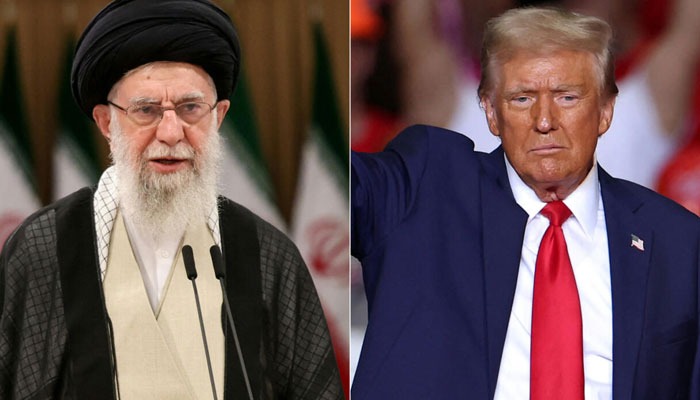
. The Iranian government has tried to control these protests, but it is being condemned internationally. The United States has threatened to attack Iran, while Iran says it will defend its sovereignty. Iran’s Supreme Leader Ayatollah Khamenei has said that the US president is responsible for the deaths, losses and slander against the Iranian people during the protests in Iran. In a statement, Ayatollah Khamenei said that the recent anti-Iran riots were different in which the US president was personally involved. Earlier, US President Donald Trump had said during a conversation with the media at the White House that no one convinced him not to attack Iran, I convinced myself. Trump added that 800 people were to be executed in Iran yesterday, but no one was executed, which had a huge impact. It should be noted that during recent days, there had been severe tension between the US and Iran, and the situation seemed to be heading towards possible US attacks in Iran, but this was not possible. Mohammad Karami, commander of the Ground Forces of the Iranian Revolutionary Guards, has made it clear in blunt words that any mistake by the enemy will be responded to decisively. Iran is facing a comprehensive and hybrid war, this war is ongoing on many fronts, including the economic, social, and political sectors. Iran’s armed forces are on high alert and are fully prepared to respond to any mistake. The commander said that his armed forces are capable of dealing with all kinds of threats. If any aggressive action is taken, a decisive response will be given. It should be remembered that the United States had warned Iran about the crackdown on anti-government protests in Iran, after which the shadows of war began to deepen in the region, but now this threat has been averted to some extent. The British newspaper has claimed that the US president changed his decision to attack Iran and this change was implemented due to the diplomatic efforts of the Gulf countries. The Iranian government has succeeded in controlling the protests. According to Iranian state TV, no incident of unrest has been reported from any city in Iran in 24 hours. Meanwhile, the Iranian Foreign Minister told the American media that peace and tranquility have been established in the country and the situation is completely under control. He gave a message not to repeat the mistake like June, otherwise the same result will result as before. Our resolve cannot be broken by bombing. The Iranian Foreign Minister claimed that the elements present in the protests were being controlled from abroad, some protesters shot at police officers, ISIS-style terrorist acts were carried out, and police officers were burned alive. He said that his country is facing various threats from Donald Trump and European countries. Diplomacy is a good way, but we do not have a good experience with the United States, yet diplomacy is better than war. According to the Revolutionary Guards, internet services have been restored in Iran. The British Broadcasting Corporation says that the Revolutionary Guards announced the restoration of internet services on its Telegram channel. According to media reports, the global internet monitoring organization Netblocks also reported a slight improvement in internet traffic since morning. On Saturday morning, a slight increase in internet connectivity was seen in Iran, which came after more than 200 hours of disruption. According to the organization, there has been a very slight improvement in internet access, but overall connectivity still remains at only about 2 percent of normal, and there are no clear signs of effective internet restoration. Iran said that there is undeniable evidence of Israel’s role in violence and terrorism. In a statement, the Iranian Foreign Ministry said that the G7 countries are directly involved with Israel in the genocide of the Palestinian people, and the Iranian nation will not forget the civilian casualties in Israeli attacks in 2025. The Iranian Foreign Ministry has demanded that the G7 stop illegal interference in Iran’s internal affairs, lift illegal sanctions, and not use human rights as a political weapon. The Foreign Ministry said that encouraging violence and terrorism in the name of human rights is unacceptable. Protesters and security personnel were attacked between January 8 and 10. Statements by American and Israeli officials are clear evidence of incitement to violence. Iran respects the right to peaceful protest, is bound by civil rights under the constitution, and the state will assume full responsibility for protecting citizens and maintaining peace and order. National security will be defended against terrorism under external auspices.US President Donald Trump, while talking about the decision not to attack Iran, has said that no one convinced him not to attack Iran. During a conversation with the media, a journalist asked Trump whether Arab and Israeli officials convinced him not to attack Iran? In response, Trump said that no one convinced me, I convinced myself. Trump added that 800 people were to be executed in Iran yesterday but none were executed, which had a huge impact. US President Donald Trump thanked Iran in a post on his social networking platform Truth Social, saying that he appreciates that the Iranian leadership will not execute the people who were to be executed yesterday. Yesterday, the American newspaper New York Times claimed that Israeli Prime Minister Benjamin Netanyahu had requested US President Donald Trump to delay a possible US military attack on Iran. According to the report, Netanyahu spoke to President Trump on Wednesday, the same day the US president made a statement that he had received information from “very important sources on the other side” according to which the killing of protesters in Iran has stopped and the death penalty of protesters is not being carried out. Earlier, the British newspaper The Telegraph claimed that US President Donald Trump changed his decision to attack Iran at the last minute. According to the Telegraph report, this change was made due to the diplomatic efforts of the Gulf countries. Saudi Arabia, Qatar and Oman held emergency talks with Washington and persuaded Trump to postpone military action by saying that Tehran should be given a chance to demonstrate its “good deed”. Saudi Minister of State for Foreign Affairs Adel al-Jubeir, while addressing the conference, said that disputes should be resolved through negotiations. On the tense situation regarding Iran, Adel al-Jubeir said that instability harms the opportunities for development in any region. Saudi Arabia’s position has always been and will remain based on negotiations and achieving peaceful solutions to problems. The Saudi Minister of State for Foreign Affairs further said that whether it is Somalia, Iran, Syria, Lebanon, Sudan, Afghanistan or Yemen, our efforts are to prioritize dialogue.People who have been coming to Pakistan from Iran in the past few days due to the protests that have been going on in Iran for the past two weeks say they have witnessed a situation of ‘chaos’. The anti-government protests in Iran began two weeks ago on December 28 when local businessmen in Tehran took to the streets against another major devaluation of the Iranian currency, the rial, against the US dollar. According to Iran’s Tasnim news agency, 114 government officials have also been killed during these protests.

Since the 1979 revolution, Iran has been the only country in the region that has been challenging the US-dominated system. The rest of the Islamic countries are close allies of the US, which complicates the situation. Iran is close to China and Russia, but both countries avoid direct military confrontation with the US. When the US attacked Iran’s nuclear facilities last year, 21 Islamic countries issued a statement condemning it. These included countries such as Saudi Arabia, Turkey, Pakistan, the United Arab Emirates, Oman, Egypt, Sudan, Somalia, Brunei, Chad, Bahrain, Kuwait, Libya, Algeria and Djibouti. The fall of the Islamic regime in Iran could benefit the Gulf countries considerably. Major Gulf countries such as Saudi Arabia, the United Arab Emirates and Qatar have been silent on the protests in Iran since late December. Qatar has long and good relations with Iran, while Saudi Arabia and the United Arab Emirates have improved relations with Iran after years of hostility. These countries have strengthened diplomatic relations with Iran. But Saudi Arabia and the United Arab Emirates still do not fully trust Iran. These countries do not like Iran’s support for armed groups in the region. Oman is a country in the region that often acts as a mediator in disputes between Gulf countries. Oman also acts as a bridge for talks between the United States and Iran. On January 10, the Omani foreign minister also met with the Iranian foreign minister in Tehran. The two sides discussed increasing cooperation and avoiding policies that could escalate tensions, which signaled to the United States that Iran was ready for talks. The two sides discussed increasing cooperation and avoiding policies that could escalate tensions, which signaled to the United States that Iran was ready for talks. The animosity between Saudi Arabia and Iran has not yet completely ended. These differences range from Shia-Sunni to the Saudi Arabian monarchy versus Iran’s Islamic Revolution. Azerbaijan, a Shia-majority Muslim country, is close to Israel and its differences with Iran are not hidden from anyone. When the United States invaded Iraq and Saddam Hussein was hanged, Iran did not oppose the United States on this issue. When the Islamic Revolution came to Iran in 1979, Egypt recognized Israel that same year and established diplomatic relations with it. Jordan recognized Israel in 1994. In 2020, the United Arab Emirates, Bahrain, Morocco and Sudan also established diplomatic relations with Israel. Muslim countries want good relations with the United States and at the same time they want to maintain their reputation. Arab countries in particular have good relations with the United States and cannot afford to spoil them. Pakistan has been a close ally of the United States since the Cold War. Pakistan had recommended Trump for the Nobel Peace Prize. Iran and Pakistan also often attack each other’s territory. The report said that Islamabad does not want instability in Iran. The report said that ‘Islamabad does not want regime change in Iran because the consequences would be dire. Iran and Pakistan share a 900-kilometer-long border. This border passes through Pakistan’s Balochistan province. Balochistan is Pakistan’s most vulnerable province. Any change in Iran, whether internal or external, will have an impact on Pakistan. Pakistan has helped reduce tensions between Iran and Western countries in the past, while the Pakistani embassy in the United States also looks after Iranian interests. “The last time there was a conflict between Iran and Israel, Pakistan very clearly supported Iran’s territory and sovereignty, but I was one of the few people in Pakistan who said that the military conflict weakened Iran. The situation we are seeing today is a result of this political instability. Now any external intervention, whether it is economic sanctions or military action, will only worsen the situation in Iran.”