
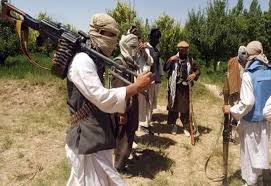
ISLAMABAD (TNS) Pakistan has once again expressed concern over the active presence of extremist groups in Afghanistan and called on the Afghan Taliban to take effective action against these elements through sustainable and verifiable measures. Pakistan’s Permanent Representative to the United Nations Asim Iftikhar expressed these views after Pakistan voted in favor of the resolution, under which the term of the Monitoring Team on the Taliban Sanctions Regime established in 1988 has been extended by 12 months. Asim Iftikhar welcomed the unanimous adoption of the resolution, saying that it is “both timely and necessary.” According to the Permanent Representative: “Pakistan is deeply concerned about the active presence of terrorist groups on Afghan soil, including the TTP (Tehreek-e-Taliban Pakistan), BLA (Balochistan Liberation Army) and Majeed Brigade, ISIS-Khorasan and Al-Qaeda. These groups have been responsible for some of the most heinous terrorist attacks and hostage-taking incidents against Pakistan. Referring to the deaths of a total of 80 innocent Pakistanis in the BLA attacks in different areas of Balochistan and ISIS-K attacks on a mosque in Islamabad in February this year, he said: “Once again, Afghan soil was used to plan and execute these attacks.” Asim Iftikhar said: “We reiterate our demand that Afghan soil should not be used for terrorism against neighboring countries and steps should be taken to prevent external subversive elements from taking advantage of the situation.” He also called on the Afghan Taliban to “prevent terrorist groups from taking such actions without hindrance and to take effective action against terrorism by fulfilling their counter-terrorism responsibilities through sustainable and verifiable measures, so that the interests of lasting peace and security can be protected.” The Pakistani delegate added: “It is for the Taliban to decide which path they want to take for Afghanistan. The path of isolation or the path of peace and prosperity that is adopted as a responsible member of the international community. In Pakistan, claims have been made by the government about the involvement of Afghan militants in the operations of banned organizations, but now the leaders of two banned organizations have issued instructions to their fighters not to include Afghan citizens in their operations. These instructions were issued to their followers in an audio message by Hafiz Gul Bahadur and in a video message by Sarbakuf Mohmand. The statements of the leaders of these two Taliban organizations have been issued for about a week. The first statement was issued by Hafiz Gul Bahadur on January 1, while the second message was issued by Sarbakuf Mohmand on January 6. Hafiz Gul Bahadur is the head of his own group of the banned TTP, while Sarbakuf Mohmand is the head of Jamaat-ul-Ahrar and is also part of the banned TTP. The militant leaders, in their messages in Pashto, first presented evidence of their survival and in these recordings they also mentioned the dates when these statements were recorded. Hafiz Gul Bahadur has released his audio message in the Waziri language. Since Hafiz Gul Bahadur’s group does not have a media wing, this message has been sent by him to his followers and then shared on their social media pages. These statements by militant figures have come at a time when Afghan clerics issued a joint statement last month, saying that Afghan soil should not be used against any other country. The statement made it clear that anyone who uses Afghan soil to carry out military operations outside the country will be considered an ‘insurgent’. Government officials and security officials in Pakistan have repeatedly identified those killed in clashes with militants as Afghans and have claimed that Afghan soil is being used for violent incidents. The Afghan Taliban have repeatedly denied these allegations. There have also been several clashes between fighters between Pakistan and the Afghan Taliban over this issue. Turkey and Qatar played a central role in the ceasefire between the two. However, the subsequent talks did not prove to be very effective. Pakistani army spokesman Lieutenant General Ahmed Sharif Chaudhry also mentioned 10 major terrorist incidents during 2025 in a press conference and said that all the militants involved in them were Afghan citizens who were killed. Observers in Pakistan are seeing the statements of Hafiz Gul Bahadur and Sarbakif Mohmand as a change. Both Hafiz Gul Bahadur and Sarbakif Mohmand have issued instructions to their fighters not to recruit foreign fighters, especially Afghan citizens, in their groups. Ehsan Tipu Mehsud, an analyst who closely monitors armed organizations in the region, told the BBC that “unlike the leaders of other organizations, Hafiz Gul Bahadur has always stayed away from the media and has never issued any statements on social media.” One proof of Hafiz Gul Bahadur’s distance from social media is that he himself has forbidden his followers from using mobile phones or social media in his statement.Pakistan has urged the United Nations Security Council to move quickly to designate the Balochistan Liberation Army (BLA) as a terrorist organization under its sanctions regime. Pakistan’s permanent representative to the United Nations told the Security Council in a briefing on the ‘threats to international peace and security’ caused by terrorist acts that a request to include the BLA in the Council’s list of terrorist organizations is already under consideration. On January 31, 2026, the banned separatist organization Balochistan Liberation Army (BLA) carried out ‘coordinated attacks’ under ‘Operation Herove 2.0’ at 12 different locations in Balochistan, which, according to security forces, were foiled and over 100 militants were killed. Earlier on Friday, the Pakistani army had said that ‘41 Indian-backed terrorists’ were killed in two separate operations by security forces in the province. On February 1, Balochistan Chief Minister Sarfaraz Bugti said that security forces had killed 145 militants in the past 40 hours, which he called “the highest number of casualties in such a short period of time in Pakistan’s war on terror.” The recent attacks also killed 48 Pakistani citizens, including 31 civilians, including five women and three children. Security Council members strongly condemned the recent attacks in Balochistan and urged that “the perpetrators, planners, financiers and sponsors of these heinous terrorist acts be held accountable and brought to justice.” In August last year, the US State Department added the BLA and its Majeed Brigade to its list of foreign terrorist organizations. “We hope that the Council will act expeditiously to designate the BLA under the 1267 sanctions regime by approving the listing request currently under consideration,” said Asim Iftikhar Ahmed. The Pakistani ambassador thanked the members of the UN Security Council for issuing a press statement condemning the recent attacks in Balochistan, praising them for their “expression of international support and solidarity with Pakistan,” saying that Pakistan has paid a heavy price in the global war on terrorism. The Pakistani delegate added that “as a frontline state in the global efforts to counter terrorism, we have made immense human and financial sacrifices, with 90,000 deaths and immense economic losses.” Reiterating Pakistan’s role in previous counter-terrorism efforts, the delegate said that Al-Qaeda was “largely destroyed in Afghanistan due to Pakistan’s significant efforts.” Pakistan has also played a significant role in dealing with regional factions of the militant Islamic State. The ambassador warned that the security situation has deteriorated in recent years, especially after the Afghan Taliban took over Kabul. He said that “externally sponsored and foreign-aided proxy terrorist groups such as Fitna al-Kharij and Tehreek-e-Taliban Pakistan (TTP) And the Fitna-ul-Hindustan BLA (Baloch Liberation Army) and its Majeed Brigade have been given a new lease of life. “Working with assistance from Afghan soil and with the active support of our eastern neighbor, this group is responsible for heinous terrorist attacks inside Pakistan.” Referring to the latest violence in Balochistan, he said that the BLA has claimed responsibility for coordinated attacks at multiple locations. “We are determined to eradicate this externally sponsored menace from our soil and expose the sponsors, financiers, abettors sitting across our borders,” he said. “Just this weekend, the BLA claimed responsibility for terrorist attacks at multiple locations in Balochistan province, resulting in the martyrdom of 48 innocent civilians, including 5 women and 3 children.” He added that “145 BLA terrorists were killed during the effective response by our brave security forces.” The ambassador was referring to the findings of the United Nations Analytical Assistance and Sanctions Monitoring Team. He also expressed concern about the regional threat emerging from Afghanistan. “These terrorist groups pose a threat not only to Pakistan but to the entire region and beyond.” He also warned against the proliferation of advanced weapons left behind after the withdrawal of foreign forces from Afghanistan. He said that it has become imperative to prevent the billions of dollars of sophisticated weapons and equipment left by foreign forces in Afghanistan from falling into the hands of terrorists. The international community needs to address the contemporary threat of terrorism through a collective, comprehensive and coordinated response, including the implementation of the Global Counter-Terrorism Strategy. Criticizing the methods chosen for counter-terrorism, he said that “counter-terrorism policies have so far only included followers of one religion.” He referred to the situation in Indian-administered Jammu and Kashmir and said that “there should be zero tolerance for state terrorism and the legitimate struggle of the people against foreign occupation should be recognized in accordance with UN resolutions.” The upcoming 9th review of the Global Counter-Terrorism Strategy later this year provided an opportunity to “renew our collective resolve” and bridge the existing gaps. Pakistan will continue to support multilateral efforts aimed at formulating a comprehensive strategy to combat and eradicate this menace through collective efforts and cooperation.Pakistan’s National Assembly has passed a resolution condemning the recent attacks in Balochistan, condemning the targeting of civilians and calling the use of women as weapons in the attacks “heinous” and “inhumane.” The resolution was presented by Federal Minister for Parliamentary Affairs Dr. Tariq Fazal Chaudhry. “Coordinated” attacks were carried out at several locations in Balochistan, killing 17 security personnel, 31 civilians, and around 150 militants. At least two female militants were reportedly involved in these attacks. The resolution states, “This House condemns in the strongest terms the recent terrorist incidents in Balochistan, in which not only innocent civilians were targeted but also heinous and inhumane tactics such as using women as weapons were adopted.” This House expresses deep sorrow and concern that terrorist networks are trying to use women against the state and society through exploitation, coercion, mental pressure and blackmail, which is completely against Islamic, Pakistani and Baloch values. This House appreciates the timely and effective measures taken by the security forces, law enforcement agencies, the provincial government of Balochistan, and the civil administration and expresses full solidarity with the families of the martyrs and injured. This House makes it clear that attacks on the civilian population, women and children are unforgivable crimes, and the state should take decisive action against such elements on the principle of zero tolerance.” This House draws attention to the fact that in several incidents, there are indications of external patronage, especially regarding the role of India, while there are serious concerns about the role of the Terrorism is fueled by logistical and operational facilitation, financial support, training, medical treatment, movement and propaganda networks in some neighboring countries. The members of the United Nations Security Council on Tuesday strongly condemned the recent attacks in the Pakistani province of Balochistan, urging that “the perpetrators, planners, financiers and patrons of these heinous terrorist acts be held accountable and brought to justice.” On January 31, 2026, the banned separatist organization Balochistan Liberation Army (BLA) carried out “coordinated attacks” under “Operation Herof 2.0” at 12 different locations in Balochistan, which, according to security forces, were foiled and more than 100 militants were killed. Earlier on Friday, the Pakistani army had said that “41 Indian-backed terrorists” were killed in two separate operations by security forces in the province. Balochistan, which borders Iran and Afghanistan, has been plagued by separatism for decades, including attacks on security forces, infrastructure projects and civilians. Pakistan has stepped up its crackdown on militants in the region in recent days. The UN Security Council, in a statement by its president, James Kariuki, expressed its deepest sympathies and condolences to the families of the victims, the government and people of Pakistan, and wished the injured a speedy and full recovery. The members of the Security Council reaffirmed that “terrorism in all its forms and manifestations constitutes one of the most serious threats to international peace and security.” They called for “the perpetrators, planners, financiers and sponsors of these heinous acts of terrorism to be held accountable and brought to justice.” The members of the Council urged all States to “fully cooperate with the Government of Pakistan in this regard, in accordance with their obligations under international law and relevant Security Council resolutions.” The members of the Security Council also reiterated that “any act of terrorism is criminal and unjustifiable, regardless of its motivation, wherever, whenever and by whomsoever committed.” They also stressed that all States should combat threats to international peace and security posed by terrorist acts by all possible means, in accordance with the Charter of the United Nations and their other obligations under international law, including international human rights law, international refugee law and international humanitarian law.