
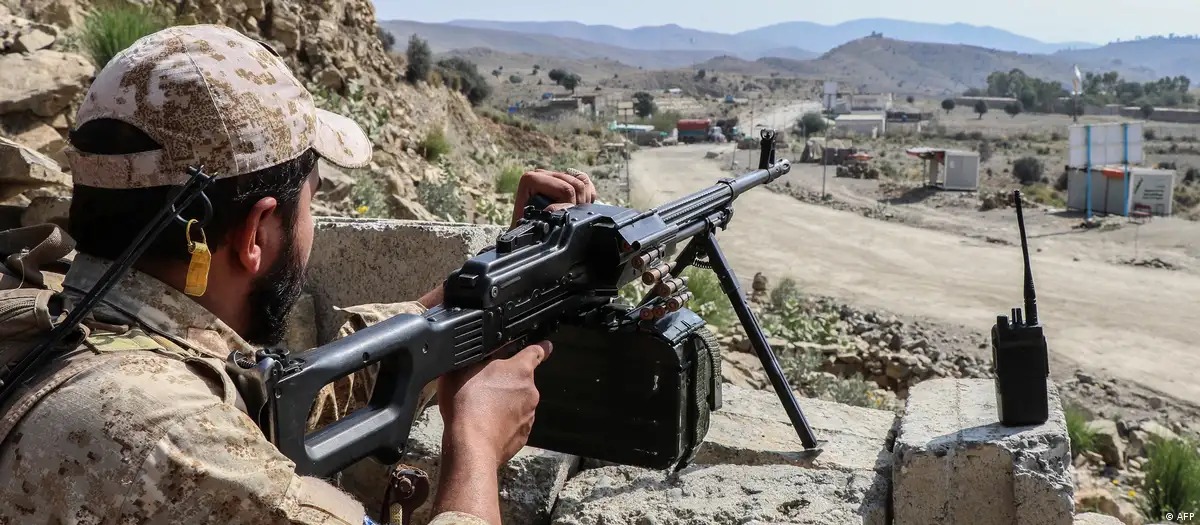
ISLAMABAD (TNS) The report of the international American journal Eurasia Review states that the current situation in Afghanistan is becoming a serious challenge to regional peace and that cross-border infiltration and terrorism are increasing. Attacks and infiltration by extremist elements from Afghanistan are becoming commonplace, affecting Pakistan, Iran, and Central Asian states. It has been said that Tajikistan’s border surveillance has had to be further strengthened due to repeated border tensions. According to the journal, Afghanistan is no longer limited to internal instability but is also becoming a center for armed groups and cross-border crime. Citing a United Nations report, it has been stated that more than 20 terrorist organizations and about 13,000 foreign fighters are active in the country. The effects of this unstable situation are also having an impact on neighboring countries, especially border threats and smuggling. According to experts, along with safe havens for extremist groups in Afghanistan, drug and human trafficking have also increased, which has posed threats to the security of the entire region. Pakistan’s problem is not with the Afghan people, but with the Afghan Taliban regime. Despite all the claims of the Afghan Taliban, terrorism, poverty, and unemployment remain in place in Afghanistan. According to an international report, half of the population in Afghanistan, especially women, is suffering from poverty. It has been reported that 15.8 million people in Afghanistan were affected last year due to weak economic conditions and severe malnutrition. Child labor has also increased significantly due to the policies of the Afghan Taliban and poverty. After the Afghan Taliban seized power, it has become impossible for the Afghan people to even get their daily bread. The Taliban also seize the aid that comes from foreign countries in the name of the poor Afghan people. According to the World Bank, along with poverty, 25 percent of the population of Afghanistan is facing severe malnutrition, while according to the World Food Program, one-third of the population of Afghanistan needs urgent food aid. Pakistan has consistently maintained that the banned Tehreek-e-Taliban Pakistan (TTP) is carrying out attacks in Pakistan from safe havens in Afghanistan. Be it the suicide attack on the Tarlai Imambargah in Islamabad or the attacks targeting security forces, according to officials, their links are linked to networks across the border. Similarly, regarding the Balochistan Liberation Army (BLA), a separatist organization active in Balochistan, Pakistani agencies claim that some of its elements have been present in Afghanistan or have been facilitated there. Although Afghan officials deny these allegations, Pakistan says that the ground realities paint a different picture.
The Foreign Office spokesperson clearly stated in his recent briefing that the UN Security Council’s 1267 Sanctions Committee report issued on February 4 ‘broadly supports’ Pakistan’s position. Key points of the report cited in the briefing: TTP enjoys ‘greater operational freedom’ in Afghanistan. TTP is one of the largest terrorist organizations in Afghanistan and is involved in attacks inside Pakistan. Al-Qaeda is present in Afghanistan and provides training and advice to other groups, especially the TTP. According to the spokesperson, this report reflects the concern not only of Pakistan but also of other member states that the cooperation of terrorist groups present in Afghanistan can create threats beyond regional borders. Pakistan has raised this issue on various international platforms:
After the establishment of the Afghan Taliban government in 2021, Pakistan expected that cross-border terrorism would decrease. However, the Security Council report indicates that the Afghan interim government is still providing operational space to some groups. This point has become a central component of Pakistan’s diplomatic strategy. The demand that Afghan soil not be used against any country has now become part of the documented discussion at the international level, moving from the bilateral level to the international level. For Pakistan, the issue is not only border infiltration but also internal stability. Attacks like Tarlai affect sectarian harmony, while operations in Balochistan target economic projects. Islamabad’s current policy appears to be based on three pillars: strengthening intelligence and defense measures, maintaining diplomatic channels with Kabul, and strengthening legal and moral legitimacy at the global level. The recent briefing by the Foreign Office has made it clear that Pakistan wants to take the Afghan issue not just as a narrative war, but within a documented and legal framework. The references to the Security Council report have strengthened Pakistan’s position internationally, but a lasting solution is still conditional on Kabul’s practical actions and regional cooperation. If Afghanistan takes verifiable steps against groups operating on its soil, there is room for improvement in relations. Otherwise, Pakistan’s diplomatic strategy may become more aggressive and active at the global level. In another drastic step taken to curtail women’s freedom in Afghanistan, the Taliban regime has threatened to close all national and international non-governmental groups that employ women in the country. In a statement posted on the social networking website X, the Afghan Ministry of Economy warned that NGOs failing to comply with the latest decree would face the loss of their licenses to operate in the country. According to the decree, the Ministry of Economy, as the authority to register non-Emirati entities, is responsible for coordinating, guiding, and monitoring all activities of domestic and foreign NGOs. Therefore, a follow-up circular has been issued once again to prevent the work of female employees in non-Emirati and foreign entities. In case of non-cooperation, all activities of the violating entity will be suspended and the amount of their activity license received from this ministry will be canceled. Since the Taliban came to power in Afghanistan three years ago, Afghan women have been excluded from almost every sphere of public life, including schools, universities, most workplaces, and even parks. The Taliban have already expelled women from many jobs and most public places. After denying Afghan women the right to education beyond the sixth grade, the Taliban banned the construction of windows in residential buildings.The Taliban regime is causing increasing security concerns for the region and Europe. It is always said that our Afghan policy is not correct, but Pakistan’s Afghan policy has never been as clear and unambiguous as it is today. During the withdrawal of US forces, $7.2 billion worth of military equipment was left in Afghanistan. The Afghan Taliban regime does not represent all Afghan nationalities, and half of the Afghan population, that is, women, is not represented in this regime. Pakistan’s problem is not with the Afghan people but with the behavior of the Afghan Taliban regime. For us, there is no distinction between good and bad terrorists. For us, a good terrorist is one who has gone to hell. A comprehensive political solution and credible negotiations between Afghan parties are indispensable for long-term stability. Protection of women’s rights and unhindered provision of humanitarian aid are very important points. The Taliban’s oppressive policies, neglect of minorities, and economic mismanagement are further exacerbating the mass migration and crisis. It should be noted that after the US withdrawal from Afghanistan, the Taliban’s interim government is in place in the country, which still seems to be failing to steer the situation in the right direction, and terrorist groups are becoming stronger due to the policies of the Afghan Taliban. According to experts, the continuous violations of the Doha Agreement and the refusal to make reforms have isolated the Taliban government from the international community. The Taliban must cut ties with terrorist networks and release foreign prisoners. According to the Pakistan Army spokesperson, 4,910 intelligence-based operations have been conducted since November 4, 2025, in which 206 terrorists were killed. A total of 67,023 Intelligence-Based Operations (IBOs) were conducted this year, in which 1,873 terrorists were killed, including 136 Afghans. According to the provincial division, 12,857 operations were conducted in Khyber Pakhtunkhwa and 53,309 in Balochistan. Misleading propaganda is being spread regarding border management, while the Pak-Afghan border consists of 1,229 kilometers of difficult terrain and 20 crossing points. At many places, checkpoints are located 20 to 25 kilometers from each other, so controlling movement is a big challenge. He said that the divided villages on both sides of the border complicate the situation. The Afghan Taliban regime is a complete facilitator of terrorists, and Pakistan has provided solid evidence of the centers, leadership, weapons, and funding of various terrorist organizations in Afghanistan. Pakistan demands that the Taliban regime not allow its soil to be used for terrorism under a verifiable mechanism. Afghanistan has been a playground for proxies, but it should That he should end his proxy work. Earlier, Kabul was the center of gravity of Afghanistan, but now Kandahar and Paktika are also there because different groups are getting stronger. Several steps were taken to secure the Afghan border and a fence was also built and the Taliban regime was also asked not to allow its land to be used for terrorist purposes. The Doha Agreement was not just an agreement but a regular process that was supposed to move forward gradually. It was agreed in the agreement that Afghanistan’s land would not be allowed to be used for terrorist purposes. The Doha Agreement should also have resolved the TTP. This agreement was not made public, but Pakistan was also kept out. Pakistan definitely took the entire Doha Agreement forward through facilitation and played the role of a facilitator, which had two objectives: one, if there is peace, it will be better for Pakistan, and the other is to end the fighting in Afghanistan. Under the Doha Agreement, Pakistan also has an important role in peace in Afghanistan, and Pakistan played an important role in ending the war in Afghanistan. A United Nations report has said that Afghanistan once again poses a serious threat to regional security. The ongoing cross-border infiltration, terrorist attacks, and armed clashes have destabilized not only neighboring countries but also the wider region. Following repeated incidents on the Afghanistan-Tajikistan border, the Russian-led Collective Security Treaty Organization has announced that it will provide modern weapons and equipment to the Tajik border forces to effectively counter infiltration and attacks from Afghanistan. The move reflects the growing threat posed by organized activities from Afghan soil. On November 26, 2025, a quadcopter drone flying from Badakhshan (Afghanistan) targeted a Chinese installation in Tajikistan, killing 3 Chinese citizens. Just 4 days later, on November 30, another attack was carried out by Afghanistan, killing 2 workers of the China Road and Bridge Corporation. Thus, 5 Chinese citizens were killed, and 5 were injured in 4 days. On January 18, 2026, the terrorists who had infiltrated from Afghanistan were killed after armed resistance, while their Weapons, equipment, and logistical materials were recovered, confirming an organized cross-border network. On January 29, 2026, armed smugglers entered Tajikistan from Afghanistan and were killed during the clash, and a large quantity of weapons and drugs were seized. All these incidents indicate that Afghan territory is being used as a staging ground for infiltration, smuggling, and terrorist-related activities. According to the report of the United Nations Analytical Support and Sanctions Monitoring Team, more than 20 international and regional terrorist organizations are active in Afghanistan.While nearly 13,000 foreign fighters are affiliated with various groups. These include Tehreek-e-Taliban Pakistan (TTP), ISIS-K (ISIL-K), Al-Qaeda, Al-Qaeda in the Subcontinent (AQIS), Islamic Movement of Uzbekistan (IMU), East Turkestan Islamic Movement (ETIM/TIP), and Jamaat Ansarullah. These groups pose a direct threat not only to Pakistan, Iran, and Central Asian states but also to Chinese citizens, regional connectivity projects, and strategic infrastructure. The ideologies and policies of the Taliban leadership have further complicated the situation. The rapid expansion of madrassas across the country, the exclusion of women from education and employment, and social restrictions have turned Afghanistan into a nursery for ideological extremism. The establishment of more than 23,000 madrassas in a country of 40 million people reflects an educational structure that prioritizes ideological training over critical thinking. Measures to exclude women from public life, education, and employment are increasing poverty, deprivation, and social isolation, which provide a fertile recruiting ground for extremist organisations. The unrest spreading from Afghanistan is spilling over borders in the form of terrorism, drugs, and arms trafficking. Pakistan, Iran, and Central Asian countries are suffering immediate consequences, while regional trade corridors, energy projects, and connectivity initiatives are also at risk. According to experts, normalising the Taliban regime without accountability could be tantamount to reinforcing terrorism. Any international involvement must be conditional, verifiable, and linked to the dismantling of terrorist networks. A regional strategy based on intelligence sharing, border cooperation, financial monitoring, and joint diplomatic pressure is essential. Observers say that the United States and European countries will not be immune to this threat, because Afghanistan should not be seen as just a regional problem, but also as a center of international terrorism. The United States Commission on International Religious Freedom (USCIRF) has recommended declaring Afghanistan a Country of Particular Concern (CPC) due to serious, systematic, and persistent violations of religious freedom. The report says that religious freedom in Afghanistan is under serious threat under the Taliban regime and that state-level measures are being taken that deny the rights of religious minorities and Muslims of different faiths. According to the report, religion is being used to strengthen government control and suppress dissent. According to the USCIRF, minorities, including Shia, Ahmadiyya, Hindu, Sikh, and Christian communities, face pressure, discrimination, and religious restrictions. The report also expresses concern over the use of public punishments, flogging, stoning, and other harsh punishments. The situation of women and girls is also highlighted in the report. According to the commission, restrictions on girls’ education, women’s movement, and participation in public life are being implemented in the name of religious injunctions, which are affecting fundamental human rights. The report also expresses concern about the Taliban’s new penal law, under which the religious identity of those who disagree with the Hanafi school of thought can be challenged. The commission says that this law reinforces religious and social divisions and weakens legal protection. It has also been said that the ideological rigidity in the madrassa system is increasing, and social attitudes are being monitored through moral laws. USCIRF stressed that declaring Afghanistan a CPC would be a global recognition that the situation of religious freedom there is extremely worrying and that the international community should adopt an effective and coordinated policy in this regard. The majority of experts are of the opinion that if the current Afghan interim government becomes strong in the future, it will pave the way for further escalation of problems for Pakistan, Iran, and India, and as a result, regional tensions will increase. Despite its many weaknesses, Afghanistan has the advantage in this scenario that all political parties in Afghanistan, including its people, are emotionally on the same page on the issue of their country’s security, while Pakistan’s collective situation is completely opposite. Another advantage is that Afghanistan has the sympathy of some of the main religious parties in Pakistan, in addition to the Pashtun and Baloch nationalists of Pakistan, while Pakistan, despite all its efforts, does not have any political or popular support inside Afghanistan. What is possible in the future and what kind of changes may occur in the security and political situation of the region cannot be said with certainty; however, there is no ambiguity that the future of the region will face further complications and challenges, and this game will not be limited to Pakistan and Afghanistan alone.According to the report, the Tehreek-e-Taliban Pakistan is now receiving operational and logistical support from terrorist networks like Al-Qaeda. The UN sanctions monitoring team released the assessment report in this regard at a time when there has been a dramatic increase in terrorist attacks by the TTP against Pakistani security forces and civilians. The report says that “the TTP is now widely active in Afghanistan and often uses Afghans to carry out terrorist acts in Pakistan from there.” According to the report, the terrorist group Tehreek-e-Taliban Pakistan now has between six and six and a half thousand fighters in Afghanistan, who are completely free to carry out their activities under the patronage of the Afghan Taliban. The report says that the Taliban rulers of Afghanistan, “do not view the TTP as a terrorist group and there is a very close relationship between the two. The debt owed to the TTP is very important for them. The report also says that “the TTP has intensified attacks against Pakistan, especially from 573 attacks in 2021 to 715 in 2022, while the number of attacks in 2023 increased to 1,210. The same trend continues in 2024.” The report also presents data up to May 28 this year. It should be noted that this UN report confirms Islamabad’s position that Kabul is not ready to take action against terrorist groups that pose a threat to Pakistan. In recent months, Pakistan’s Defense Minister Khawaja Asif and Interior Minister Mohsin Naqvi have repeatedly made such allegations. The report also supports Pakistan’s concern that NATO weapons, including night-vision equipment, have been provided to the TTP since the Taliban took over Afghanistan, leading to a “significant increase in terrorist attacks on Pakistan’s border posts.” It also says that regional al-Qaeda operatives in Afghanistan, who have long-standing ties to the Taliban, are helping the TTP carry out high-profile terrorist attacks inside Pakistan. It was reported that TTP operatives are being trained in al-Qaeda camps, which the terrorist organization has established in several border provinces such as Nangarhar, Kandahar, Kunar, and Nuristan. In the report, a UN member has expressed concern that “increased cooperation” with al-Qaeda could transform the TTP into a “non-regional” group, meaning it could expand beyond the region. According to the report, another active terrorist group in the region is the Islamic State Khorasan (IS-K), and its affiliates are estimated to have between 4,000 and 6,000 fighters. According to another estimate, their number is between 2,000 and 3,500. Many of this group have allegedly infiltrated the central ministries of the interior, defense, and intelligence, and are also trying to secretly recruit members in other groups like the TTP. It describes how ISK has now limited its presence in Afghanistan and expanded its external operations. It has encouraged its “expert operatives and suicide bombers to move towards Europe, the Russian Federation, and other neighboring countries.”