
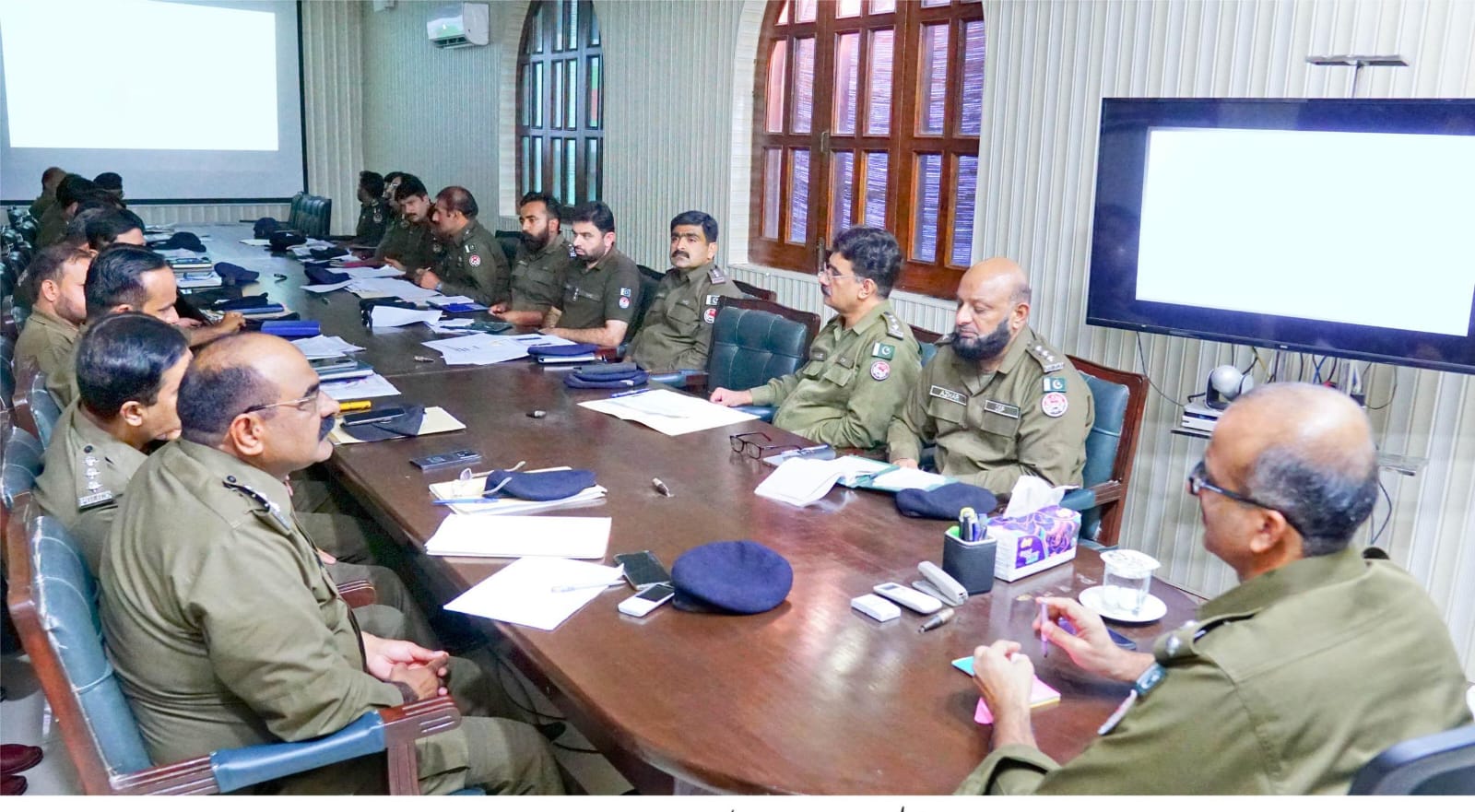
Khanewal (TNS) Amid the daily routines of Khanewal’s streets and the busy lives of its residents, a significant development took place. A crime meeting chaired by District Police Officer (DPO) Ismail Khark, with participation from the district’s SDPOs, SHOs, and senior police officials, made it clear that the police administration is actively and resolutely committed to public safety and the maintenance of law and order in the district. This meeting was far from a mere formal gathering; it sent a firm message that the police will prioritize public service, prompt action, and the systematic follow-up of investigations.
One of the most prominent directives from the DPO was the mandatory immediate response to emergency calls, and the presence of senior officers at the scene in case of serious incidents. For the citizens, this is certainly reassuring. Over the past few years, timely intervention and consistent police presence have played a vital role in reinforcing public confidence. Now, the DPO’s clear instructions indicate that the police will no longer be limited to taking notice—they will combine prompt action with swift response.
Emphasizing the streamlining of pending investigations is also of crucial importance. This ensures that each case progresses promptly and is included in the judicial process. Recognizing the persistent presence of wanted criminals, drug dealers, and other offenders in Khanewal, the DPO has mandated daily progress reports, the use of modern investigative techniques, and increased recovery rates as core principles. These steps highlight both the professional performance of the police and their commitment to public service.
This meeting is significant not only because it reviewed the current situation but also because it established a clear strategy for the future. The DPO emphasized that every SHO and officer must understand their responsibilities thoroughly and strive to provide the highest level of service. Preserving the dignity of the uniform and listening to citizens’ concerns with respect are principles essential for building trust between the police and the public.
Ensuring the security of police lock-ups and judicial custody facilities, maintaining active CCTV surveillance, and improving recovery rates after arrests all indicate that the police have decided not just to be reactive but to dismantle criminal networks in a structured and sustainable manner. This strategy will enhance both the operational efficiency of the police and public safety in the district.
Highlighting the effectiveness of the front desk is another critical aspect. Many residents hesitate to approach the police, fearing their complaints may be ignored. Under the DPO’s guidance, the front desk will register every complaint promptly and provide timely responses, strengthening public confidence and fostering a cooperative relationship between citizens and law enforcement.
Instructions to expedite the submission of pending challans to the courts are another positive step. This ensures that arrested suspects are presented in court promptly and that judicial fugitives are apprehended. These measures indicate that the police are committed not only to operational action but also to active participation in the judicial process.
For Khanewal’s police officers, this is an opportunity to carry out their duties with dedication while making a meaningful contribution to public service. The nature of crime in the district—whether related to drug trafficking, land grabbing, or networks of wanted criminals—is complex. Ensuring timely action alongside effective investigation and judicial follow-up is no simple task, but the DPO’s clear directives and structured approach provide a framework for effective management.
This meeting sends a clear message: the police will actively serve the public, uphold the law, and protect citizens. Residents will see law enforcement taking timely action, systematically managing cases, and consistently targeting criminal elements. Building such trust between the police and the community is essential for improving public safety and maintaining high standards of law and order in the district.
The DPO has made it clear that action is now the only path forward. Each officer must understand their responsibility and ensure that the public receives protection, justice, and confidence. For the citizens of Khanewal, this is a beacon of hope, yet the success of these measures will depend on the diligence and integrity of every officer.
This meeting is far from a routine administrative gathering; it marks the direction of the Khanewal police for the future. The real test will be whether these directives remain on paper or translate into practical, on-the-ground results. Citizens’ issues, the timely completion of judicial procedures, recovery rates, and the effectiveness of the front desk—all will play an integral role in shaping a safe and secure future for Khanewal.
It is worth noting that public trust in the police will only be strengthened if these measures are implemented consistently and transparently. Citizens are watching and evaluating, and if the police follow through as promised, this could mark a significant and lasting improvement in law and order.
The DPO’s meeting exemplifies the seriousness and determination of the police administration in addressing public concerns. It sends a clear message: the priority of law enforcement in Khanewal is to serve the public, ensure timely action, and maintain law and order effectively.
Residents of Khanewal will now witness a police administration that is not merely a law-enforcing body but also an active partner committed to protecting every citizen and ensuring justice. These initiatives will strengthen law and order, citizen security, and public confidence in the district.
Such a strategic and committed approach lays the foundation for a positive and effective policing model in Khanewal, assuring residents that the police are accessible, trustworthy, and capable. For the citizens, this is not only a message of hope but also a guarantee of a brighter future, where public service and the supremacy of law remain paramount.