
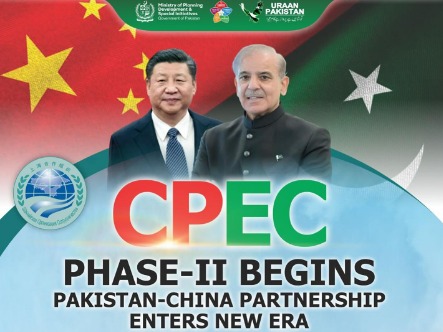
ISLAMABAD (TNS) The Pakistani government is committed to the completion of all projects and agreements under CPEC, CPEC is an important milestone in promoting Pakistan’s economic development. China-Pakistan Economic Corridor (CPEC) Phase 2 will boost investment in Pakistan. Pakistan and China have reiterated their commitment to high-quality development in the second phase of CPEC and have described CPEC as the basis of economic cooperation and a bright sign of enduring friendship.
The China-Pakistan Economic Corridor has emphasized industrialization, special economic zones (SEZs), clean energy, agriculture and employment projects.
It is worth noting that the first phase of CPEC included infrastructure and energy projects, while in CPEC Phase II, both countries will focus on agriculture, Pakistan Railways ML-1, trade deals, and the reconstruction of the Karakoram Highway (KKH). Prime Minister Shehbaz Sharif had told a meeting of representatives of Chinese companies that Pakistan wants to benefit from Chinese experiences to promote its IT sector and increase exports. China’s role in Pakistan’s development is very important, China has always helped Pakistan in difficult times, for which the entire nation is grateful to the Chinese leadership and people. The Prime Minister had assured that the safety and security of Chinese workers and citizens is the top priority of the government of Pakistan, while the government has taken all possible steps to ensure foolproof security of Chinese citizens in Pakistan and a comprehensive plan has been prepared in this regard. Pakistan is an agricultural country and wants to benefit from China’s advanced technology in this sector. The Prime Minister also invited Chinese companies to invest in Pakistan’s electric, hybrid auto sectors and other sectors. The government and people of Pakistan value this enduring friendship. The two sides acknowledged in the CPEC Joint Working Group for International Cooperation and Coordination meeting that CPEC has a key role in promoting regional connectivity, cooperation and shared prosperity, and the parties described CPEC as the foundation of economic cooperation between the two countries and a bright symbol of enduring friendship. Pakistan and China have emphasized the new paths introduced under CPEC 2, namely growth, livelihood, innovation, open and green corridors, and their integration with Pakistan’s national development framework, which is centered on the 5 Es, which include exports, e-Pakistan, energy, environment and equity.
Pakistan and China have always reaffirmed their commitment to enhance cooperation in all areas of bilateral relations and deepen the strategic cooperative partnership in all seasons. Pak-China relations are ‘special and unique’, with the Chinese ambassador to Pakistan highlighting the ideal relationship of friendship from time to time. Addressing a ceremony marking the Chinese New Year 2025, the Chinese ambassador said that the Khunjerab Pass has started operating year-round, which is a historic development. The Chashma Nuclear Power Plant Unit 5, which can create 40,000 direct and indirect jobs during the construction period, has been officially launched. The project has broad prospects for practical cooperation between the two countries. Chinese Ambassador to Pakistan Jiang Zhidong said that the strategic cooperation between Pakistan and China will continue to deepen in the future. He said that we are ready to strengthen the development strategy with Pakistan, deepen mutually beneficial and beneficial cooperation, develop an upgraded version of the CPEC construction, and accelerate the building of a China-Pakistan community with a shared future in the new era. The Chinese ambassador had said that President Xi Jinping has agreed to maintain close communication with the President and Prime Minister of Pakistan and promote strategic cooperation. China is ready to provide new opportunities to the world with its modernization drive. On the other hand, Pakistan has appreciated the vision of the Chinese leadership to upgrade the second phase of CPEC. Addressing the Joint Cooperation Committee (JCC) meeting, Federal Minister for Planning and Development Ahsan Iqbal said that we are ready to work with the NDRC to finalize the scope and implementation plan on these corridors. Last year, Chinese Vice Premier He Leifeng spoke about the 5 new corridors proposed by President Xi Jinping, including Growth Corridor, Livelihood Corridor, Innovation Corridor, Green Corridor, and Regional Connectivity Corridor. Ahsan Iqbal said that Gwadar Port has been made operational and many other projects have also been completed, so now it is time to attract investors and manufacturers to populate the Special Economic Zones (SEZs) and Gwadar. The second phase of CPEC has begun but a lot of work remains to be done to ensure its success. The China-Pakistan Economic Corridor (CPEC) is a major trade project that aims to transport oil and gas from southwestern Pakistan to China’s northwestern Xinjiang Autonomous Region through Gwadar Port, railways and motorways in a short time. The CPEC projects have been of importance to both Pakistan and China, but work on these projects has been slow for many years. China is now on its way to becoming the world’s first major country in economic development, especially the Belt and Road Initiative, which began in 2013 and has completed its first decade, in which it introduced a new model of connectivity and economic development. So far, China has signed more than 200 BRI cooperation agreements with 151 countries and 32 international organizations. The Chinese Academy of Sciences has established 10 science and education centers abroad. More than 100 research cooperation projects have been launched with BRI countries and about 5,000 high-level scientists have been trained.
 The BRI has evolved into a comprehensive framework that includes infrastructure development, trade facilitation, financial cooperation, and cultural exchanges across Asia, Europe, Africa, and beyond. The BRI is both regional and international indispensability, with the potential to anchor economic miracles, address challenges, and contribute to sustainable development. As economic globalization undergoes unprecedented changes and the global economic recovery faces challenges, the global luster of the BRI has become a bright streak that reflects its increasingly important role in enhancing the economic development of the countries and regions concerned. The BRI is playing a key role in advancing global development by promoting economic growth, promoting trade, and enhancing cultural understanding. Through large-scale investment in infrastructure projects including roads, railways, ports, and energy facilities, the BRI is creating economic growth and job opportunities. By improving connectivity and reducing logistical bottlenecks, the initiative facilitates the movement of goods and services, allowing businesses to expand their reach. It helps to expand trade and access new markets. A research report released by the World Bank in 2019 stated that if fully implemented, the transport infrastructure projects under the BRI could generate annual global income benefits of $1.6 trillion by 2030, which is 1.3 percent of global GDP. The BRI was a project proposed by China that is creating financial benefits for the entire world. For example, the China-Europe Railway connects Chinese cities with Poland, Germany and other European countries, and last year 16,000 freight trains were operated in both directions. One of the distinguishing features of the BRI is its adaptability and flexibility to emerging challenges and its commitment to sustainability. Recognizing the importance of addressing environmental concerns, the BRI has included the concept of the Green Silk Road, emphasizing environmental cooperation, clean energy and sustainable development, prioritizing environmentally friendly infrastructure projects, promoting green finance, and Efforts are being made to ensure that environmental considerations are incorporated into the planning and implementation process. The BRI is promoting sustainable development, including green and green infrastructure, green energy, and green finance, as part of the efforts to cooperate on green infrastructure, green energy, and green finance in line with the United Nations 2030 Agenda. The plan also emphasizes cooperation in public health. China and its BRI partners work together to combat and prevent epidemics, expand public health research and development, and improve global public health governance. In terms of flexibility, the BRI has the full capacity to adapt to changing circumstances and overcome geopolitical challenges. In this regard, China has demonstrated flexibility in responding to the feedback and concerns of participating countries and international stakeholders, which has also won the project’s global recognition. China has also enhanced the standards of transparency, accountability, and governance in the project. Through bilateral and multilateral cooperation, the BRI Forum has It also provided a platform to address concerns and build consensus to move forward by sharing best practices. China is undoubtedly becoming a developed country and its efforts are to ensure that its neighbors join it in the race for development. China is the second most populous country in the world with a population of over 1.4 billion. China is spread across five time zones and shares land borders with fourteen countries, the most of any country in the world after Russia. With an area of approximately 9.6 million square kilometers, it is the third largest country in the world in terms of total land area. Its national capital is Beijing and its most populous city and largest financial center is Shanghai.
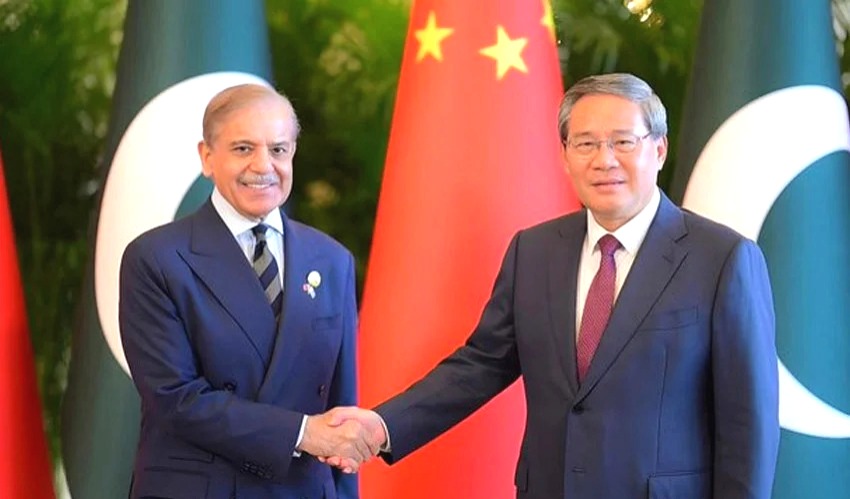
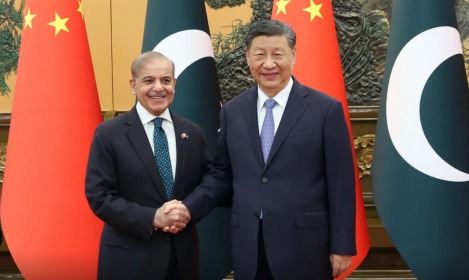
 China has an enduring and beautiful relationship with Pakistan.The Pakistan Economic Corridor is a long-term Chinese infrastructure network project launched in Pakistan. According to Pakistani officials, CPEC will create 2.3 million jobs by 2030 and increase the country’s annual economic growth by 2 to 2.5 percentage points. Potential industries being set up in CPEC special economic zones include food processing, cooking oil, ceramics, gems and jewelry, marble, minerals, agricultural machinery, iron and steel, motorbike assembling, electrical appliances and automobiles. The government is also going to start more development work in collaboration with China. It is worth noting that Pakistan and China last month reiterated their commitment to further enhance cooperation under the upgraded phase of the China-Pakistan Economic Corridor (CPEC) Phase 2. The new phase includes five additional corridors. The understanding was reached during a meeting between Prime Minister Shehbaz Sharif and Chinese Premier Li Keqiang. The two leaders expressed satisfaction over the progress in bilateral relations and agreed to work together on the next phase of CPEC. The Pakistani prime minister, during his six-day official visit to China, also attended the ceremony of exchanging memoranda of understanding (MoUs) and agreements covering cooperation in science, technology, IT, media, agriculture, and the development of CPEC Phase 2. Prime Minister Shehbaz had sincerely thanked the Chinese leadership and people for their support for Pakistan’s territorial integrity, sovereignty, and socio-economic development. Based on the consensus reached between Chinese President Xi Jinping and Pakistani Prime Minister Shahbaz on September 2, the leaders reaffirmed their commitment to further strengthen the all-weather, iron-clad strategic partnership between the two countries. The Pakistani Prime Minister congratulated the successful hosting of the SCO Summit in Tianjin and the 80th anniversary of the victory of the Chinese people in the World Anti-Fascist War. Paying tribute to China’s remarkable transformation under the leadership of President Xi Jinping, Prime Minister Shahbaz said that Pakistan wants to learn from China’s achievements and build a strong community with a shared future. The Pakistani government’s reform agenda is yielding results with China’s support. Pakistan plans to issue panda bonds in the Chinese capital market. The Pakistani Prime Minister highlighted the important role of CPEC in Pakistan’s development over the past decade. He stressed on early implementation of projects like ML-I, redevelopment of Karakoram Highway and full operationalization of Gwadar Port under the second phase of CPEC. The Prime Minister highlighted the vast potential for business-to-business cooperation and investment. He briefed Prime Minister Li about the investment conference held in which over 300 Pakistani and 500 Chinese companies participated. He identified agriculture, mining, textiles, industry and IT as priority sectors for joint economic cooperation under the upgraded CPEC framework. Prime Minister Shehbaz also reiterated Pakistan’s strong support for President Xi Jinping’s global initiatives, including the Global Development Initiative, Global Security Initiative, Global Governance Initiative, and Global Civilization Initiative.