
Khaniwal (TNS) In the fertile plains of Punjab lies Khaniwal, a district that has long been a symbol of resilience, its fields heavy with grain and its people bound by the strength of community. Yet in recent years, the floods and relentless rains have transformed this land of promise into a landscape of despair. The fields that once carried the golden shimmer of wheat now resemble waterlogged graveyards of shattered dreams. The homes that once echoed with laughter now stand broken, their walls scarred with the stains of floodwater. Hunger, poverty, and silence spread like an unending fog.
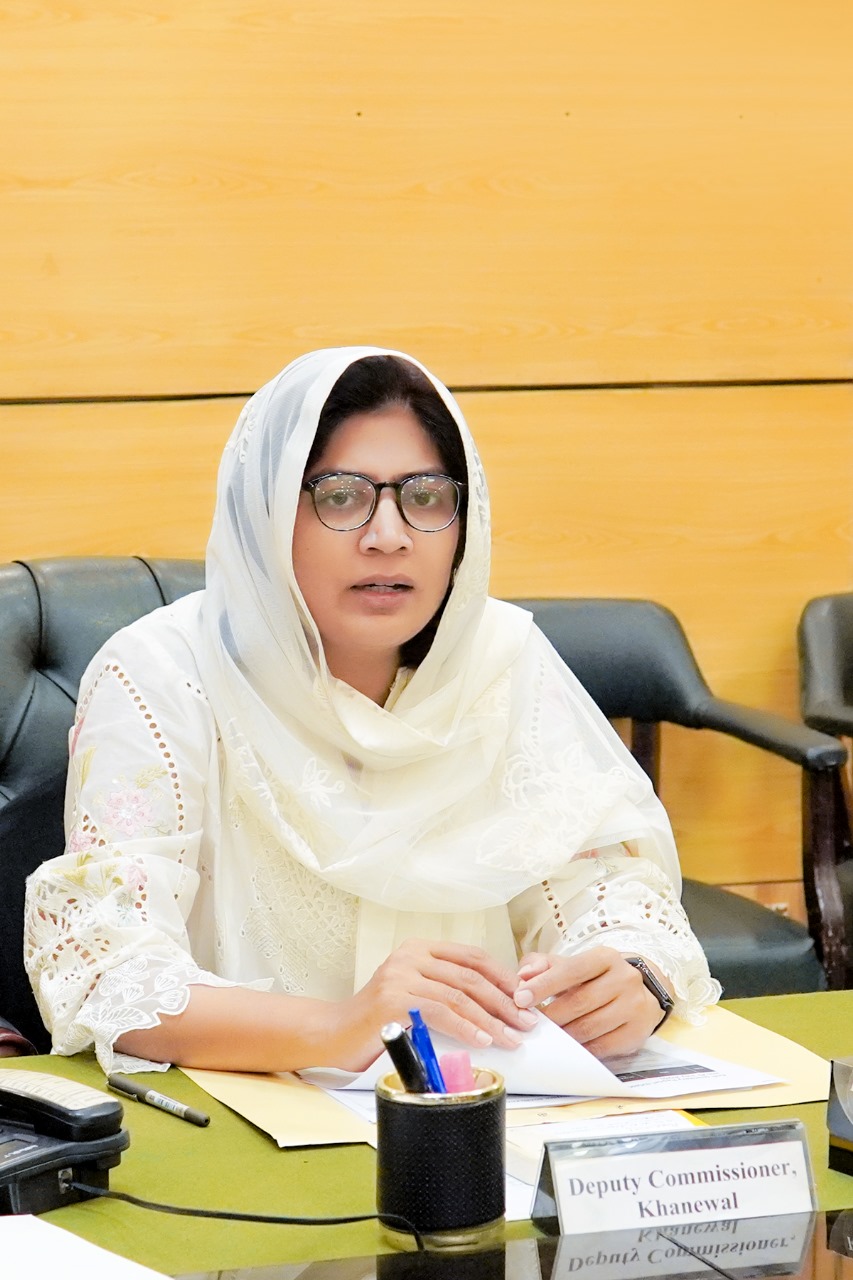
In this setting of grief and abandonment, the story of a woman emerges — a story not of power, but of compassion; not of authority, but of empathy. Deputy Commissioner Salma Suleman became, for many, the face of hope in Khaniwal. She was not merely a government official overseeing relief operations; she was a presence that touched the lives of those left adrift by disaster.
The despair in Khaniwal was not only material. It was the despair of mothers who had lost their kitchens to the water, unable to feed their children. It was the despair of farmers who had watched their seed drown, their year’s labor erased in a single night. It was the despair of children who looked at the skies, not for rain, but for food. To these people, words alone could not heal. They needed a human hand, a human face, a reason to believe again.
That hand, that face, was found in Salma Suleman. She walked through the flooded lanes where barefoot children waded in dirty water. She entered broken huts where the smell of damp earth mixed with hopelessness. She sat with the elderly who had nothing left but memories of what once was. And in those quiet encounters, she gave what bureaucracies often fail to give: dignity.
A farmer recalls her visit not in terms of relief packages or government promises, but in the way she listened. “When we spoke, she did not look away,” he said. “She looked into our eyes as if our pain was her own.” A mother remembers her holding a child, brushing the mud from his face. “For a moment, it felt as if my child mattered again,” she whispered.
Leadership is often measured in grand speeches and official statements, but in Khaniwal it was measured in the ability to sit on the ground with the dispossessed and share their silence. Salma Suleman redefined what it meant to lead — not above the people, but among them.
Under her watch, rescue operations gained speed. Relief distribution became more organized. But beyond logistics, there was something intangible she brought: the will to endure. People who had thought their lives ended with the flood began to sow again, not just seeds in the ground, but seeds of hope. Women began to believe they could rebuild their homes, children began to believe they could return to school, and elders began to believe that their community would rise again.
The story of Khaniwal is not unique; natural disasters have struck countless communities across the world. But what makes it different is that in its darkest hour, there was a woman who refused to let the story end with despair. She insisted on writing another chapter — one where compassion could conquer ruin.
Poverty, hunger, and ruin are not easily defeated. They are battles that take years, perhaps generations. Yet, what sustains those who must fight is not just food or shelter, but the knowledge that they are not forgotten. In Salma Suleman, the people of Khaniwal found not just an administrator but a witness to their suffering, and a guardian of their dignity.
Today, as Khaniwal begins to recover, the scars remain. Fields still bear the memory of water. Children still remember nights of hunger. Families still mourn what was lost. But alongside those scars grows a different memory: of a woman who stood with them, who turned her official role into a mission of humanity.
Salma Suleman’s name is now spoken not only in government offices but in the whispers of villages, in the prayers of mothers, in the gratitude of farmers. For them, she is more than a Deputy Commissioner — she is the woman who brought hope to Khaniwal.
And perhaps this is the lesson Khaniwal gives the world: that even in the age of politics and bureaucracy, true leadership is still measured in tears wiped away, in hunger met with compassion, and in the courage to stand beside the forgotten.