
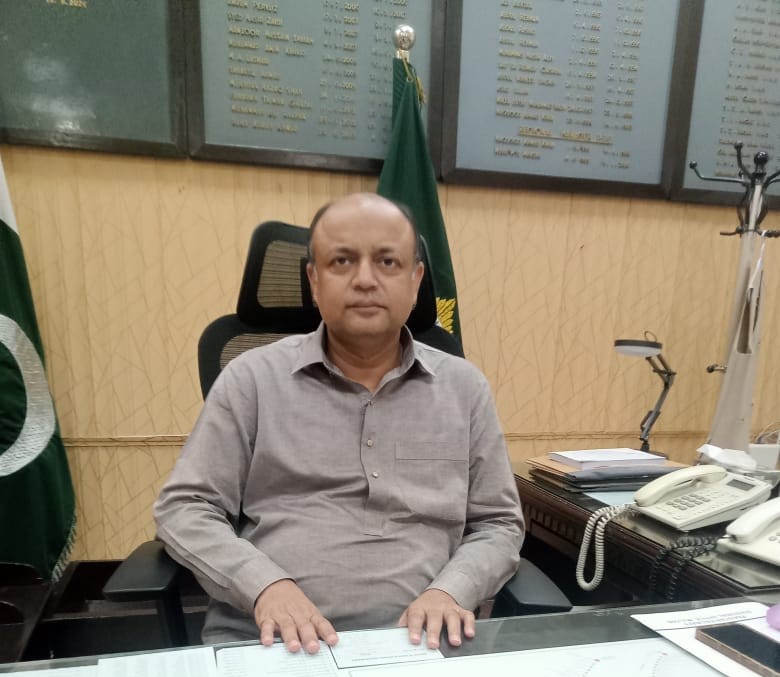
ISLAMABAD (TNS) In an age where many institutions crumble under the weight of inefficiency and corruption, there occasionally emerges a figure who redefines the meaning of service. For Pakistan Railways — an institution once regarded as the pride of the subcontinent — that figure today is Divisional Superintendent (DS) Railways Multan, Iftikhar Hussain.
Soft-spoken yet resolute, his name has begun to echo across the tracks of southern Punjab as a symbol of reform grounded in integrity. When he says, “No one is above the law,” it is not mere rhetoric — it is the cornerstone of his administrative creed. For him, leadership begins with example and ends with accountability.
Iftikhar Hussain’s journey is not the tale of an officer chasing position, but of a man devoted to purpose. Having served as DS in Sukkur and later as General Manager at Mughalpura Workshops, he carries with him a wealth of experience — and something rarer: a clean reputation. His background in the Mechanical Department gives him a unique grasp of both the technical and human sides of the railway. He understands that the system’s strength lies not only in engines and equipment but in discipline, teamwork, and trust.
When he assumed charge in Multan, his first statement was brief but powerful: “I will make this a corruption-free division.” The words carried the calm conviction of someone who has already fought and won such battles before. Those who have worked under him in Sukkur recall that under his leadership, punctuality returned, maintenance improved, and morale was restored.
For Iftikhar Hussain, discipline is not a tool of fear but a form of respect. He believes that every institution reflects the mindset of those who lead it. “When an officer is sincere, his sincerity becomes contagious,” he often says. That principle now defines the Multan Division.
His style of management is both traditional and progressive. He values presence over paperwork — preferring to walk through platforms, workshops, and stations rather than remain confined to an air-conditioned office. Workers describe him as firm yet approachable. His office door remains open, not as a symbol, but as a habit. “The real command,” he says, “is not in issuing orders but in listening.”
One of his key initiatives has been the digitization of internal reporting and record-keeping, minimizing loopholes that once allowed manipulation. Financial transparency, punctual train schedules, and visible cleanliness have all become measurable indicators of his governance. Yet, what stands out most is his insistence on dignity for every worker. He often reminds his staff: “A system can be efficient only if its people feel respected.”
Pakistan Railways has long been burdened by the shadows of neglect and political interference. But under Iftikhar Hussain’s watch, the Multan Division has started to breathe differently. Trains are leaving stations on time, the platforms are cleaner, and a quiet sense of order is returning. What once seemed an impossible dream — an efficient, accountable, corruption-free railway — now feels achievable.
His colleagues describe him as a man of few words but immense willpower. “Sir doesn’t talk much, but his silence has authority,” says a senior engineer. That authority does not come from the position he holds, but from the moral credibility he commands. In a bureaucracy often driven by connections, Iftikhar Hussain’s only connection is with his conscience.
His belief that “institutions fail when intentions fail” defines his entire career. In a system where excuses are easy, he has chosen action. His daily routine — inspection of sites, surprise visits, and direct interactions with staff — keeps everyone alert but motivated. For him, punctuality is not about time alone; it is about respect for responsibility.
Under his supervision, merit has quietly replaced recommendation culture. Transfers, promotions, and assignments now depend solely on performance. It is this silent revolution — not the loud claims — that has begun to set a new tone across the region. Officers and staff now speak with a renewed sense of pride when they say they belong to the Multan Division.
Yet beyond administrative success lies something deeper — the moral example of an officer who believes that honesty is not an act of heroism but of normalcy. His calm discipline has made integrity fashionable again in a department long plagued by cynicism. “A leader,” he says, “should never demand what he himself cannot deliver.”
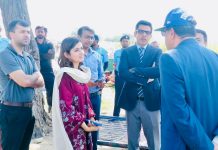
Perhaps this is why people find his presence reassuring. He does not dramatize his role; he dignifies it. For him, public service is not a career to be displayed but a duty to be fulfilled. When he walks across the railway tracks, inspecting engines and talking to workers, one feels that this is not an officer visiting his domain — this is a custodian caring for his trust.
Today, as the Multan Division takes shape under his watch, the broader railway system finds in him a symbol of what leadership can achieve when discipline meets intent. There is still a long journey ahead, but it is now a journey with direction.
In the grand narrative of Pakistan’s public service, names come and go, but a few leave behind the scent of sincerity that outlasts titles. Iftikhar Hussain is one such name — a man rebuilding the railway not merely with machines and manpower, but with integrity, order, and faith in the law.