
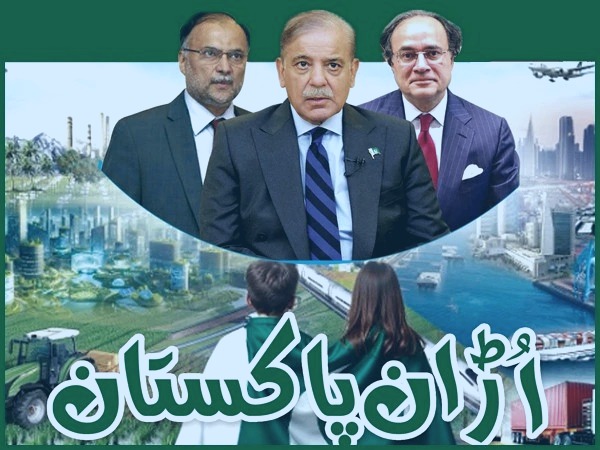
ISLAMABAD (TNS) URAAN Pakistan Economic Recovery Plan and Reforms are bringing economic stability, the world is amazed at the pace of Pakistan’s economic improvement. The federal government has launched an economic recovery plan called ‘Udan Pakistan’, which has set high targets for economic growth and exports as well as social sectors. Remember that Prime Minister of Pakistan Shahbaz Sharif formally inaugurated the ‘URAAN Pakistan’ program on December 30 at a time when claims were made about the stability of the country’s economy. Sustainable economic development is not possible without reforms. The focus of Pakistan’s investment policy is predictability, transparency and confidence-building. Some important steps such as economic reforms, promotion of investment, education, health, agriculture and industry need to be developed to improve the pace of economic growth in Pakistan.
Prime Minister Shahbaz Sharif has said that the latest economic data is proving the government’s economic reforms correct, which have resulted in economic The pace of development is improving every day, evidence of which is also coming before the business community and the nation. According to a statement issued by the Prime Minister’s Office, Shehbaz Sharif chaired a review meeting on FBR reforms. The meeting was attended by Federal Minister for Finance Muhammad Aurangzeb, Federal Minister for Climate Change Dr. Mosaddiq Malik, Federal Minister for Petroleum Ali Pervez Malik, Minister of State for Finance Azhar Bilal Kayani, Chief Secretaries of all provinces, Chairman FBR and other relevant government officials. According to the statement, it was informed in the briefing that the tariff reforms to be implemented this year did not have any negative impact on revenue collection, but rather there was a 25% increase in the collection of duties and taxes at the import level. It was briefed that this increase came despite only a 3.6% increase in the quantity of dutiable products, which also proved wrong the fear that reducing tariffs would reduce revenue collection. Duty-free imports increased by 41.5 percent, indicating that the bulk of imports were in raw and intermediate goods, indicating a significant improvement in the output impact at the grassroots level. It was reported that ongoing economic reforms, including tariff reduction and tax reform, are aimed at boosting manufacturing and exports, thereby making the investment climate in the country more conducive. The increase in imports of duty-free imports is a sign of the effectiveness of the government’s tariff rationalization measures, which are aimed at increasing the import of raw materials and intermediate goods. The aim of tariff reforms was to reduce the cost of raw materials used in the manufacturing sector so that the volume of domestic exports could increase and competitiveness in the global market could be achieved. Recent data proves that this government policy has been successful. The results achieved from customs reforms also include the effects of the successful government strategy of making the FBR a modern, transparent and excellent institution. On this occasion, the Prime Minister directed to take administrative and institutional measures to prevent tax evasion and effectively eliminate the shortcomings in the tax collection system in tobacco, tiles and other major sectors in a phased manner. According to the announcement, Prime Minister Shehbaz Sharif congratulated the entire finance team including the FBR and stressed that the pace of effective implementation of the reform process should be further accelerated so that Pakistan can get out of the vortex of economic difficulties and truly achieve the sustainable development goals. Meanwhile, the Director General and Collector Commissioners of major tax centers, including Karachi, Islamabad, Lahore, Rawalpindi and Peshawar, were changed. The Federal Board of Revenue made appointments and transfers of 80 senior officials nationwide. All officers have been asked to immediately send a report on assuming charge to the FBR headquarters.Remember that under URAAN Pakistan, economic goals have been set for the next five and long-term period up to 2035. For example, a target of six percent growth in the country’s growth rate has been set in the next five years and a target of taking the size of the Gross Domestic Product (GDP) to one trillion dollars by the next 10 years, i.e. 2035. The major goals set for the next five years under ‘Udan Pakistan’ are ‘economic goals’ compared to the country’s current economic indicators. Udan Pakistan is a comprehensive national economic transformation plan that has been designed to take Pakistan to ‘new heights of development’. The aim of this program is to make the country stable, sustainable and competitive in the global economy, which is based on the framework of the five Es: ‘The first goal is to create an export-oriented economy, the second is to bring about a digital revolution in the country, and the third is to deal with climate change and its impacts. The fourth sector where attention will be paid is energy and infrastructure, while the fifth is building an equity-based society. Among the goals set by the government under this program, the first is to increase exports to $60 billion annually in the next five years. It should be noted that the current volume of Pakistan’s exports is around $30 billion annually. Similarly, the GDP growth rate should be increased to six percent in the next five years. In the e-Pakistan sector, a target has been set to take the information technology freelance industry to $5 billion in the next five years, for which two hundred thousand IT graduates will be prepared annually.
In the climate change sector, a target of reducing greenhouse gases by 50 percent in the next five years has been set, along with an increase in arable land by more than 20 percent and an increase in water storage capacity by ten million acre feet. The share of renewable energy in the energy sector is to be increased to ten percent. According to the ‘URAAN Pakistan’ document in the field of social equity, the poverty rate is to be reduced to 13 percent. According to World Bank data, the population in Pakistan is living below the poverty line and according to World Bank estimates, this rate is likely to remain above by 2026. The government will provide investment opportunities in this program, which includes easy rules and incentives to promote national and international investment. Along with this, support will be provided for IT startups and the freelancing industry in terms of digital facilitation, while government support in the form of funds and grants for technical research, innovation and industrial development should be provided. Large-scale development projects through public-private partnerships are also part of this program. The government has declared Udan Pakistan a ‘game changer’. Economic stability is the goal under this program because establishing an export-oriented economy will stabilize the Pakistani rupee and promote economic growth. Similarly, the promotion of modern technology under e-Pakistan will make Pakistan prominent in the global market and in the field of environmental protection, there will be better use of natural resources for sustainable development, while in the field of social equality, women and youth will be included in economic development. Addressing the launching ceremony of the URAAN Pakistan program, Federal Finance Minister Muhammad Aurangzeb had said that after two to three years of this program, Pakistan will not need to go to the IMF.It should be noted that the China-Pakistan Economic Corridor was launched to promote economic development in Pakistan.
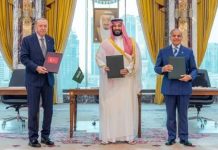
Under this, cooperation is being expanded in various sectors, such as industrial and agricultural cooperation. With the development of Gwadar, it will emerge as the most important port in the region. Cooperation with China in the agricultural sector is being expanded. A business delegation from the famous western city of Changchung in China has expressed its desire to invest $5 billion in various sectors. The progress of the establishment of the China-style “Pakistan-Saudi Economic Corridor” between Pakistan and Saudi Arabia is an extraordinary milestone. This project can lay the foundation for a new era of trade, investment and connectivity between South Asia and the Middle East. Analysts are calling it the “second CPEC” for Pakistan’s economic history—an economic project that could open up new avenues for development, industry, and technology by connecting Pakistan to the Gulf world. The “Pakistan-Saudi Economic Corridor” is being established on the lines of the China-Pakistan Economic Corridor and is in line with Saudi Arabia’s Vision 2030 and Pakistan’s development priorities. Saudi Arabia will not only invest in the project but will also promote partnerships in sectors such as energy, minerals, agriculture, tourism, IT, and housing. On the other hand, Pakistan is trying to increase its exports, create employment opportunities, and strengthen foreign investment through the project. The federal government has set up an 18-member high-level committee under the direction of Prime Minister Shehbaz Sharif to oversee the negotiations and practical steps under the Pakistan-Saudi Economic Framework. The scope of this committee extends beyond the traditional energy or defense sectors to include new areas such as environment, education, health, technology, and green energy. Pakistan’s economy, which has been plagued by debt, unstable fiscal policies, and political instability for the past several decades, is now at a stage where stability can be achieved through regional cooperation and strategic partnerships. CPEC has provided Pakistan with new foundations in the field of industrial, trade, and infrastructure with China, and now the Pakistan-Saudi Economic Corridor will provide an opportunity to expand these possibilities to the Middle East. This corridor will not only become a trade route but will also prove to be a platform for the exchange of cultural, educational, and human resources. Analysts say that if this project proceeds according to the principles of Vision 2030, large-scale industrial zones, modern energy projects, and investment centers can be established in Pakistan. This will not only open new doors of employment but also increase opportunities for Pakistan’s youth to access skills, training and technology. This project can provide a new “construction and development model” for Pakistan in which the principles of sustainable development, environmental protection and smart economy will play a fundamental role. The real success of this development journey depends not only on policies or agreements but on how quickly and equitably its fruits reach the people. Millions of poor people in Pakistan still dream of a better life. Basic rights like education, health, employment, clean water, housing and justice are still like a dream for them. Every major economic development cannot become real development until its benefits reach the common citizen. Pakistan’s farmers, laborers, workers, students, nurses, ordinary employees and small business class are all waiting to see when these big development projects of the country will bring ease and prosperity in their daily lives. For the stability of Pakistan’s economy, it is necessary to invest at the grassroots level along with big projects. Without bringing modern systems in the fields of small industries, agricultural reforms, public health, and education, economic stability will remain a mere game of numbers. It is a matter of satisfaction that environmental sustainability and human resource development have also been included in the Pakistan-Saudi economic framework, which indicates that this project is not limited to infrastructure alone but has a comprehensive socio-economic development vision. This new economic journey of Pakistan is not just a government achievement but also a test of national collective consciousness. If the state, investors, people and institutions all move forward with a common goal, Pakistan can become an example of sustainable development. In the changing economic map of the world, those countries that prioritize knowledge, technology, transparency and human capital are moving forward. It is time for Pakistan to move beyond a mere aid economy to an economy based on production, research, innovation, and trade. The Pakistan-Saudi Economic Corridor can be an important link in this journey. A bridge that connects the weaknesses of the past and the hopes of the future. If this project is carried forward with transparency, national interest, and regional balance, it can change the destiny of not only Pakistan but the entire region. But this change will be truly successful when the common citizen of Pakistan feels that the fruits of development are not limited to the elite but are reaching his home, his school, his hospital, and his future. The people of Pakistan, who have been making sacrifices for a long time, are now waiting for this new light of hope. An economic system that provides education to their children, employment to the youth, treatment to the sick, and dignity to the workers.Meanwhile, the global journal Bloomberg says that the return of Pakistani dollar bonds to the global market has doubled investor confidence. According to a Bloomberg report, the value of Pakistan’s dollar bonds is likely to continue to increase, while Pakistan’s dollar bonds are at the top in Asia with a profit of 24.5% this year. Pakistan is now ready to return to the global debt market compared to the last 2 years. S&P Global and Fitch Ratings upgraded Pakistan’s credit rating, which strengthened investor confidence. Moreover, Pakistan is also planning to return to the yuan bonds this year and the Eurobond market in 2026. Remember that Prime Minister Shehbaz Sharif said that he described the Bloomberg report on the Pakistani economy as an important milestone and said that this journey of development will not stop now. Welcoming the recent positive report by Bloomberg on the Pakistani economy, Prime Minister Shehbaz Sharif said that according to the global journal’s report, the implied default probability in Pakistan’s credit default swaps decreased by 2200 basis points. Pakistan’s CDS price has decreased significantly, reflecting the increasing confidence of global investors in the Pakistani economy. Pakistan is currently ranked second after Turkey among emerging economies in the global ranking, which is good news for our economy. Shahbaz Sharif said that with the government’s efforts and the cooperation of the Pakistani and global business communities, the promise of development seems to be being fulfilled, and this journey of development will never stop. According to the latest data from Bloomberg, Pakistan is among the few countries that have shown the greatest decrease in the risk of bankruptcy, while Pakistan’s performance has been second among emerging economies around the world, with only Turkey ahead of Pakistan. According to the report, Pakistan’s risk of bankruptcy has improved significantly by 2,200 points in the last 15 months (from June 2024 to September 2025), which is evidence of Pakistan’s sustainable economic improvement. Unlike Pakistan, there has been little improvement in South Africa, El Salvador and other countries, while risks have increased in countries like Egypt, Nigeria and Argentina. This improvement is a sign that investors are regaining confidence in Pakistan. The federal government reduced its debt by Rs 1,283 billion in the first quarter of the current fiscal year. According to the State Bank of Pakistan, the government reduced its debt by another Rs 852 billion in September. The government’s debt was Rs 76,605 billion at the end of September 2025. According to the State Bank, the government’s domestic debt decreased by Rs 649 billion in September, while the government’s external debt decreased by Rs 203 billion in September. Similarly, Prime Minister Shehbaz Sharif’s Advisor on Political Affairs Rana Sanaullah says that today the common man is angry and upset due to inflation and poverty. The government wants inflation to be reduced, but the IMF did not allow it. In Faisalabad, Rana Sanaullah said that the country has respect in the world due to the victory of the struggle for truth, India was humiliated in the world, and the respect it has received will improve our economic conditions.