

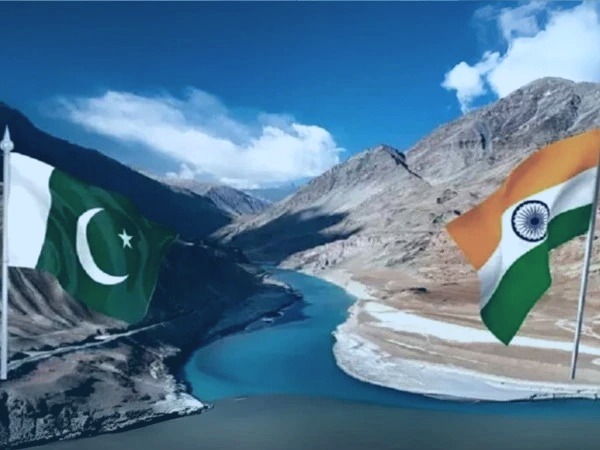
ISLAMABAD (TNS) India has been engaging in water aggression for decades, while no Pakistani government has thought about the future rivers of Pakistan. At present, India has built numerous dams on our rivers. India releases water whenever it wants, which floods hundreds of villages. It is a fact that we Pakistanis have become like India by committing water aggression like India instead of building dams. A few years ago, a judge of the Pakistani Supreme Court had said that they will build dams and become watchmen, but all efforts have gone in vain.

India has maintained its stubborn stance and said that the International Court of Arbitration does not have the authority to give a decision on the water agreement with Pakistan. India has never recognized the legal status of this court. On the other hand, according to reports, India is routinely releasing more water into the Sutlej and Jhelum rivers without prior notice, which could lead to severe flooding, raising concerns of widespread loss of life and property. India, through its aggressive behavior and illegal occupation of water resources, has not only created problems for Pakistan in the region but has also flouted international water laws. India’s non-recognition of the International Court of Arbitration and denial of its legitimacy is a challenge for Pakistan, as this court was established to resolve disputes settled under the Indus Waters Treaty. This behavior of India is not only against diplomatic principles but is also a clear violation of international law. This behavior shows that India is willing to go to any lengths to achieve its goals, even if it results in further strained relations between the two countries and instability in the region. India’s blocking of water from Pakistan’s rivers is ‘water aggression’. The Indus Waters Treaty, which was signed between the two countries in 1960, is a historic document in water management, but India has violated this treaty and blatantly violated Pakistan’s water rights. This agreement is a cornerstone of fair distribution of water resources and mutual cooperation between the two countries, which was aimed at maintaining peace and order in the region, but India has always weakened it through its stubbornness and nefarious strategy. India is constantly violating the Indus Waters Treaty. India has built about 14 dams on our rivers. After independence, India has built 102 dams, while we have only been able to build two dams, Mangla and Tarbela, while the third, Kalabagh Dam, has become a victim of politics. India has also built dams on those rivers, on whose water Pakistan has the right. And besides, India is stealing from Pakistan’s rivers through pipes. Through water aggression, India has accelerated work on the project to connect the Chenab River with the Beas and Ravi rivers so that it can complete its nefarious plan to deprive Pakistan of water. India is working through the Jaspa Dam to connect the Chenab River with the Beas. Funds were allocated for the project in India’s 2011–2012 budget, under which a 23-km-long concrete tunnel is being constructed to connect the Chenab with the Solang Nallah, which flows into the Ravi, to divert water towards the Ranjit Sagar Dam. The Chenab, often called the “River of the Moon”, flows over an area of just 130 km in Himachal Pradesh, which accounts for only 7,500 km2 of its total river basin of 61,000 km2. Despite this, 49 hydropower projects are being built in Himachal Pradesh, which has put South Asia’s free-flowing river in serious danger. India has already completed the 9.7-km Bagru-Nawale tunnel, the country’s largest water tunnel, and the 14.2-km Zojila tunnel in the 12,000-foot-high mountains is also in the final stages. It is feared that this expertise can be used to connect the Chenab with the Beas and Ravi, which will divert water to the Ranjit Sagar Dam, which was built on the Ravi in 2001. It is important to create public awareness to protect the water and aquatic life of the rivers. Remember that the Indus River is the largest river in Pakistan. The Indus River begins near Mansarovar, a lake in Tibet. After that, the river enters the KP province, passing through India and Pakistan Kashmir. In the KP province, it is also called Abasin, which means father of rivers. The Indus River is also called the Lion River. In the province of KPK, the river descends from the mountains to the plains and then flows through the provinces of Punjab and Sindh to the Arabian Sea near Karachi. The Indus River used to flow somewhere to the west of Harappa. In Harappa, the Sanskrit word APA means the edge of the border. It is as if it was on the border of the five tributaries of Punjab and the occupied areas of the Indus Sagar. The battle of Harappa in the Rig Veda took place on this border. The Indus River gradually started moving towards the west and the five tributaries also started changing their course.Its name is derived from Persian. Panj means five and Kora means river. The Poonch River, the Poonch River, is a river in Jammu and Kashmir, India and Azad Kashmir, Pakistan. It flows northwest. It then flows southward and empties into Mangla Lake. Its two tributaries are the Sawan and the Betar. The Dori River, also known as the Lora River, is a river in Afghanistan and Pakistan. It flows for 320 km in Kandahar Province, Afghanistan and then into Balochistan, Pakistan. It is called Lora in Pakistan, after entering Afghanistan its name is Kadhanai and in Aspen Baldak it is called Dori. The Zhob River is located in Balochistan and Khyber Pakhtunkhwa. The name of the river is originally from the Iranian language. In Pashto, Zhob means flowing water. The Zhob River irrigates the land in northern Balochistan. The Beas River rises in the Himalayas and flows through the districts of Amritsar and Jalandhar in eastern Punjab, India, before joining the Sutlej River near Ferozepur. The Jhelum River rises from the Verinag spring in the Himalayas and enters Pakistan, taking its water from Dal Lake in Srinagar, and flows southwest to join the Chenab River at Trimon. The Hub River is a small river in Pakistan, located near Karachi. It originates in the Kirthar Mountains in the Lasbela district of Balochistan and empties into the Arabian Sea. This river forms the border between the provinces of Balochistan and Sindh. In 1981, a dam was built on this river, called the Hub Dam. The Astore River is a tributary of the Indus River that flows through the Astore Valley. The Bara River originates in the Tirah Valley, Bara Tehsil, Khyber Agency. It enters Peshawar after joining the Kabul River, which originates from the Warsak Dam. The Tawi River is a river that flows through the city of Jammu. Like other rivers in India, the Tawi River is considered sacred. After Jammu City, it joins the Chenab River in Punjab, Pakistan. The Jundi River, also known as the Kot and Manzri Baba, is a river originating in the northern regions of Malakand, Charsadda, and Khyber Pakhtunkhwa in Pakistan. The Rupal River is a glacial river originating in the Rupal Glacier in northern Pakistan. It joins the Astore River. The Shanghu River flows in the Ladakh region. The Shanghu River enters Pakistan from India at the Azad Kashmir location.
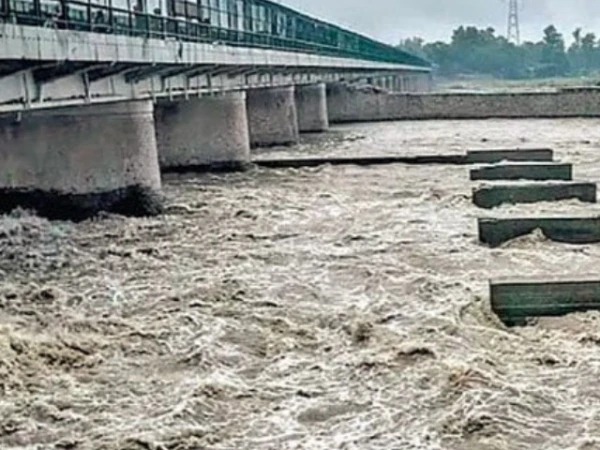
Punjab is called the land of five rivers. The fifth river is the “Beas River” along with Chenab, Sutlej, Jhelum and Ravi. Chenab River is formed by combining Chen and Aab. Chen means water of the moon and Aab. It is an important river coming from the Indian state of Himachal. It flows from Jammu and Kashmir, passes through Punjab and joins Jhelum at the Trimu point, then joins the Ravi. Chenab River, which is also called the Roman River, is associated with the stories of Sohni Mahinwal, Hiranjha and Sasi Pannu. Wazirabad, Rasool Nagar, Jalalpur, Pindi Bhattian, Chiniot, Jhang, Suhadra, and Shorkot are located on the left bank of the Chenab River. Lahore, Gogira, Saidpur, Sahiwal, Chichawatni, Abdul Hakim are located on the banks of the Ravi River. Attock, Mukhad, Kalabagh, Mianwali, Kandian, Piplan, Bhakkar, Layyah, Dera Ghazi Khan, Mithan Kot, Chachran, etc. are located on the banks of the Indus River. There is also a port on the Sutlej River, the name of which is still famous. This is from the era when roads and paved roads did not yet exist, nor did the railway system come into existence. Therefore, trade was carried out through rivers. On the banks of the Jhelum River, there used to be very famous ports at the places of Miani and Pindadan Khan, from where the trade of salt and wood was at its peak. Which was transported to Sukkur. There were ports on the Chenab River at the places of Rasool Nagar, Mahmudpur, Chochak, etc. Trade goods were transported to Multan through these ports. All the rivers of Punjab have been changing their course. The five rivers coming from India include the Sutlej, Beas, Ravi, Jhelum and Chenab of the Indus Basin System. They come together at Panjnad to form the Panjnad River, which joins the Indus River after some distance. China, Pakistan and India are three countries that are linked to each other in a common river system. Dozens of rivers flow in the three countries, but all these rivers belong to three major rivers, the largest of which is the ‘Indus River’. It originates in the Tibet region of China. No special major drains emerge from these rivers, but they include major tributaries of the Indus River such as Jhelum, Chenab, Ravi, Sutlej and Beas. From India, the Sutlej River meets the Beas River in India and then enters Pakistan. The Sutlej River reaches Islam via Head Sulemanki from where it After a long journey, the river reaches Panjnad. The Ravi River enters Pakistan through Madhav Power in Indian Punjab via Jaisar and passes through Shahdara and Baloki Sadhanai before joining the Sutlej River near Ahmadpur Sial. The Jhelum River joins the Chenab River at Trimon Jhang after a long journey through Azad Kashmir via Kohli, Mangla Dam and Rasool, while the Chenab River enters Pakistan from Akhnoor in Indian Punjab via Head Marala and passes through Khanki Qadirabad at Panjnad where the water of the Jhelum, Ravi and Sutlej rivers merge to form the Panjnad River. The Ravi River was considered the identity of Lahore, but now this river is only collecting the sewage of the entire city.The Chenab River and the Jhelum River are the two rivers of Punjab that do not enter Indian Punjab. The Chenab River has a total length of about 960 km. The Ravi River and the Sutlej River enter Pakistani Punjab from Indian Punjab. The Beas River does not enter Pakistan individually. It is in Indian Punjab that the Beas River joins the Sutlej River and the Sutlej River flows into Pakistan. The Beas River originates in the Himalayan foothills. The Beas River is located in northern India and is one of the five rivers (Punjab = five waters). The source of the Beas River is at Beas Kund in the Kannur district of Himachal Pradesh, which is located at an altitude of about 3,700 meters near Manali. The Beas River flows from east to west into Punjab and then joins the Sutlej River. In ancient Hindu scriptures, this river is called Vipasha, which means “the one who frees from bondage”. According to the Greek historian Aryan, when Alexander the Great came to Punjab in 326 BC, he reached the Beas River with his army, but his soldiers were afraid to go beyond it because they had to face the vastness of the Ganges plains and large armies ahead. Thus, the Beas River became the last bank of Alexander’s campaign. During the Mughal and Sikh periods, the areas settled on the banks of the Beas were fertile and of commercial importance.
 The Beas River has faced frequent floods in the past. Especially during the rainy season from June to September, when the snow melts in the Himalayan mountains and there is rain, the Beas would take on a severe flood form. Many districts of Punjab, including Hoshiarpur, Gurdaspur, and Ferozepur, were affected by it. According to historical references, several major floods occurred in the 19th century, which destroyed the villages on the banks of the Beas. The old route of the Beas Before the partition of India, the Beas River was also one of the rivers of Punjab and Pakistan. After the Radcliffe Line was drawn, the Beas and Sutlej became part of India, but their old water flowed to the south-eastern parts of Pakistan. The old route of the Beas in Pakistan can be seen in the south-east of Multan division. The old dry bridges and channels of the old Beas between Vehari and Bahawalpur are still there. 45 years ago, some of the water relays of the Beas used to come to Pakistan during the monsoon, and the locals used to cross it using irons. After the Indus Waters Treaty, the entire water of the Beas, Ravi and Sutlej was handed over to India. After that, the old route of the Beas in Pakistan remained only in the form of dry drains and deserted channels. The Beas River originates from Himachal Pradesh. It became the last stop of Alexander the Great’s journey in ancient history. It used to bring floods frequently during the monsoon. Before partition, its water used to reach the south-eastern parts of Multan and Bahawalpur. Today, only its old routes and dry bridges remain in Pakistan. The Indus River begins near Lake Mansarovar in Tibet. After that, the Indus River flows through occupied Kashmir, enters the Skardu district of Gilgit-Baltistan, enters the borders of Khyber Pakhtunkhwa at Partap Pul in Bisham and reaches Tarbela Dam, where after joining the Kabul River, it reaches Sarki via Kala Bagh, Chashma Barrage, Awat and Taunsa Barrage, where the five rivers Sutlej, Beas, Ravi, Chenab and Sutlej form the Panjnad River after covering a distance of 71 km. They join the Indus River at Mithan Kot, from where it travels 3180 km via Guddu Barrage and Sukkur Barrage to Kotri and empties into the Arabian Sea. The Sutlej River is one of the rivers of Punjab. It originates from Lake Rakshasthal in Tibet and has a total length of 1448 km. The Sutlej is also called the Red River in Greek. Apart from this, its ancient name is Satadari. The locals of Tibet also call it the Elephant River. The Sutlej River passes through the Himalayan valleys and irrigates an area of up to 900 miles in the state of Himachal Pradesh, before reaching the plains of Hoshiarpur district. From here, it flows southwest in the form of a large canal, falls into the Beas River and enters Pakistani territory in Kasur district of Pakistani Punjab and merges with the Chenab River at Panjnad through Uch Sharif. This place is 62 kilometers west of Bahawalpur. It flows through the Sulemanki Headworks near Dipalpur and irrigates the lands of Bahawalpur and Bahawalnagar districts. Under the Indus Waters Treaty of 1911, India’s right to the water of this river was recognized. India has built the Bhakra Dam on the Sutlej River, which generates 450,000 kilowatts of electricity. In addition, India has made the area fertile by constructing canal projects called the Sirhind Canal and the Sutlej Valley from the Sutlej River. The water of this river is used to irrigate agricultural land in the Indian provinces of Punjab, Haryana and Rajasthan. Water from the Sutlej River now enters the Pakistani territory from India only in the form of floods. Before the war between the Sikhs and the British in 1849, this river served as a border. At the place of Kot Mithan, the Sutlej River joins the Indus River. In ancient times, the Sutlej River passed near the town of Ach Sharif in the Ahmedpur East tehsil. In the past, all the rivers of Punjab have flowed through each other. In 1245, when the Mughal chieftain Mangota attacked Multan, the city of Multan flowed on the western bank of the Chenab River. However, when Amir Timur attacked Multan, the city of Multan was located east of the Chenab River. Similarly, in the 15th century, the Chenab River flowed east of the present city of Jhang, and today this river flows seven miles west of Jhang.